Monday, March 26, 2012

I'll be guest hosting a virtual book launch. Join the fun to win some great prizes

Hello, everyone. 

My fabulous friend, fellow children's and YA author LM Preston, will be having a book launch for her new sci-fi novel Explorer X - Beta, and I'm going to be one of the guest hosts. Drop by for a chance to win lots of wonderful prizes, including an electronic copy of my latest fantasy novel,Toren the Teller's Tale. This will be my first virtual book launch, so I am super excited about this. Hope you'll drop by.  


Book RELEASE PARTY! Join in on the FUN!

Saturday March 31st is the Facebook Jam PARTY!


I'm so excited to announce the details about the star studded guest that will be running the party at my Explorer X-Beta Facebook Release Party!

Here's the PARTEE - link to here the buzz:
http://www.facebook.com/events/263303783743646/

Spotlight Author Guest Hosts Keeping the Party Rolling will be:
LM Preston to kick it off - Yours Truly

12pm-1pm (EST) - LM Preston party kickoff

1pm-2pm - Willow Cross

2pm-3pm - Leah Diane Hutchinson

3pm-4pm - C. Lee McKenzie

4pm-5pm - Norwood Holland

6pm-7pm - Alivia Anders

7pm-8pm - Alicia 'Kat' Dilman

8pm-9pm -KaSonndra Leigh

9pm-10pm - Kristi M Worrell

10pm-11pm - Shevi Arnold

The Party Rundown!

11 hour marathon of Spotlight Authors, trivia games, food, itunes gift cards, list of freebie party favors, interactive chatting, singing, dancing, nonstop games, music, prizes and free stuff!! Author segments each hour that are themed and more giveaways!!!

Also having a Twitter release party on Tuesday April 3th, sponsored by #AAMBCBookParty so follow that hashtag on 4/3 if you want to party more :-D

Virtual Tour Schedule for Explorer X-Beta More Prizes More Fun:

April 8th: Mariah @ A Readers Adventure
April 8th: The Plot Thickens
9th: Angie @ My Four Monkeys
10th: Glenda @ Book Reader's Heaven
11th: Krystal @ Live To Read
12th: Nicole @ Purple Peguin Reviews
13th: Shelia @ Shelia Deeth
14th: Luke @ Luke Reviews
15th: Andrea @ So Many Books, So Little Time
16th: Stormi @ Books, Movies, Reviews. Oh my! (Guest Post Only)
17th: Dee @ Book Zone

Writing stories for and about kids that overcome the impossible...

Saturday, March 24, 2012

Indie Publishers, What You Need to Know About Book Covers

Indie publishers, think of your book's cover as the most important page of your book. Why? Because it might be the only one a potential customer will see.

People say you shouldn't judge a book by the cover, because that’s exactly what we all do. We judge books by their covers. Your story might be amazing, but if your cover doesn’t grab a reader’s attention, that reader will pick another book over yours.

That’s why you should try to make your cover the best that it can be, and unless you're a professional designer, that means hiring one.

When you’re sick, you go to a doctor.

When you have legal problems, you call a lawyer.

Yet, it’s amazing how many indie publishers choose to design their own covers.

It’s true that you can. You can also diagnose and treat your own illnesses, and you can be that proverbial idiot who has himself for a lawyer. People do things that aren’t in their own best interests all the time. Sometimes they do it to save money, but more often than not they do it because they think they can.

Our mothers told us, “You can be anything you want to be.” And that’s true.

But to be as good as those who have more knowledge and experience than you, you have to work for it.

You can’t tell yourself, “I want to be a doctor,” put on scrubs, and then start operating on people. You can’t tell yourself, “I want to be a lawyer,” put on a suit, and then start representing clients in a courtroom. You have to learn the profession first. And I don’t know about you, but I wouldn’t want to be a doctor’s first patient or a lawyer’s first client. I would want a doctor or a lawyer with experience.

Smart writers know what they can and cannot do, and they hire people to do the things they can’t. J.A. Konrath and John Locke hire cover designers, and it shows. Their books look good, and so do their sales.

Shot of Tequila by J.A. Konrath

The Love You Crave by John Locke

What do these covers have that many other covers of books put out by indie publishers don’t?

• Clear, legible text--You'd think this would be a no-brainer, but I've seen so many covers with titles that couldn't be read once they were shrunk down to the postage-stamp size they appear in the Kindle store. It's not enough that the title of your book is legible on your book's page. The title also has to be legible when the cover of your book is shown super tiny alongside the covers of other books on Amazon search page.

• The simplicity of the design--Each cover contains just one element that pulls focus. With Konrath's book, it's the glass of tequila. With Locke's book, it's the girl's body and legs. You know right away what you're supposed to be looking at. There's only one text type in Konrath's cover, while Locke's has two (although it probably would have been better with just one).

• Everything fits the book’s title--The book entitled Shot of Tequila shows a shot of tequila. Look closely at the glass, and you see two guns. Clearly "shot" has two meanings here. The red of the cover makes you think of something hot and spicy, maybe even dangerous. The only fault I can find with Locke's cover is the font selection. The title appears to be in Comic Sans, which is one of the most overused fonts, and it isn't very sexy. But there's no denying that cover is saying this book is about the love you crave, a beautiful, sexy, red-hot kind of love.

• Emotional response--Both books use red to imply something hot. Konrath's cover conveys something exciting. There are guns in it, and the word "shot." Someone is going to get shot. Don't you want to know who, how, and why? Locke's cover screams craving for hot romance.

• Color balance--these covers use very few colors--just reds, yellows, and darker and lighter variations of those two colors-- which makes it much easier to achieve harmony, balance, and a unified message. Too many colors create what is known in the newspaper business as the "Carmen Miranda" affect, after the singer known for her colorful fruit-covered hats. Yet too many indie publishers think the more colors a cover has, the better. You also don't want to go too far in the opposite direction. Black-and-white is fine for interior pages, but you should put some color on your cover. Just one element of color can be very powerful. Like the red apple on the almost black-and-white cover of Twilight. That single element of color really pops. (The Twilight cover works for other reasons, which I hope to cover in a future article.)


• Flow--Flow is all about where your eye is drawn and where it goes from there. See the way the curve on J.A. Konrath's name mimics the curve of the rim of the glass? See the way it acts like the bottom of the glass or maybe light shining through it? That really makes you pay extra attention to the glass, which is important, because that makes you notice the two hidden guns. And look how everything in John Locke's cover is pointing to... You get the picture.

I've designed close to 100 magazine and newspaper covers, but I wouldn't have been given that first job if I didn't have the education and hadn't proven that I knew what I was doing in that newsweekly's layout department and as its illustrator. My editor wouldn't have let me design the most important page of his magazine if I was just some person who woke up that morning and said, “I want to be a magazine cover designer.”

So unless you have a design background yourself, hire a professional who does.

In a future article, I plan to explain how to choose and work with a book cover designer. Stay tuned.


BOTTOM LINE: Smart indie publishers know what they can and can’t do, and they know they need to hire people to handle the things they can’t, like designing their own cover.


What about you? Which books have covers that you think really stand out? What made them stand out? What do you think of the covers of indie book in general?

Friday, March 16, 2012

Want to get it perfect? Why that's the worst thing you can do.

I've been teaching my home-schooled daughter a course on creating graphic novels. The course is partly about writing and partly about illustrating. Both are connected. They're both ways to tell a story. The story you want to tell is up to you.


My daughter has come up with a great idea for a story, and she's very excited about it. That's wonderful. She wants to be a writer someday, and this course will teach her a lot about that. I'm teaching her a lot about that. I've been an editorial cartoonist, and I used to edit a comics magazine. Each issue of Iton HaComics (The Comics Paper), which was a Hebrew comic book comprised mostly of American comic strips, included an article I had written on a comics related topic. I also have a teacher's certificate, and am an experienced writer, editor, and illustrator, so I think I'm a pretty good teacher when it comes to this topic.


We've been using You Can Do a Graphic Novel by Barbara Slater as our "textbook." Slater shows you don't have to be a great artist to create a great comic book. I highly recommend this book to anyone interested in learning how to write and draw a graphic novel. It might be just a start, but it's a very good start.


There are some things the book doesn't get into, though, things like overcoming perfectionism. You might think perfectionism is a good thing--wouldn't it be great if we could all get it perfect the first time?--but perfectionism leads to fear, and as Yoda says,  “Fear is the path to the Dark Side. Fear leads to anger. Anger leads to hate. Hate leads to suffering.” 

First you want to get it perfect. Then you're afraid that--surprise, surprise--you can't get it perfect. You can't. No one can, especially not the first time. It's impossible. Then you get angry with yourself and with your work because you can't do the impossible. Then you hate your work, so you give up on it. And then you and your work suffer. And that does lead to the Dark Side, because you're depriving the world of the gift you could have given it, and if you go around feeling miserable all the time, you'll make the world around you miserable as well.  

You suffer because you've given up on something before you've barely started. Creating a comic book--or a graphic novel, or a short story, or even a blog post--isn't about getting it perfect. No one cares if your character's eyes look gorgeous. No one. So stop obsessing over those eyelashes, and just get the story written and the pages laid out. You can edit later, but only if you actually write the darn thing. You can change the drawings around over and over, but it will be a lot easier to do if you didn't waste ten minutes drawing eyes you might have to edit out later. 

Look at Barbara Slater's artwork. It isn't gorgeous. But it's THERE. She's done it. She created something. So has Scott Addams, the creator of Dilbert; Charles Schulz, the creator of Peanuts; Cathy Guisewite, the creator of Cathy; and many other comic strip artists who don't draw particularly well. Maybe one day you'll be a great illustrator or a great writer. Let me tell you a little secret. Even then you will not get it perfect. It's an impossible dream.

So forget about trying to get it perfect. Let go of your fear. Instead, embrace joy. Because the truth is that writing and illustrating are a pleasure. They're fun. They're all about dreaming on paper. As far as I'm concerned, they're the most fun you can have. So have a ball.

Monday, March 12, 2012

Researching my romantic YA ghost story

I'm currently editing Ride of Your Life, a romantic YA novel involving ghosts in a theme park, when I came across this website:  http://amusementsafety.org/safety_news_11.asp

I know that several deaths and injuries take place in theme parks every year, but to see just the ones that happened in 2011 compiled like that is disturbing: 24 people died and many more were badly injured. The "lucky" ones end up with broken bones, but others lost limbs. Wow. 

Ride of Your Life was inspired by what is probably the worst amusement park accident to have ever happened in the USA: the Great Adventure Haunted Castle fire that killed eight young people in 1984. 

Friday, March 09, 2012

Geek Q for March 8th, 2012

Shevi’s Geek Q for yesterday: 168 (very high!)

Yesterday was Purim, so my Geek Q was very, very high, and it was AWESOME! 


I love Purim. It's my favorite holiday. We go to the synagogue to hear the story of Esther, and every time the evil Haman's name is mentioned, we make a lot of noise. Kids and some grownups wear costumes. I saw a Smurfette, a crayon, a Supergirl, several small Batmans, and lots and lots of Hogwart students. 


My daughter was a black cat, and I wore this:


Steampunk Angel tee from ThinkGeek

Creativity: Off the charts high! I wrote a short story about Esther in the king's garden, and I printed it on a scroll I made to look like a megillah. I also made the coolest bento boxes with a garden theme to give to friends. There were pizza rollups made to look like roses, and I put them on baby spinach leaves. I made a garden salad with flower-shaped carrot, cucumber, and cheese pieces, as well as homemade croutons. And there were flowers made from fruit and chocolate sauce to dip the fruit in. It was healthy, beautiful, delicious, and so much fun!


Ate: Snacked on vegetables while I was preparing them. We had Chinese takeout for lunch.

Fun level: High! There was a great ventriloquist who entertained at the synagogue after Megillah reading. There was also a minstrel with a guitar.

Friday, March 02, 2012

7 STEPS TO BECOMING AN AMAZON BESTSELLER (AND 3 REASONS WHY I WON’T TAKE THEM)


Anyone can be an Amazon Kindle bestseller by playing the numbers, and I'll tell you how in a moment.  

First I want to explain why I would never do it.

I want people to buy my book because they want to read it. And I want people to be happy that they bought my book after they've read it because something in it moved, inspired, or entertained them. I want readers to love my books. If I didn't, I wouldn't spend a year or more carefully writing and polishing each one. If I didn’t, I wouldn’t have spent over a decade honing my craft.

In Toren the Teller'sTale, there's a wizard who says he will not accept payment until he knows the customer is fully satisfied. That's how I feel about my books. I don't want to trick readers into buying something they don't want or need. I want them to feel that their money was well spent, that my book was worth every penny and more.

So far the reviews I’m getting are telling me that I am succeeding by my own definition of success, even if I’m not selling millions of copies or making bestseller lists. I am doing what I set out to do: I’m getting my books into the hands of people who enjoy reading them.

A lot of people would say that I'm naïve, and they may be right.

They would say that even the major publishers play the numbers to get on bestseller lists, and have been doing so for years. They would say that major publishers have huge advertising budgets, and little indie publishers have to play the numbers in order to compete. I don't know if that's true. I hope it's not. In any case, I'm not going to stoop to that level. Of course I want to win the game, but only because I’ve earned it.

Okay, now let me tell you how someone can turn almost any book into an Amazon bestseller. It has something to do with Amazon’s new program: Kindle Direct Publishing Select (KDP Select).

To understand KDP Select, you must first know what KDP is.

KDP is the Amazon program authors can use to get their e-books into Amazon's Kindle store. The regular KDP program lets publishers keep 70% of the retail price of their e-books (provided they’re priced between $2.99 and $9.99).

KDP Select, on the other hand, lets publishers make money based on the number of times Amazon Prime customers “borrow” a book for free.

Amazon Prime customers can borrow any book in the KDP Select program. To help authors encourage customers to choose their books, each author is allowed to give away his or her books for free for up to five days while that author is in the 90-day KDP Select program. The amount of money authors can make in the KDP Select program fluctuates and is based on the size of the pot every KDP Select author earns a portion of, and on the relative number of free borrows each author’s books have seen in relation to the number of free borrows other KDP Select books have seen. In other words, if 500 copies of your books are borrowed for free and everyone else in the program averages 1,000 free borrows, you’ll earn much less than everyone else. Contrary-wise, if you book is borrowed 1,000 times for free and everyone else's books are borrowed 500 times for frees, you’ll make a lot more.


The main way to draw attention to your book so people will consider borrowing it is by giving your book away for free for five days. Amazon will promote your free book at that time, and you can promote it too. You can't sell your book through BN.com, the Apple iBookstore, or any other online retailer when you're in the KDP Select program. It becomes your only way to make money. There is, therefore, a huge incentive to sell a lot of free books while you’re in the KDP Select program.

Every day, Amazon customers have the option of choosing from over 100 free books. So why would a Kindle owner choose your free book above another? What’s in it for them?

Now it’s entirely possible that what’s in it for them is a great book, but that’s not why Amazon customers trawl the freebie bestseller lists. People are willing to pay for great books--but they’re also willing to take a chance on something that may or may not be good if they don’t have to pay for it.

So what incentive are you going to give Amazon’s customers to get them to choose your book over someone else’s?  


7 EASY STEPS TO BECOMING AN AMAZON BESTSELLER

STEP ONE: write a book.

You don’t need to know how to write, and it doesn’t have to be a great book. Don’t even think of it as a book. Think of it as a product. Based on their reviews, many of the writers on the Amazon Kindle freebie bestseller list don’t really know how to write, and many of those who do are giving away a single short story or essay, not an entire novel or nonfiction book. You don’t have to write a masterpiece, just something you can slap a title and cover on and call an e-book.

STEP TWO: give it an enticing title and a nice cover.

You don’t really have to know anything about book design. There are places you can buy premade covers for $50 or less. Here’s one that has a clearance section with lovely book covers for just $18: http://mycoverart.wordpress.com/clearance/

STEP THREE: ask friends and relatives to post 5-star reviews for you.

I recently got into an argument with a writer on Amazon because I said her suggestion to write reviews for your own book is unethical.  She argued that it is common practice. As a former consumer columnist, I consider any attempt to mislead consumers unethical, and I think putting your words into someone else’s review is misleading consumers. However, there are apparently people who have no problem with it, and that’s the competition those who join the KDP Select program are up against. Remember, you're all getting a portion of the same pot, so if someone has better sales, it's at your expense. 

STEP FOUR: get a Twitter account.

The longer you’ve been on Twitter and the bigger following you have there the better.

STEP FIVE: sign up for KDP Select.

Mark the five days you’ll be giving your book away for free on your calendar.

STEP SIX: buy some Amazon gift cards.

You can start with just one $10 card and then build up from there. If things pan out, you might give away up to six $25 gift cards, which is one for every two weeks you’ll be in the KDP Select program.

STEP SEVEN: go on Twitter to announce you’ll be giving away a free Amazon gift card, and repeat this step over and over.

 Make the giveaway conditional. For example, you’ll give away a gift card to someone who re-tweets about the contest when you reach 1,000 borrows or 5,000 free downloads. You can even give away some of the cards when you get a certain number of Twitter or blog followers, 5-star Amazon reviews, or Facebook fans. Use the correct hashtags so that people looking for Kindle freebies or contests can find your tweet easily. Your tweet would look something like “#Win a $25 #Amazon gift card when my #Kindle #ebook reaches 2,000 #free downloads! Buy here (link) and RT to enter #giveaway”.

Notice how that tweet says nothing about the book itself? That’s because with this method, you’re not selling a book—you’re selling an opportunity to win a free Amazon gift card. You’re essentially selling free raffle tickets to get people to do what you want!

If you don’t think people are doing this, go to Twitter and see just how fast the #free or #giveaway hashtag flies there. It’s dizzying.

There are thousands of people on Twitter who are looking for free stuff, and they’ll be more than willing to download your free e-book to get it.

So writers are posting tweets like the one I wrote above, and those tweets are getting people to download their books in droves. They might download your book and never read it, but what difference does it make? Your book will be a bestseller. It’ll appear on the Amazon bestseller list along with all the other bestsellers. You can even put “Amazon bestseller” on your book jacket. And that will help you get a bigger share of the KDP Select pot, because all that attention and the bestseller status will help you get your book borrowed more times than the next guy’s book.

I’m not saying there isn’t a time and a place for giveaways. They can be great if you’re trying to get Twitter or blog followers or Facebook fans. They can also be great for rewarding the fans you already have. What I am saying, though, is that if you’re using giveaways to sell books, you aren’t really selling books.


3 REASONS WHY I WON’T BE JOINING AMAZON’S KDP SELECT

NUMBER ONE: I know how to play the numbers game—and I don’t want to play it.
I want people to buy or borrow my books because they want to read my books, not because they want to win some sort of giveaway.

NUMBER TWO: I don’t want to compete with writers who are willing to play the numbers game.
I’m a writer, not a salesperson, and in the KDP Select program, salespeople have a distinct advantage over writers. That would make my book look bad, because it would be lower down in the bestseller list, and other books—many of them poorly written—would be above it. How would that look if my free book didn’t sell as well as someone else’s book an Amazon customer tried and hated?

NUMBER THREE: giving your book away for free once devalues all of your work forever.

They do say, “Why buy the cow when you can get the milk for free?”

Someone once did a psychological study to see if people enjoyed a piece of cake more if it was served on a fancy dish. It turns out they do. They also discovered that a $100 bottle of wine actually tastes better if you know it costs $100. In fact, a $9 bottle of wine tastes better if you think it costs $150.

So what happens when you give your book away for free?

Those who are in the KDP Select program find they sell the most copies when their book is free and within the few days after those free days, which is when your book is riding the bestseller list high from all those free downloads. The sales and free borrows for that particular book often stay high for a while and then gradually drop off. 

However, the increased sales rarely carry over to the author’s other books—and a few writers have noted that some readers who picked up that one book for free have expressed that they expect to get the writer’s other books for free too. Instead of enticing readers with a free book, these writers are actually losing potential sales on their other books.

WHAT DOES THIS PROVE?

In the end, the Amazon sales rankings and bestseller lists, which both writers and readers tend to focus on, say virtually nothing--when it comes to free books, or books that were free at one time--about the quality of a book and everything about the writer’s ability and willingness to do anything to sell that book.

This isn’t to say that all the writers that sell a lot of free books play the numbers or manipulate reviews. Many of them don’t. But beware the company you keep, because many other writers on the free bestseller Amazon Kindle list do. 

And as a reader, do your best to read between the lines when it comes to the bestseller rankings and the reviews on those books. Maybe you’ll luck out and find a diamond in the rough, but don’t be surprised if it turns out to be rock salt in disguise.

So as you can see, the numbers can be played. The only question left for writers to ask themselves is if they want to play them. I don’t, so I fold. Now that I know the rules, I am sitting this game out.

Saturday, February 25, 2012

Geek Q for February 24, 2012

Shevi’s Geek Q for today: 134 (pretty good!)


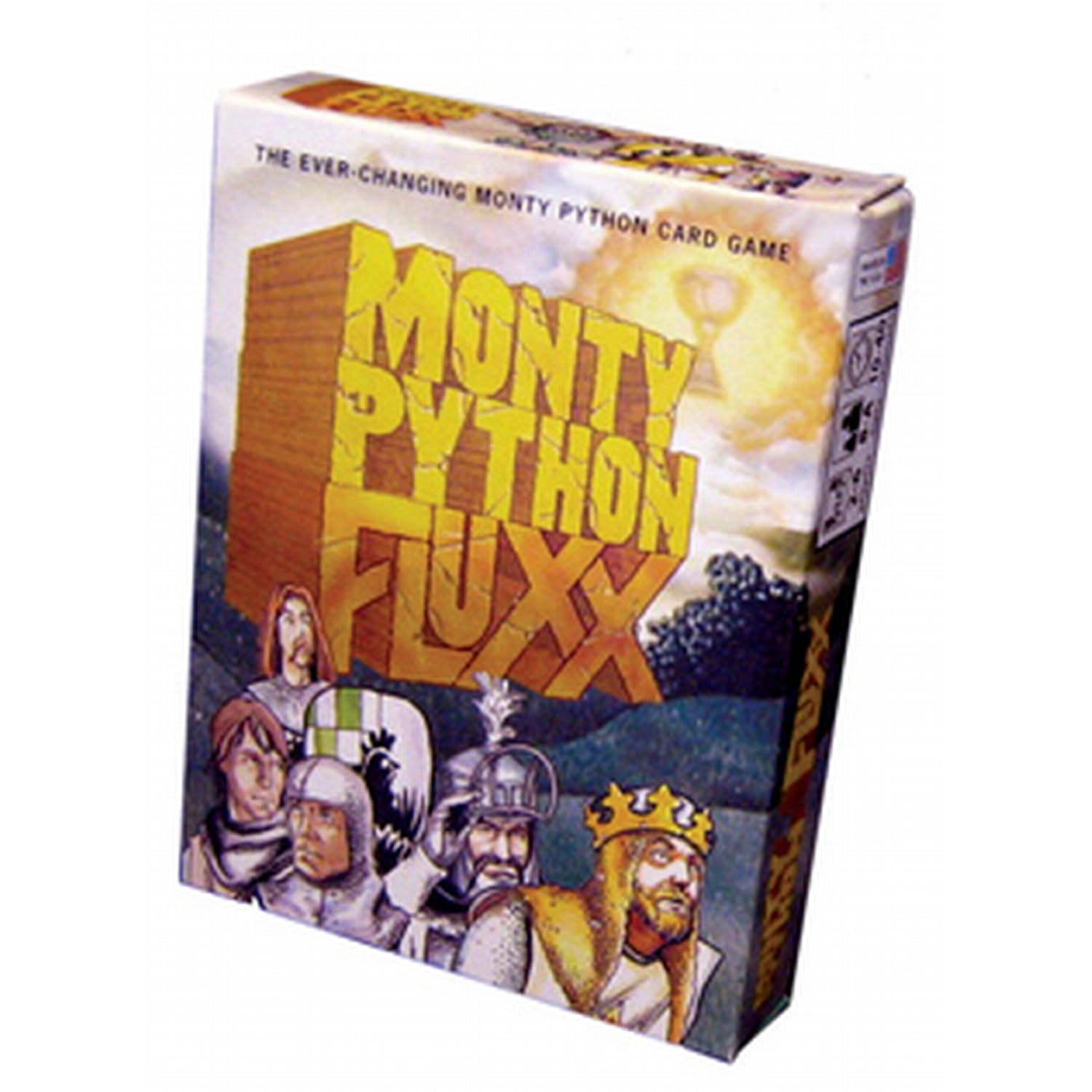
Activities: played Monty Python Fluxx with my husband and daughter, and we had the great time. (We're all huge Monty Python geeks.)


Ate: homemade lentil soup

Fun level: high

Creativity level: low

Brain activity: good, although I did have to play the "My brain hurts" card at one point. 

Thursday, February 23, 2012

How do you get anything done when you have too many things to do?


I have so many things on my to-do list, I can't choose what to do first. What do you do in situations like this?

Here it is:

TO-DO LIST


1. Edit Ride of Your Life--keep notes of where everything is in the Amazing Lands Theme Park so you can draw a map of it.

2. Outline Dream. Write. Publish. in three sections of 10,000 words each. The first section should be about the dream to write. Why do people want to write a book? What are the right reasons? What are the wrong reasons? The wrong reasons--like wanting to achieve the kind of financial success that J.K. Rowling has had or because you think writing is easy--will prevent you from realizing your dream before you've even begun. But the right reasons--to educate, inspire, entertain or help readers in some way--will motivate you more. We're used to not giving ourselves what we want, but it's harder to let someone else down. And you have to give yourself little dreams along the way. You should also choose dreams that depend only on you, not others. NaNoWriMo is a good example. The second section about writing would be about letting go of your internal editor, different ways to find time to write, ways to motivate and reward yourself, editing, and recommended books on writing. And the last section will be about the different options writers have when it comes to publishing, how these apply to your dream, and how to make that dream come true.This will be followed with a list of resources about making your dreams come true, writing, publishing, and marketing. 

3. The best books for author visits are hardcover picture books, so pick one of mine to turn into both a paperback and a hardcover book. Make sure the hardcover isn't priced higher than $17.95 retail. Which book should it be? Alphabetical Disorder, Click the Dog, Fay Fairy's Very Big Problem or one I haven't illustrated yet, like The Glass Butterfly, Green Dreams, Can You Talk Like the Animals? or Princess Lucy, the Fairies & the Goblins? It might be better to work out which one in reverse--work out what would make a good author visit, and then create a book around that. Then create a lesson plan for an author visit.

4. Design swag for Toren the Teller's Tale, like t-shirts expressing the magic of stories. What about your other books? You want to be able to give out stuff like that during author visits or contests.

5. Write a story for Purim and come up with a lunch menu that fits the theme I've chosen. (Purim is a Jewish holiday where people give food to their friends. Every year I try to come up with a fun theme. This year I'm doing a garden theme, and I have an idea for a story involving Esther and a bee, which would tie the theme together.)

6. Reread We Are Not Alone: The Writer's Guide to Social Media, and try to figure out how to utilize social media better. Create a plan and put it into action.

7. Write a three-part series on my blog on Amazon's future brick-and-mortar store. Part one: collect all the rumors and my ideas of the reason for these rumors. Part two: explain all the pitfalls Amazon would encounter in a brick-and-mortar store, and how I think Amazon can overcome them. Part three: a design of an Amazon store I think could work (possibly with drawings to illustrate my ideas).

8. Finish reading Class Act, and make a plan of action based on it so you can start making money from author visits.

9. Create a Geek Stuff section on my blog.

10. Take the lessons I've been teaching my daughter on how to make a comic book and turn them into blog posts. Also consider turning them into a book.

Daily Geek Quotient (or GQ)

Shevi’s Geek Q for today: 100 (down and then up to average out)

I was depressed today because my entry in the ABNA contest didn't make it through to the next round. After watching The Big Bang Theory, Parks and Recreation, The Office (with guest Katherine Tate), and Up All Night, and listening to some great songs (including "The Gates" by  Da Vinci's Notebook) on my Funny Music Pandora station, I'm feeling a little better. 


Wednesday, February 22, 2012

I gave in...

I gave in and joined Pinterest. Here's a link to my "Dream" page: http://pinterest.com/shevistories/dream/

It's fun to look at the inspirational photos and illustrations. I also created a page called "I love books."

Tuesday, February 21, 2012

Everybody Has a Story

In a New York Times editorial from September 28, 2002, Joseph Epstein quotes a survey that claims 81% of Americans would like to write a book. (I don't know how reliable that survey is, but Epstein doesn't cite or question the specific source.) That's about four out of every five people who dream of someday publishing a book. But Epstein goes on to tell his readers, “Save the typing, save the trees, save the high tax on your own vanity. Don't write that book, my advice is, don't even think about it. Keep it inside you, where it belongs.”

Even though he's written over a dozen books, he think you shouldn't even attempt to write one. He thinks you should abandon your dream. Why? Because he thinks your book isn't necessary. It won't be good enough, and it won't offer readers anything new. 

I disagree. 

I believe that everyone has a story worth telling. 

CBS New correspondent Steve Hartman believes that too. Every couple of weeks between 1998 and 2004, Hartman had someone throw a dart at a map of the United States. The dart would land on some random location, and the phone book helped him choose a random house. He then did a story on someone who lived there--and the stories were always fascinating. That's because people--real, everyday people, the kind of people Epstein thinks shouldn't write a book--are fascinating. They're full of surprises. There's so much you don't know about them.


This segment was called "Everybody Has a Story." The name says it all. I believe everybody truly does have a story. Not everyone knows what that story is--and even those who do rarely know how to tell it well--but that doesn't mean their story shouldn't be told. On the contrary. I'm grateful for every story that's saved, and sad for all the stories we've lost, because they were never written down.

I believe that a story is a gift. The right story can give a reader knowledge, inspiration, entertainment, encouragement, or hope. Your story is a gift, a gift someone probably needs to make his or her life better. How sad would this world be if we all kept our stories inside? How selfish would that be?

If you dream of writing a book someday, you should write a book. It might take a while for you to figure out what your story is--what gift you have to offer and to whom--but once you do, you should realize your dream.

There's a story only you can write, and there's someone who needs to read it. Don't let them down. Don't let your dream down.

Everybody has a story worth telling. What's yours?

More technical difficulties...

I couldn't login to my Google account on my Android phone, which once again leads me to believe the problem is with my phone. I put anti-virus software on it, but it didn't find anything. I'm stumped.

Sunday, February 19, 2012

We are experiencing technical difficulties. Please stand by . . .

I found out my Hotmail account was hacked on Friday. On Saturday I got a sty in my eye. I still have the sty, and now on top of that, I have a paper cut. They do say bad things come in threes, so hopefully all this has passed and I can get back to work.

Friday, February 17, 2012

MY HOTMAIL ACCOUNT WAS HACKED!

 How this happened is a complete mystery. Apparently someone started sending spam from it last night at 2:30 AM. McAfee was running with a Firewall, and says nothing is wrong. System Mechanics says the same. I had a secure password, too, which I promptly changed. We do use a wireless modem, but it should be secure. At first I thought it was my Android phone, but that doesn't fit the timing. I wasn't using my phone at 2:30 AM.

Anyway, I'm extremely sorry if you received spam from my account.

Thursday, February 16, 2012

Daily Geek Quotient (or GQ)

Shevi’s Geek Q for today: 124


Activities: Word games at the library. Played Big Boggle, Taboo, and You've Been Sentenced

Fun level: Pretty good

Creativity level: Not bad. Taboo and You've Been Sentenced lead to some really creative thinking

Brain activity: High

Wednesday, February 15, 2012

Daily Geek Quotient (or GQ)

Shevi’s Geek Q for today: 122 (not bad)


Activities: On Wednesdays, I'm giving my daughter a course on how to make a graphic novel. Today we worked on layout, and I showed her some options for a sample comics page she's working on. She came up with some very cool ideas, and I think she did a good job.

Ate: I experimented with sushi in a pathetic attempt to recreate Simply Sushi's delicious crunch roll. It was okay, but it wasn't nearly as great as Simply Sushi's rolls. 

Fun level: Okay, although I wish I had more time to play my new Professor Layton game.

Creativity level: High

Brain activity: Pretty high. Teaching is fun, but challenging.

The Why and How of Indie Publishing Hardcover Editions

My husband and I are currently working on the hardcover edition of Toren the Teller's Tale, and I think the information we're collecting might benefit others, so here it is.

Why make a hardcover edition?

Hardcover editions are better for libraries. 

Having a hardcover means your book will be shelved on a shelf and not jammed into a carousel. (We learned this the hard way with our Dan Quixote paperback. After seeing how mangled it got, we created a new "school and library edition" paperback that fits a carousel better and has discussion questions on individualism, conformity and bullying in the back. The largest format that fits the carousels well is 5.25"x8", so I highly recommend sticking to that size when it comes to a paperback.)

J.A. Konrath recommends publishing your book in every possible format to open it to the most markets, and I agree.

Having a hardcover library edition is particularly important if you are considering doing school and libary visits, which are a good way to market a children's book and--more importantly--a potential source of additional income. 

While you'll probably sell paperbacks to students (if you decide to sell copies in connection to your visits), the hardcover edition will be better for readings and will probably appeal more to the librarian or library media specialist. It's less important if your genre is one that's rarely published in hardcover, like paperback romance.


So how do I make a hardcover edition?

Lightning Source is a good POD provider, because it does hardcovers and works with libraries. It's owned by Ingram, which is a distributor that works with everyone, particularly libraries. Working with Lightning Source will get your book into Ingram's catalogs, which are sent to libraries and schools. 

Lightning Source is, however, notoriously difficult to figure out. It can also be rather expensive, not only because of the setup fee, but because it asks that books be formatted in Adobe Acrobat as a PDF/X-1a:2001 compliant file, and Adobe Acrobat costs hundreds of dollars. We're currently trying to see if we can use Nuance PDF Create instead, but unfortunately Lightning Source charges for each upload that isn't formatted correctly. It's risky. One of the reasons we chose CreateSpace for our paperbacks is that the startup cost is $0. CreateSpace will even provide you with an ISBN (Lightning Source doesn't, so you have to buy your own). CreateSpace is also a lot easier to use.

We're still in middle of working with Lightning Source, but here are a few things we've learned.

While most libary books have jackets, there are some children's books that have laminated covers. 

I prefer laminated, because it doesn't rip and it's easier to clean. Some titles like this are the Wimpy Kid books, the Origami Yoda books, and Cornelia Funke's Dragon Rider.  

This means that if your book is similar, there's no reason why it shouldn't have a laminated cover. All of these covers are matte, although they have glossy elements. I don't know if CreateSpace allows for glossy elements, but it does allow for some gold. Dragon Rider has the title and the author's name in gold, so that's something to consider if you're interested, although it will cost more.

The main thing we've been researching lately is pricing. 

How much should you charge for a hardcover edition?

This is what I found out. First, go to page 20 on this PDF document: http://www1.lightningsource.com/ops/files/pod/USPODOpsManual.pdf

You'll find there are several options. 

Your book will probably be a small hardcover, as "small" refers to the dimensions of the book, not the number of pages. (My guess is that "large" hardcover refers mostly to picture-book dimensions.) Your book will therefore cost $6.00 + $0.013 per page (a book with a jacket costs $1.55 more) per copy to print. A 500-page book, for example, costs $12.50 to print.

But that doesn't tell you how much the retail cost of your book should be. 

Lightning Source recommends that you allow for sellers to take 55% of list price if you want the widest distribution. This lets the stores sell your book at a discount.

This means you should divide your printing costs by 0.45 to get the minimum retail price for your book, which in the case of a 500-page book would be $27.78. You should then add a bit so you're not selling at a loss.

The next question then becomes, "How much will the market bear?"

To find out, go to the current New York Times besteller hardcover list for your type of book. 

In the case of my 500-page children's/YA novel, that would be this list: http://www.nytimes.com/best-sellers-books/2012-02-19/chapter-books/list.html 

While most books are priced below $20, Wonderstruck by Brian Selznick is listed at $29.99, which means this is the top of the range of what you can charge for this kind of book. Fortunately, that's stil $2 over the minimum, so it could work out for this particular book.

Don't expect to make a lot on hardcover editions. The main benefit is just to offer that option for those who need it, like some libraries.

Having a hardcover edition of your book can help you get it on library shelves

If you have any additional information, comments, or questions about hardcover editions, please add them below. Thanks, and I hope this helps!

Tuesday, February 14, 2012

Daily Geek Quotient (or GQ)

Shevi’s Geek Q for today: 142 (Genius!)

You CAN get happiness in the mail! I ordered Professor Layton and the Last Specter, and it arrived today! 


I've already started playing it, and it's so much geeky fun. I know it's not as great as Professor Layton and the Unwound Future, which is the best video game EVER (anyone with a heart would have to shed a few tears at the end of that game), but who cares? It's still a Professor Layton game with all those wonderful puzzles. 


The only problem is that the battery on the Nintendo DS started dying, and I couldn't find the charger, so I couldn't play more than a few minutes. Of course, that just gives me something to look forward to when the DS is fully charged. I'm so happy, I'm geeking out! Yes!