Showing posts with label The Princess Bride. Show all posts

Tuesday, May 24, 2016

Writing Words for Nerds #AtoZChallenge--V is for Voice (Have you found yours?)

There’s a fun improv game you can play where you say the same thing in a bunch of different ways.

For example, try saying “I love you” in the following ways: bashfully, sarcastically, like Captain Kirk (remember . . . to pause in the . . . most unexpected of places), like a rock star (yeah, baby!), like a slimy politician (don’t forget to vote for me), angrily, drunk, like a little kid, like a parrot, and like Siri.

These are just a few examples. Maybe you want to come up with a few on your own. Or maybe you’d like to try different words. I used to play a similar game with my daughter and her friends, where we would read a children’s book in different ways. Believe me, Dr. Seuss sounds a lot funnier if you read his words furiously.

What makes this game interesting is that you soon discover that words change their meaning depending on how you say them. Spoken bashfully, “I love you” sounds deep, so deep that it scares the speaker just a bit; but spoken sarcastically, it sounds more like “I despise you.”  

You might be thinking, “What does any of this have to do with writing?”

While different literary agents and editors are looking for different genres, one thing that almost all of them are looking for is a unique and interesting voice.

Written words actually do have a “voice.” It’s the thing that differentiates one writer from another, the way each of us can express the same thing in a different way.

Some of us are like standup comedians. We write in our own voice. Jane Austen was like that. Her words are uniquely hers. No one else could have written them, not unless they were great at mimicking her voice.

Others are more like actors. We write in the voice of a character we’re playing. Daniel Handler wrote the Series of Unfortunate Events books like that under the name Lemony Snicket. I’d say Louise Rennison wrote her Georgia Nicolson books like that, although I’ve been told by people who heard her speak that Georgia’s voice was Rennison’s. They say she actually spoke like a teenage girl “on the rack of lurrrv,” and she really was the bestie every girl wanted to have.

Of the books that I’ve written, Toren the Teller’s Tale is close to my writer’s voice, although it’s heavily influenced by the voices of the various storytellers in it, particularly Toren herself. Dan Quixote: Boy of Nuevo Jersey has a lot of my voice in it, although a younger version of it.  I think Ride of Your Life comes closest to my true writer’s voice. Yes, it has focal characters, so the voice adjusts depending on the point-of-view character in a scene. But I do think you get a lot of my voice, my style, the way I put words together into sentences and sentences into paragraphs.


On the other hand, Why My Love Life Sucks was written in Gilbert Garfinkle’s voice, not mine.  I suppose parts of me get into his voice, just a bit. We’re both proud geeks, after all, both love science and both want to fix the world in our own way. He’s a lot smarter and younger than I am, though, and male. And I’ve given him some things that are the opposite of me, just so I could try on his way of seeing things. Gilbert loves heights, because I’m afraid of heights. Gilbert loves extreme sports for the same reason. He’s brave where I’m scared, and sometimes he’s scared where I’m brave. 

I think I prefer to write in someone else’s voice. I know I prefer to write in Gilbert’s. When I write in my own voice, I feel self-conscious. What will readers think of me? What if they don’t find me funny? What if they don’t like my writing? What if they don’t like me at all? Gilbert, on the other hand, could hardly care less. He just sees the world the way he sees it, and it doesn’t matter what anyone thinks. Writing in his voice also makes me feel like I’m not doing this alone. I have a friend in my head. I can take him anywhere I like. And he is geeking awesome.  I would listen to his voice all day if I could.

While different literary agents and editors are looking for different genres, one thing that almost all of them are looking for is a unique and interesting voice.

So how do you, the writer, give them what they want?

That’s a good question. After all, if there were an easy answer, everyone would be doing it.

When it comes to a personal voice, you probably already have one. You probably already have a unique way of saying things that’s different from how other people say them. You can develop that voice by reading a lot books and seeing how you would say things differently.

Maybe you wouldn’t say “I love you.” Maybe you would say “I hate you” in such a way that deep down everyone reading it would know you actually mean “I love you.” 


Maybe you would say, “As you wish,” like Westley in The Princess Bride. 


Or maybe when told “I love you,” you’d say “I know,” like Hans Solo tells Princess Leia in The Empire Strikes Back.  


Or maybe you wouldn’t say it at all. Maybe you’d show it with the things that you do, or maybe you’d think it and be too scared to say it out loud.

Whatever way you have that’s unique to you, pay attention to it. Cultivate it.

Many new writers try to write like someone else, but you need to write in the way that only you can. That’s the only way you’ll stand out. That’s the only way your voice can be heard above the rest.

As for writing in a character’s voice . . . This one is a bit trickier to explain.

I think you need to know the character inside and out. It could help to write down their entire life’s story, all the things they like and don’t like and why, all their greatest dreams and deepest fears. It could also help to draw them or find a photo of someone who makes you think of them. You have to know who they truly are, and you have to let your characters speak for themselves. You can’t try to control their voices. If you can treat them like they’re real people—not puppets for you to manipulate—they’ll be more likely to have their own unique voices, the way that real people do.

Two small technical notes: first, avoid writing things like “he saw,” “she thought,” or “I felt.” There’s nothing between your character and the things that are affecting them, so don’t put your character between them.  Instead of writing “He saw her as she left,” simply write “She left.” Instead of writing “she thought it might be nice to meet him for coffee,” write “Meeting him for coffee might be nice.” Instead of writing “I felt reassured,” write “So it wasn’t all bad.” And second, if you’re writing in first person, watch out for the “evil I.” You’ll probably have to sprinkle a few I’s in your first-person manuscript, but you don’t want to overdo it. People who say “I” a lot are usually self-absorbed, so if your character isn’t meant to be an egomaniac, try to edit most of those out.

I’m currently writing the end of Why It Still Mega Bites, the sequel to Why My Love Life Sucks. It’s fun, but also challenging, because a big part of the book is written in Amber’s voice. Getting inside her head and seeing things through her bright blue eyes and strange mix of hope and insecurity feels weird, I’ve really enjoyed it. I think it helps not to judge your point of view character too harshly, to accept that they are who they are, to see them as they see themselves. It probably helps to view the people around you that way, too. Try to have an open mind and put yourself in another’s shoes. Maybe it will make you a better writer. It probably couldn’t hurt.

Whatever you do, try to keep your voice authentic to yourself or your character. Don’t write anything for convenience or because that’s the way you think the character is supposed to be or the way the genre is supposed to be written. An authentic voice is rarely convenient and often breaks the rules.

And that, I think, is the kind of voice literary agents and editors are looking for, a voice that’s different because it breaks the rules. 

Friday, May 06, 2016

Writing Words for Nerds #AtoZChallenge--J is for Justice (and why we need it in stories)

I’m a middle child.

You can go ahead and think of all the stereotypes about middle children having an overdeveloped sense of justice. In my case, they’re entirely true.

It’s one of the things I liked about fairy tales when I was growing up. I loved seeing brave and good heroes and heroines (especially the heroines) get rewarded. Even more, I liked seeing bad things happened to the bad people who deserved them. I wanted justice to be served, and like the boy in my favorite movie, The Princess Bride, it bothered me when it wasn’t. It bothered me because it just wasn’t fair.

“What did you read me this thing for?!”

When I was little and pointed out that my dad was being unfair about something, he replied, “Life isn’t fair.”

Well, I never expected life to be fair. I expected him to be fair. Just because life isn’t fair, that’s no excuse for people to be unfair. Heck, if anything, that’s even more reason for people—especially parents—to be fair, to make up for the injustices of life.

And I feel that’s even more true when it comes to writers and the stories we tell, particularly stories for children.

What’s the point of telling a fictional story if doesn’t right the wrongs of life? What’s the point of telling a story if it doesn’t give us something we don’t get in real life: justice?

Of course, not all classic fairy tales have just endings. The original Little Mermaid doesn’t. I hated that story when I was little. I hated how the Little Mermaid, who only wanted to love and be loved, had to pay for her bravery and devotion to the stupid prince with her life. That was so unfair!

 Of course, years later, Disney fixed it. I guess I wasn’t the only one who felt that story needed to be fixed and justice needed to be served. Someone at Disney felt that way, too.

One of the things I’ve done time and again in this blog is show writers easy ways to come up with story ideas. Here’s another: if there’s something in a classic story that you don’t like—whether it’s a Hans Christian Anderson fairy tale, an ancient Greek myth, or a Shakespeare play—write a story inspired by it and fix the part that you don’t like.


I did that with Don Quixote when I wrote Dan Quixote: Boy of Nuevo Jersey. I love Don Quixote, but I hate the ending. Why does he have to give up on his dream and die? Actually, I know the reason. Cervantes wrote Don Quixote in parts, and while he was still writing it, readers said that the main character needed to wake up and stop dreaming. Of course, once he gave up on his dreams, there really was no reason for him to keep living. Hence the tragic ending to what should be a comedy. When I wrote Dan Quixote and put the story of Don Quixote into a modern middle-school American setting, I fixed the part I thought was wrong and gave it the just ending it deserved.

A lot of the adaptations we see today are about righting literary wrongs.

The Wicked Witch of the West, for example, was never actually shown to be evil in the movie version of The Wizard of Oz. Sure, everyone hates her, but why? The worst thing we see her do is take Toto away from the girl who killed her sister (yes, it was an accident, but still) and stole her sister’s magical shoes. Can we really blame the witch? And why is Oz so great? He manipulates a girl to kill someone for him. He basically turns Dorothy into a mercenary. Really? So I’m glad to see adaptations like Wicked, adaptations that right the wrongs.

 The same goes for the movie Maleficent. Originally the character was awful, but we never got to hear her side of the story. And Aurora? All she does is sleep, and we’re supposed to root for her? And her happy ending is that a prince kisses her while she’s asleep? Yeesh! The new movie fixes all of that, and I’m glad it does.

I also like adaptations that fix social injustices in fairy tales, the way Ella Enchanted and Disney’s latest live action Cinderella movie attempt to fix the inherent sexism of the original Cinderella fairy tale.

So if you’re looking for an easy way to write a story, just look for a story old enough to be in the public domain that has something unjust about it and make it just. Fix it. Right the wrongs.

Life might be unfair, but you don’t have to accept it. You can be a literary superhero. 

Monday, August 26, 2013

Character bios for Gilbert and Amber from Why My Love Life Sucks

I was asked to share the bios of the main characters from my latest novel, so here they are:


The main characters in Why My Love Life Sucks (The Legend of Gilbert the Fixer, book one) are Gilbert Garfinkle--a.k.a. Gilbert the Fixer--and Amber. Gilbert is the ultimate, teenage geek; and Amber is the gorgeous, vampire girl who wants to turn him into her platonic BFF--literally forever. The story is written from Gilbert’s point of view.

GILBERT GARFINKLE

Age: 17
Goal: to fix the world
Weakness: anything illogical
Favorite things: electronics, lockpicks, fixing things, inventing things, rock-climbing, aikido,  comic books, fantasy & science fiction, The Princess Bride, Albert Einstein, Dungeons & Dragons, his father, his Uncle Ian, his friends

Gilbert loves everything geeky: from Star Trek and Dungeons & Dragons to rock-climbing and inventing electronics. He has a compulsive need to fix things that are broken or can be improved on, and he plans on someday fixing the world. He’s already invented a few things to help him achieve that goal, including his Lablet, which is a cross between a laboratory and a computer tablet. At one time he tried to upload his own conscience into the Lablet, but it turned into a closed-lipped, depressed, animated robot instead. He has no idea why this happened. He is currently inventing a form of artificial intelligence with a will of its own. His father was a very successful chemical engineer who died at the age of 83 when Gilbert was still a toddler. His mother is a self-absorbed gold digger who only married his father for his vast fortune and who loathes even being in the same room as Gilbert. Uncle Ian, his mother’s lawyer, is the only person that Gilbert considers living family, even though they aren’t related. His best friend, Dylan, calls him “Little Dude,” and Gilbert calls Dylan “Big Dude.” He’s had a secret crush on the absolutely brilliant Jenny Chen since they were both six, and he considers Dungeon Master Dave his own personal Yoda, the mentor he turns to for advice. His life isn't perfect, but as far as he’s concerned, it’s pretty good...and it was going to be amazing until the Amber ruined his well thought out plans. His brilliant mind, eidetic memory, sarcastic sense of humor, lockpicking, aikido and rock-climbing skills, various gadgets, and friends are just what he needs to help him solve any mystery and get him out of any jam.

AMBER

Age: claims to be 17, although she appears to be 15
Goal: to turn Gilbert into a vampire and her platonic BFF--literally forever
Weakness: low self-esteem (although she hides it well)
Favorite things: bacon, pizza, candy, her friends, boys, dancing, laughing and smiling, and above all being liked

Why My Love Life Sucks is written from Gilbert’s point of view, and the first time we meet Amber is on the first page. As Gilbert lies paralyzed by her vampire bite, he looks back at the events of the night, starting with what happened when he brought her to his room: “Amber laughed. It was a nice laugh. I felt so relaxed, because she’s so beautiful. They say there’s no point in worrying about the things you can't control, and I figured I didn't have a chance in hell with her. Guess I was right, but not in the way I thought.” Aside from being drop-dead gorgeous, seemingly sweet, funny and quick, asking Gilbert to kiss her, and the whole turning-him-into-a-vampire thing, she remains mostly a puzzle for the start of the book, a puzzle Gilbert feels compelled to figure out. And he does figure out some of it by the end of this book. But there’s a lot more to Amber than meets the eye, and it will take the rest of the series for readers and Gilbert--and in some ways Amber herself--to truly know who and what she is.


Monday, September 19, 2011

The Princess Bride and the Storyteller


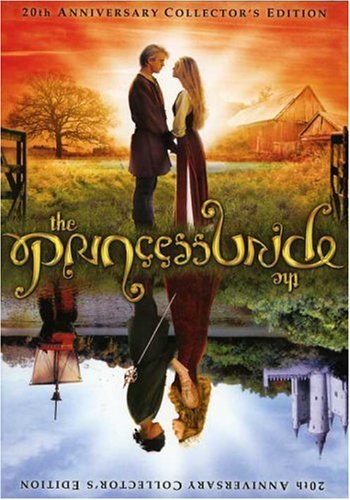
My favorite movie is The Princess Bride. It has everything. To quote the storytelling grandfather in the movie, “Fencing, fighting, torture, revenge, giants, monsters, chases, escapes, true love, miracles . . .”

 What’s not to love? 

I shared this movie with my daughter when she was about ten, and it became her favorite too.  Like me, she knows the hidden meaning behind those three little words: “As you wish.” 

Every once in a while the subject of my favorite movie comes up, and people tell me I should read the book. William Goldman wrote the screenplay for The Princess Bride, which was based on his novel. I’ve been meaning to read it for decades, but never got around to it. Recently, I was participating in a Twitter chat for writers, when someone once again told me that I had to read the book. So I opened up my web browser to Amazon, found a used copy, and bought it on the spot.

Once it arrived in the mail, it sat on the shelf for a few weeks, because I was busy with other stuff. I had my own novel to edit, information about publishing and social media for writers to study and put into practice, and there were family obligations. But I kept seeing that book on the shelf. “Read me already,” it said.  

So I finally started to read it, and I told my Facebook friends they could stop pestering me about it already. That post received a lot of “likes,” but then someone warned me about the book.  

 While I knew many people who said it was their favorite book, I've also heard from many who said that the book isn't as good as the movie. I just didn’t know why. William Goldman wrote both, so how different could they be?

My Facebook friend explained: “The theme of the movie is ‘true love conquers all’ while the theme of the book is the more difficult and frank ‘life is not fair.’ One is a fairy tale and the other most definitely is not.”

Oh.

That almost put me off of reading the book.

But I started reading it anyway, and I discovered something rather surprising—William Goldman seems to have liked the movie better too.

I say this because the edition of The Princess Bride that I bought is the 30th anniversary edition, which includes both the introduction to the 25th anniversary edition and an even newer introduction.

First, to truly understand The Princess Bride, you must realize that this is a story within a story. The internal story of Buttercup, Westley, Inigo and Fezzik is almost identical in the movie and the book. Where the book and the movie differ is in the external story, the one about the storyteller and the audience. This is metafiction, and that’s probably one of the things I love the most about The Princess Bride. 

In the book, the storyteller is the character of William Goldman. Not the author, but the character. You can tell it’s the character, because in the book he has only one child, a boy named Jason, when in fact the real Goldman wrote The Princess Bride for his daughters. But that’s not all. The full title of the book is The Princess Bride, S. Morgenstern’s Classic Tale of True Love and High Adventure. In the book, William Goldman writes about how he came to abridge S. Morgenstern’s classic tale. However, S. Morgenstern doesn’t really exist. He’s as much a fictional character as Westley and company.

In the movie, a grandfather reads Morgenstern’s book to his sick grandson. Grandpa explains that this is the book his father used to read to him. At first the grandson is hesitant, but then he really gets into the story. In the very end of the movie, he asks Grandpa to come back and read the story again. Grandpa gets the final line in the movie, which is “As you wish.”

From a storyteller’s point of view, there could be no better ending. How could it end better than a request for more?

But the book doesn’t end that way.

Nor does it end with the much beloved last lines from the movie’s internal story: “Since the invention of the kiss there have been five kisses that were rated the most passionate, the most pure. This one left them all behind. The End.” That isn’t even in the book.

The book ends almost in the same place as the internal story, but with the storyteller pointing out that “in my opinion anyway, they squabbled a lot, and Buttercup lost her looks eventually, and one day Fezzik lost a fight and some hotshot kid whipped Inigo with a sword and Westley was never able to really sleep sound because of Humperdinck maybe being on the trail. . . . But I have to say, for the umpty-umpth time, that life isn’t fair. It’s just fairer than death, that’s all."

That’s not exactly a fairy-tale kiss or an “as you wish.”

So why are the two endings different? And why do I think the real Goldman preferred the movie ending to the original novel’s ending, aside from the obvious answer, which is that Goldman wrote the screenplay years after he wrote the novel?

In the introduction to the 25th anniversary edition, Goldman—the character and the real author—talks a lot about the making of the movie, as well as some of the other movies he wrote. One of them was Marathon Man, which is a story involving a Nazi in New York City, a Nazi who kills and tortures some good people in the story. The Holocaust proves that life isn’t fair, but it’s fairer than death. It proves that it might be better to tell your children not to believe in fairy tales. One-and- a-half million children were killed by the Nazis, in part because these children believed that grownups don’t hurt children. They believed in that fairy tale, and the Nazis used it against them. Only those who could see beyond that fairy tale survived, and I think that might have been part of the reason for the novel’s original ending.  

But the storyteller in the original novel isn’t Grandpa. He’s a screenwriter named William Goldman, whose son Jason doesn’t want to read Morgenstern’s novel. The character of Goldman in the novel has fond memories of his father reading the story to him, but when he picks up the actual book, he discovers that his father had only read the good parts. So Goldman sets out to abridge Morgenstern’s tale, all the while commenting on what he left out, what his father left out or put in, and what he thinks of all of it. This matters a lot, because, as I’ve already said, the movie and the novel have almost the same internal story. It’s only this external story that changes.  

But in the introduction to the 30th anniversary edition, Goldman is now a grandfather. Not only that, he’s shared The Princess Bride with his grandson, who loves the story as much as his grandfather does. It took 30 years, but eventually the storyteller from the book evolved into the storyteller from the movie.

And although the novel still doesn’t end with “As you wish,” chronologically, it kind of does. Because chronologically, the most recent event, which is found in the 30th anniversary edition’s introduction, is Goldman offering to make his grandson’s birthday wish come true. “As you wish.” And what his grandson requests is something every Princess Bride fan dreams of: a trip to Florin to see the sword that was forged for the six-fingered man, Fezzik’s gigantic clothes, and many other wonders from the story. The grandson gets his wish, and we get to go along for the ride.    

But what about the theme, you ask? Is the theme different for the 30th anniversary edition too?

This edition has a few chapters from a supposed sequel to The Princess Bride, which is entitled Buttercup’s Baby. There’s not much of it here, but what is here is all about love, particularly the love we feel for our children. Fezzik loves Buttercup’s baby so much that he’s willing to give his life to protect little Waverly. That’s not romantic love, but it is true love.  

So in the end, while life isn’t fair, love makes it bearable. And that truly is love conquering all: the unfairness, the torturers, the Nazis, and even death.