Wednesday, July 11, 2012

Guest Post by W. Jack Savage

A while ago I sent out a request for guest posts. I asked that they be either inspirational or informative, and I wanted them to be personal, because I didn't want something I could have written.

The guest post below is one of my favorites. It's raw and honest, and it shows how it you can learn something in the most surprising places if you just pay attention. It also shows how one person can have a long-lasting impact in a teenager's life.

_________________________________________


The Crown of the Road
By W. Jack Savage


            I’ll never forget Mrs. Johnson, my art teacher in high school.  I liked her at a variety of levels.  She had a good sense of humor, she didn’t take any crap, and she would make observations about you through your artwork that went beyond the usual critique.  “You’re my dreamer,” she would say.  “Your work has a dream quality to it.”  I found her comments useful because in high school my whole life had a dream quality to it.  But her observation, using the vehicle of a drawing I was working on, gave substance to what I was feeling without judgment.  “Don’t be such a dreamer,” other teachers might say.  As if to dream was the enemy of one’s education.  Indeed, it may have been.  It was in my case.  But, at times, to dream was all that allowed me to survive.  When she said it though, it was just another word used to describe something—in this case a drawing.
            One spring day she came in and began our day with this sentence: “No matter who you are, you have to be pretty comatose not to have noticed the budding of the trees and bushes today on your way to school.”  I hadn’t.  It wasn’t the first time the winters of my youth had instilled in me a paralysis of observation that lingered through late spring.  But, again, her giving words to my affliction made me notice it.  Her speech preceded our first outdoor sketching assignment of the spring.  I remember thinking a lot that day about why I hadn’t noticed these obvious signs of spring.  As time went by, I began to realize that whereas a nuance or an inflection of speech, a side-ways glance, or even a conspicuous silence could never escape my notice; the terrain or background against which these little dramas played out was less significant to me.  Therefore, now in my fifties, it came as somewhat of a surprise to me when I became aware of the crown of the road.
            Mind you, I don’t know if engineers or the people who work on roads even call it that.  But, to me, where the curve of a road from curb to curb meets its highest point is what I consider the crown of the road.  If it had ever occurred to me in the past, and it never had, I would have assumed that the crown of the road for the most part was always in the middle of the road.  I would have frankly doubted any idea that the crown of the road could be as near to one side as five or six feet in some cases.  But it is.  As an avid runner, I became aware of this one day.  I recently brought this observation up to someone in passing, who, having given it some thought, wondered out loud who could possibly give a damn about such a thing.  I then pointed out that it was my opinion that observing such a thing was no less poetic in nature than noticing the budding of the trees in spring.
            “Who says budding trees are poetic?” he asked.  “This is California for Christ’s sake.  We don’t have a ‘budding’ spring as such anyway.  I can’t remember noticing a budding tree since I left the Midwest, and now this…this crown in the road business.  What the hell are you talking about?”
            “I’m a runner,” I said.  “You know that.  I run everywhere: streets, trails, up in the mountains, in your neighborhood, too.  I’ve never been known as the most observant guy around when it comes to outdoors anyway.  I’m just telling you that I noticed something about the streets.  They’re a part of our world that we take for granted and drive on every day.  The crown of the road, or at least its high point, is different.  Sometimes it drifts from side to side depending on how they want the water to drain off.”
            “What water?” he asked.  “I’ve lived out here for sixteen years.  It didn’t rain at all for the first four.  If it did, I never noticed it.”
            “Yes,” I said, “but when it does, and real hard I mean, like the flood years, that’s what the crown in the road is for.  If you live on a north hill that slopes to the south, and the street in front of your house goes east and west, the crown of the road is almost certainly nearer to your house and your side of the street than the other side.  You see it impedes the water flow a little and drains it east and west to a natural flow point on either side.  There they put storm sewers or something to catch the majority of the run-off.”
            He just looked at me.  “I don’t live on a hill,” he said quietly.
            This man clearly had no sense of wonder.  Or if he had, it was long gone.  I tried for a little longer but it was no use.
            Not long after that, I began again with a woman I had known for some time.  Perhaps, unconsciously, I chose her because I wanted a woman’s opinion to begin with.  Secondly, being a woman, I reasoned that even if my observation held no particular interest for her, she would at least assess what I had to say with less antagonism.  The possibility that it might even be of interest seemed increased by the fact that she had once been a runner like me.
            “When you used to run,” I began, “did you ever notice the crown of the road?”
            “I’m not sure what you mean.”
            “Well,” I explained.  “You know how most roads have a sort of arc, a slight rounding to them in the middle from curb to curb.”
            “Yes, that is, I suppose so,” she said.  “That makes sense for the drainage, I’d guess.”
            “Okay,” I said.  “As you get up in the hills, the crown of the road varies a great deal.  Sometimes the crown or high point is as close to the curb as six feet.  As the street continues, sometimes the crown will change completely to the other side.  If it winds up a hill or something, it will change from side to side.  It’s not always in the middle is what I mean.”
            She looked at me.
            “Did you ever notice that when you were running?” I asked.
            “No, I was too busy noticing suspicious cars or vans that might follow me and want to force me in if I wasn’t paying attention.  In other words, I was trying not to get raped while I took my morning exercise.  Now that you mention it, I didn’t notice anything about the roads or my neighborhood either.”
            “You weren’t by any chance listening to music, were you?” I asked.
            “Not then,” she said.  “I power walk now.  It’s easier on the knees.  I have a headset that I listen to now and then.”
            “I see. Ever notice the budding of the trees in spring?”
            She shook her head. “Not the budding exactly, but the purple Jacaranda trees bloom in the spring.  I always notice them.  What did you call it?”
            “I’m sorry?”
            “The crown,” she said.  “Was that it?”
            “Yes,” I said.  “I don’t know what road engineers call it.  I mean, I don’t know if that’s what it’s called.  That’s just what I call it.”
            “Was there something else you wanted to ask me?”
            “Well, no not really,” I said.
            “Are you sure? You know if you change your mind, you can call me at home.”
            “Oh,” I said.  “Okay.”
            I next called my son who listened to my observation and said, “Is there a point to this Dad?” 
            My daughter wondered if I might be getting high again after all these years and said, “That’s the kind of thing someone who’s high would notice.”
            A part of me wanted to argue with both of them.  But since the lion’s share of their up-bringing was done by their mother, while my contribution could be measured more in canceled checks, I was not unaware of the futility of attempting communication with those for whom their own luminescence provides a shield against official and, in my case, semi-official points of view.  Much the same as ours did in our youth.
            Finally, I attempted to call Mrs. Johnson.  From time to time, actually once after I got home from the service and again fifteen years after that, I looked up Mrs. Johnson just to say hello.  In so doing, I hoped this would indicate my affection for her.  Her somewhat sarcastic nature made telling her of my affection more difficult than any “three times in thirty years” phone call should be.  If she couldn’t figure out that I still thought of her fondly enough to call, she wasn’t as sharp as I’d always imagined.
            I called long-distance information expecting to get her number as I had done in the past.  But I was unsuccessful this time. She had always been listed under her first two initials, but it seemed this was no longer true.  I sat there, trying to remember her first name (if ever I’d known it) and theorized that, because she had long since retired from teaching, it was possible that she had gone back to using her first name.  I tried again and again but had no luck.
            This might well have been the end of my effort to get someone—anyone—to appreciate the fact that the crown of the road varies with the terrain and the various undulations it passes through, but my daughter’s observation kicked off something in my memory.
            “The crown of the road,” she rationalized, “might be something that someone who was high might take notice of.”
            Naturally, being an avid runner, I am no stranger to the endorphin high.  It is a heady state that can be achieved by prolonged exercise, usually by runners.  Indeed, I have felt it often.  Not consistently but often nonetheless.  I tried for a moment to remember exactly when it was that I first noticed the crown in the road.  I could not, at least not exactly.  Therefore, it’s at least possible that I was in the state known as “the runner's high” when it first came to me.  But although the crown of the road itself may be a somewhat offbeat observation, the way I presented it was not.
            I first chose a friend over drinks.  The fact that we were drinking alone should have at least paved a surface conducive for such an observation.  The nonsense I have listened to over drinks down through the years could fill volumes with observations less astute than mine.
            “Ever notice how people who drive yellow cars are all assholes?  If they’ve never seen Pluto, how do they know it’s there?” These two were just off the top of my head.
            After that I choose a fellow runner: a woman fellow runner, but a runner anyway.  She should have registered something approaching an affirmation of my observation; instead, I came away with the feeling she thought I was hitting on her.  And, upon further thought, had I been hitting on her, I might have done so successfully.  I could still call her.
            That my children were unresponsive was a surprise something akin to the sun coming up each day.
            And yet, perhaps my observation was the kind that never quite lands when you bring it up, but one that you never forget either.  I was riding a bus down University Avenue once, going to a job that I hated.  Actually, it was a bus ride with a transfer, and University was the final leg, making the fact that I hated the job worse because the commute was tedious as well.  Anyway, I’d get on the bus that was always full, and there were a number of retarded riders from some group home; each morning they took this bus to where they all worked.  I enjoyed this leg of the ride because, since the bus was usually full, the retarded riders couldn’t sit together.  They were scattered around the bus.  Being that I was in my twenties, during the seventies, and less than enamored of my employment status quo or prospects, I got high on marijuana every day before going to work.  And while I’ve grown tired of the debate over what, if any, benefit may be gained by staying in such a state, being that I no longer use it; it seemed at the time to provide great theater now and then, and this bus ride was an example.
            First, with no obvious signs of mental retardation, it was fun trying to decide who in fact was retarded and who wasn’t.  Everyone sat quietly on the bus and unless someone had their hat on sideways or slept so that one side of their hair stood straight up, given my own state of impaired reality, it was hard to tell.  Under these circumstances, a man I may otherwise have pegged as a shop foreman or even small business owner of some kind might just get up and shuffle off at their stop with the other mentally challenged riders.  Then, who’s to say they were all a part of the same group just because they got off at the same stop?  You get my drift.  Over time, of course, you could kind of tell.  After a while, my daydreams concerned themselves with other things.
            One day, as happened occasionally, I was lucky enough to get a window seat for this last leg of my commute.  Another guy, who had been standing as well, took the seat next to me as I got in.  In moments, I was in that reverie aided by a window view I knew I had been lucky to get.  As we approached Fairview and the stoplight there, the fellow on my left leaned forward a bit.
            As we stopped, he suddenly blurted out “A gas station!”
            I immediately knew he was one of our challenged group and I, challenged in my own way but part of the larger whole nevertheless, responded with good-natured stoned affirmation, “Yeah...a gas station.”
            “I’ll bet they have road maps in there,” he said.
            “Yeah,” I bet they do.”
            But it was more than that.  Over the years I believe it was far more.  To begin with, given both my state of general dissatisfaction and marijuana impairment, this young guy’s progressive observation has stayed with me for thirty years. 
          At the time it was just something funny that happened on the bus.  But, after a while, it seemed like an answer to a prayer somehow.  A road map could get you anywhere, and they were available at the nearest gas station.  Too simplistic to be profound you say?  Nonsense!  It’s as simple as this: if you don’t like your situation--job, relationship, prospects, whatever--and the process of change seems too complex, leave!  Maps are available.  They chart a path of both escape and renewal.  Moreover, they are proof positive that wherever it is, you can get there from here.  I have used this metaphor countless times to kick-start my life whenever I felt trapped.
            I’m not saying that the “crown of the road” will one day compete with “road maps available at your nearest gas station,” but, over time, it may find meaning for someone.  Consider that a path—any path—leads somewhere and can therefore lead you back if necessary.  But taking your eyes off the path to a point too far ahead can lead you off the path in a hurry; looking back can as well.  Therefore, staying to the rounded apex of the path and following that apex or crown as it moves from side to side can not only provide security against leaving it but also allows you to go faster.  That is, should you desire to.

            Well, I’m not saying that it will keep anyone up nights.  But the first of many springs in my life, where I failed to notice the budding of the trees, spawned in me enough of a sense of wonder to notice the variances in what I have now dubbed “the crown of the road.”  And if the “rounded apex of the path” thing seems too contrived, then consider that the crown of the road is only my observation.  What you do with it is your business.  I’m staying with “road maps available at the nearest gas station.”


W. Jack Savage is a retired broadcaster and associate professor in Film Studies who now writes full time. The Children Shall Be Blameless is Jack's third novel and fifth book. He and his wife Kathy live in Monrovia, California. You can find out more about him by clicking here.

Monday, July 09, 2012

Read first 50 pages of Ride of Your Life for free!

There's a new BookBuzzr widget on my blog at the top of the column on the right. If you click on it, you can read the first 50 pages of Ride of Your Life for free! Check it out, and if you like what you see, click on a link to buy a copy today.

Wednesday, July 04, 2012

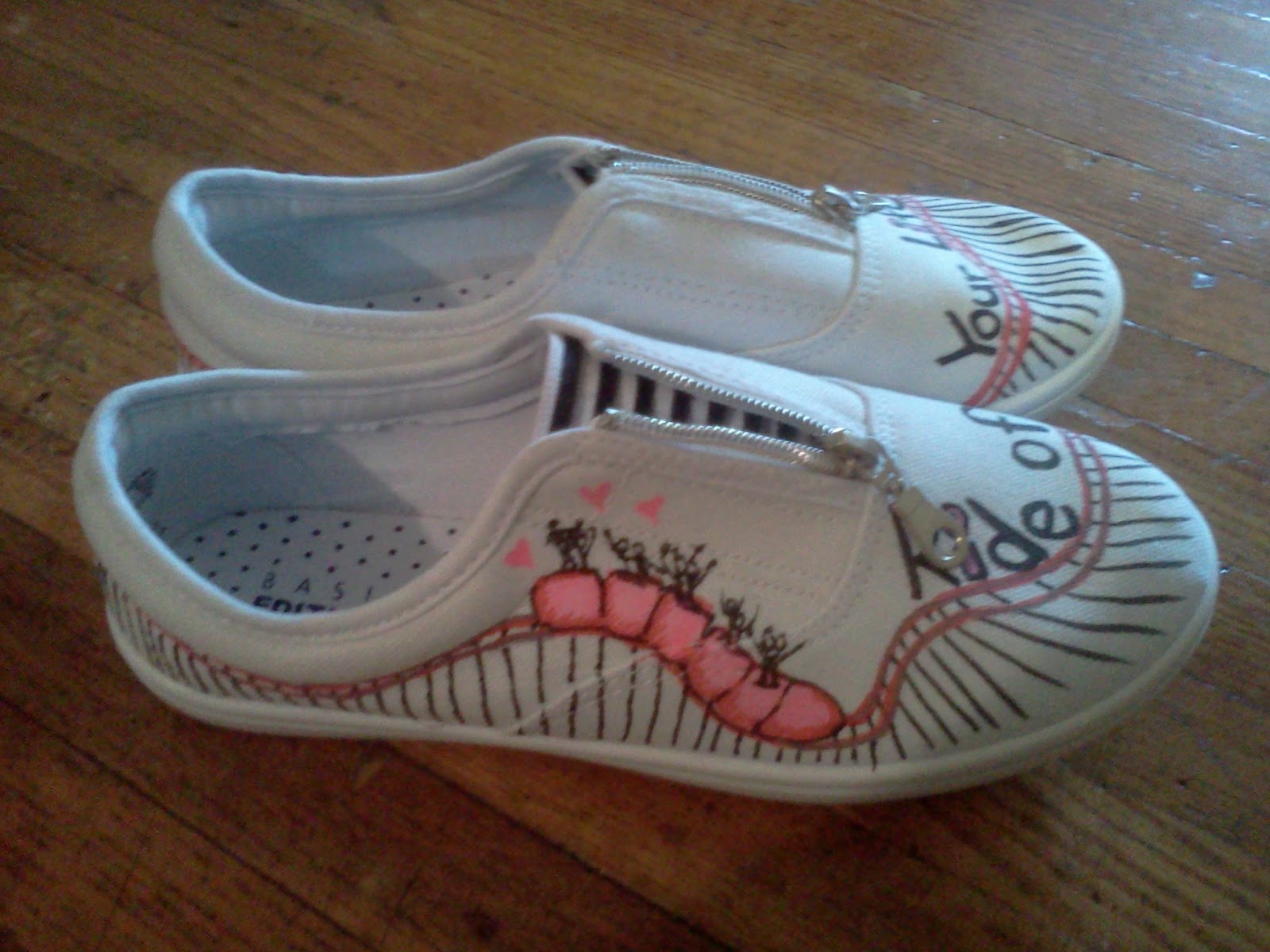
I made my own Ride of Your Life sneakers!

 Happy Independence Day to all my American friends celebrating the holiday!
Hand-drawn sneakers with a romantic-theme park design

What do you think of my new sneakers? I bought a cheap pair from Kmart and a bunch of Stained by Sharpie markers. I didn't know what I'd draw at first, but some friends suggested something from one of my books, so I went with a romantic amusement-park theme for Ride of Your Life.


Put them together, and they spell "Ride of Your Life."


I like the way they turned out.

A roller coaster on one side and a Ferris wheel on the other. 

Someone suggested I run a contest where the winner will get a hand-drawn pair of sneakers like these, but in the winner's size of course. What do you think? Would you like to win a pair?

Tuesday, July 03, 2012

For The Love of Film And Novels: (Guest Blog & Review) Ride Of Your Life By: Shevi ...


Check it out, another great review for Ride of Your Life: "...With reading this whole story, it definitely gave me the urge to want to go to an Amusement Park with friends, and it will do the same for you, and oh eat some delicious food :) I don't know what else to say, but I left this story with a good feeling, and I think you will to, so do read this novel; it's a perfect Summer Read! "

Read my guest post and the rest of the review here: For The Love of Film And Novels: (Guest Blog & Review) Ride Of Your Life by Shevi Arnold

Monday, July 02, 2012

Download the first chapters of RIDE OF YOUR LIFE for free!

You can now download the first chapters of Ride of Your Life for free!


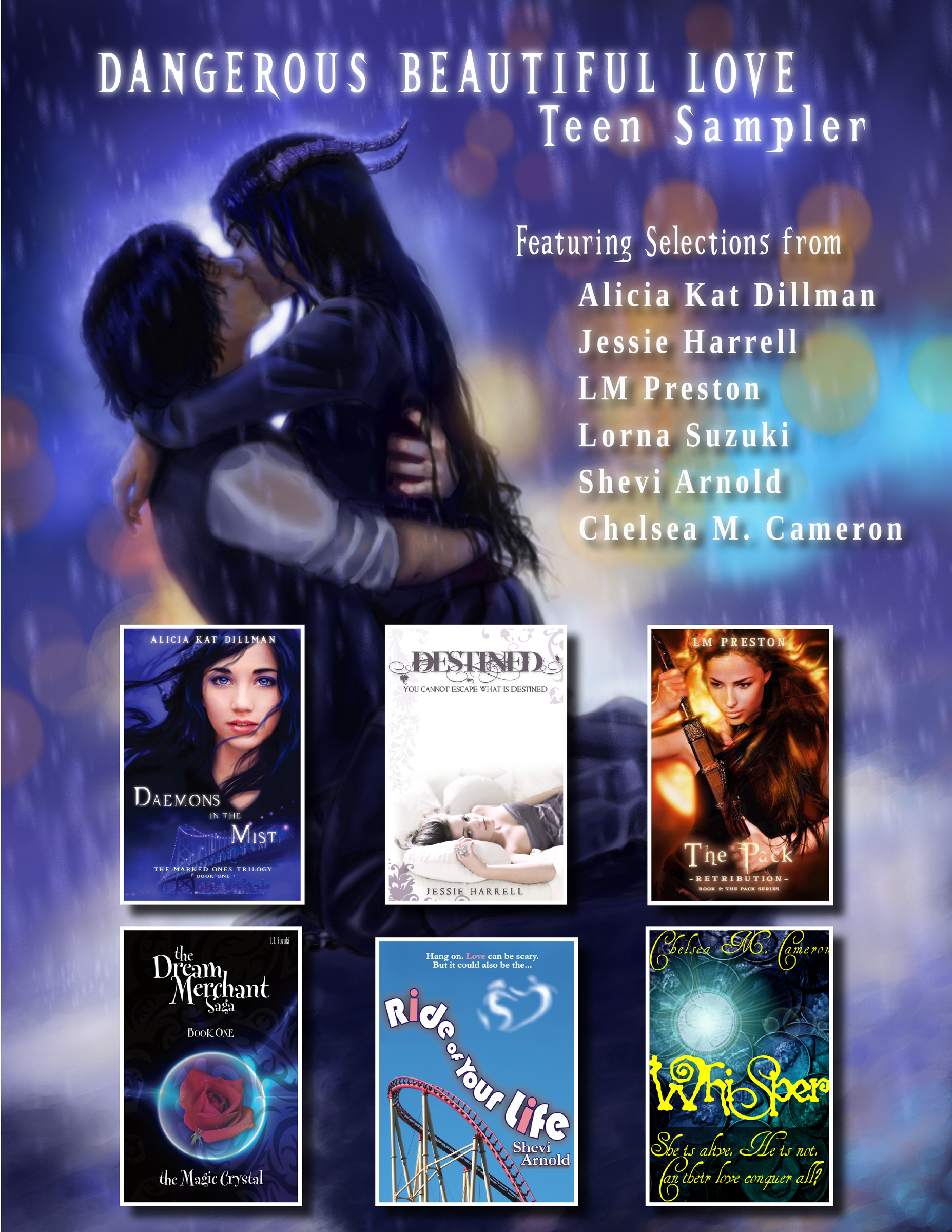
Yes, Ride of Your Life is a part of an exciting new teen fiction sampler put together by the amazing, super-creative Alicia Kat Dillman: Beautiful Dangerous Love.   


Cover of Dangerous Beautiful Love Teen Fiction Sampler


Here's the blurb:


"Do you crave the dangerously beautiful worlds of paranormal suspense, ghostly romances, and otherworldly adventures? The you’ll be swept up in this sampling of six fantastic indie reads including Daemons in the Mist by Alicia Kat Dillman, Destined by Jessie Harrell, The Pack -Retribution- LM Preston, The Magic Crystal by Lorna Suzuki, Ride of Your Life by Shevi Arnold, Whisper by Chelsea M. Cameron."


So what are you waiting for? Start the summer off right by downloading this wonderful mix of teen fantasy, science fiction, paranormal and romance from Smashwords today.  

Ride of Your Life blog tour starts today!

I'm so excited: I'm doing a Bewitching Book Tour with Roxanne Rhoads for Ride of Your Life, and it starts today!


 I hope you'll follow along. This is my second Bewitching Blog Tour, so you can tell I was happy with the first.

Here's the schedule:


July 2 Guest blog
The Creatively Green Write at Home Mom

July 2 Interview
Mary’s Garden 

July 3 review and guest blog
For The Love Of Film And Novels

July 3 Promo
Cover2CoverBlog

July 3 Review and Guest blog
My Guilty Obsession

July 3 Promo
Read 2 Review 

July 4 Promo and review
Waiting on Sunday to Drown

July 5 Promo
Sapphyria's Book Reviews  

July 5 Interview
Books, Books The Magical Fruit

July 6 Interview
Simply Infatuated

July 7 Promo
A Dream Within A Dream

July 8 Guest blog
A Bibliophile's Thoughts on Books

Thanks, Roxanne!


Sunday, June 17, 2012

The Fine Art of Talking to People Who Aren’t There: Drawing Fictional Characters to Life

 I’m delighted to have a wonderful, multi-talented writer as a guest on my blog today, Jeff Davis. Jeff is the author of a new YA fantasy novel, The Seeds.  

I was surprised to discover that, like me, Jeff likes to draw his characters and put them somewhere he can see them when he writes.

For at least 20 years, I’ve had a drawing of Toren taped under the hutch that goes over my desk. The look on her face tells me that she has a story that needs to be told. More recently I’ve had a drawing of Gilbert Garfinkle taped there too. Unlike Toren, the look on his face says, “Oh, no. What are you going to do to me this time?” Sorry, Gilbert, but I have to follow what I call Murphy’s Law for fiction writers: namely, if anything can go wrong for your main character, it should.

Jeff shared with me his thoughts about drawing characters and how this helps in the writing process. Even if you can’t draw, just having a visual representation of your character—perhaps an illustration or a photo you found online—can help you in the same way. I know some writers who collect photos on Pinterest that they use for inspiration.

So what exactly can a drawing of your character do for you?

Here’s Jeff with the answer to that question:

__________


There’s a demon on my screen giving me attitude.

Matra from The Seeds by Jeff Davis


As a kid, I was always drawing. Usually heroes and dragons. Facing them, riding them, conjuring them, my characters were always captured within an action. Something was going on. I would sit and stare at them, waiting to find out how their stories played out in my mind’s eye. The stories were always so much more intriguing than my meager talents could portray. It was as if each drawing was seen through a window into whatever world I was dreaming up.

Fast forward to the present.

 Writing blog posts, web copy and promotional materials doesn’t leave much room for fantastic characters or muscle-bound heroes, even though that kind of writing does weave a narrative that’s suppose to whisk you off to a more utopian world. But fantasy fiction? Ah! 

That’s the thing.

When I started writing my first fantasy novel, “The Seeds”, it was written in my head far longer than it has existed in print. I would watch the characters move through scenarios in my mind’s eye, just like when I was a kid.  But, where a budding artist can draw a sword in a hand if the situation calls for it, a writer must make having that sword consistent, it must make sense.

 As an exercise in continuity, I decided to create a more complex set of designs for my first major effort. Each of the main characters was created in full color that I could pull up when necessary. Does he carry a sword? I might want to mention that fact somewhere before he whips it out. Physical descriptions? To avoid the characters from becoming perfect in every way, some boundaries are needed.

But, the most surprising and most frequent use of these visual references came when writing dialogue.

Witty banter is fun to write, and usually rolls right across my keyboard. For Varia and Dartura of “The Seeds”, being twins makes their conversations appear pointed and clipped. They know what the other is going to say almost before it's said, so only what is needed is expressed. It’s almost like the lossy compression of video for the web; only the pixels that change from the last keyframe are rendered. (If that makes sense to you, Yay! You’re a geek like me!)

But, it was the shadowy antagonist that vexed me.

How many times can one rely on writing “Bah!” to express contempt? I had to really convey a personality that I didn’t have in me--that of a conniving trickster old enough to be bored with her world, yet sinister enough to care little for the damage she does. So, I created Matra in graphic form.

Her eyes would stare malevolently at me as I posed questions to her. I would form dialogue, out loud, and actually ask if that was what she would say in that scenario. She didn’t really answer. (Thankfully, or I might be writing this from a padded cell.) But the disdain in her expression was enough for me to interpret when something worked (I hope), or when it didn’t.

I usually write whenever I get the chance, but most frequently at night, when the house is quiet. Often, my wife would open the door to my office, only to quietly close it again as I sat arguing with Matra. (“But, you hate this guy! Why would you be cordial?”) More than once my wife searched my eyes for some physical sign of the madness that was surely creeping over me. When I announced that “The Seeds” was complete, I was unsure which of us was more relieved.

Still, not only sketching but fully realizing my characters is a practice that I will continue to use as my writing improves. The illustrations take on a new life when complete, and for me at least, really form the basis of the inner workings of a character. The downside for the reader may be that they interpret the character differently, but that’s okay. I would like nothing more than for a reader to tell me, “I saw this character like this…”

If you are reading my work enough to form such opinions, it can only help me become a better writer.


Jeff Davis

____


Author bio:

Jeff Davis has worked with some of the finest high technology teams in the business and has delivered to some of the world's most recognizable companies the high quality graphics, multimedia and print materials they demand, all over the world. He majored in art and design, and he continues to regard himself as a student of the history and reinvention of popular culture. As an author, Jeff hopes to bring his unique ideas to life in this medium. A visitor to his studio office will be treated to the sounds of Led Zeppelin, Sheryl Crow, Kate Bush and traditional Celtic music. Jeff resides an hour north of Manhattan, N.Y. with his wife and two children. www.jdsavage.com/theseeds.htm


THE SEEDS 


This is not your grandmother's fairy tale. A fantasy novel that turns the genre on its head, "The Seeds" follows Trooper Angus Mayweather as he is thrust into the conflict faced by twin sisters Dartura & Varia, Generals of the Tarol Nation. As the sisters uncover a new threat from an old enemy, Angus must do what he can to help as the Tarol Nation faces all-out war.


Click here to check out drawings of Characters from“The Seeds”.
Order "The Seeds" from Smashwords
Find Jeff Davis on Google+Facebookor Twitter @JDSavageTV


Do you find drawing from other mediums helps you with writing?  If so, what medium, and how does it help? Do you have a picture of your main character or a place in your story? Does listening to a certain kind of music put you in the right mood? If you haven't thought of using pictures this way before, how do you think they might help  you? What would you ask your main character, and how do you think your main character would respond? 

Please leave your answers in the comments below. Thanks!

Sunday, June 10, 2012

The Challenges of Writing with Dyslexia

I asked author Alicia Kat Dillman to tell me how she overcame dyslexia to write her debut novel, Daemons in the Mist

This is her answer:

“It is my great strength that gets me where I want to go, but it is my flaws, my weaknesses, that made me who I am.”

Sometimes I am so determined in my need to succeed that I forget just how much I have accomplished and just how far I have come.

I don’t like to dwell on things I can’t change or things that I have no control over. Instead, I just keeping moving forward toward the goals I set for myself.

I have dyslexia; in fact I have all three forms.

When I write, sometimes I move letters or words around out of order. And half the time when I read it back, I'll miss the error because my brain is auto-correcting it for me. This is made even worse, if I’m trying to write while the TV is on or someone is trying to talk to me. I will literally start transcribing the audio into the sentences inter-spaced with what I was trying to write. Sometimes words just end up there that are out of the blue and completely unrelated to anything I was thinking.

Because I know this happens, I work around it.

It’s all about focusing on what you need to do instead of focusing on what prevents you from doing it.

I listen to music that won’t distract me and try to write mostly when everyone is asleep, which means about 90% of my writing is done between 11pm-4am. For example, I’m writing this at 2am.

Dyslexia isn’t something that goes away or something you grow out of. It’s something you have to deal with every day, something that’s just a part of what makes you, you.

The point is not to let it run your life.

Sure, nearly every time I write “me” it comes out “my,” instead or vice versa. And I will forever type “chnage” instead of “change,” even though I know how it’s spelled. And I can read a sentence a dozen times and still not see the mistakes, because my brain corrects it for me.

I used to feel embarrassed about this, but you know what? Dyslexia is a disability and those are nothing to be ashamed of.

* * *

About Alicia Kat Dillman

Indie author & illustrator Alicia Kat Dillman is a lifelong resident of the San Francisco Bay Area. Kat illustrates and designs book covers & computer game art by day and writes teen fiction by night. The owner of two very crazy studio cats and nine overfull bookcases, Kat can usually be found performing, watching anime, or hanging out in twitter chats when not playing in the imaginary worlds within her head. 

Daemons in the Mist

Seventeen year old Patrick Connolly has been hopelessly infatuated with Nualla for years but he is all but invisible to her. Until, that is, he rescues her from a confrontation with her ex. Little does Patrick know he’s just set off a dangerous chain reaction that will thrust him into a world of life-altering secrets and things that shouldn’t exist, because the fog and mist of San Francisco are concealing more than just buildings.

Thursday, June 07, 2012

Write for Children? Here's What You Can Do for School Librarians--and What School Librarians Can Do for You

School librarians don't just help kids find great books. They help  children's book authors find readers too.


Last year at the New Jersey SCBWI (Society of Children’s Book Writers & Illustrators) annual conference, I attended a class called “Minding Your Own Business.” The class was on the one thing all of us who write for children want to know: how to make money as a children’s book author.

The instructor, Sudipta Bardhan-Quallen, explained that the real money isn’t made by selling children’s books, even if you’re lucky enough to get a couple of picture books traditionally published every year. No, the real money is to be made by doing other things, particularly school visits.

Sudipta--who has written numerous picture books, including Pirate Princess and Chicks Run Wild--informed us that she went to two conferences for educators every year, one in New Jersey, the other in California. Getting just two school visits was enough to pay for her entire trip to the Golden State.

After hearing her speak, I put out a new school and library edition of Dan Quixote: Boy of Nuevo Jersey, with discussion questions in the back. Because bullying is such an important topic in schools today, I focused my questions on bullying, peer pressure, friendship and individualism. 

Dan Quixote: Boy of Nuevo Jersey uses humor to show that friendship and respecting our differences can help kids overcome bullying and peer pressure. The bullying isn't sugarcoated, but it also isn't exaggerated. I wanted to show all kinds of bullying, but I also wanted to focus on the kinds of bullying most kids encounter, so that they would be able to relate to the main characters, Dan and Sandy.

The school and library edition of Dan Quixote: Boy of Nuevo Jersey has questions in the back to help teachers and librarians start a discussion with students about what they can do to prevent bullying.


Of course, success like Sudipta’s doesn’t happen overnight. She worked her way up to get into the position she’s in now, while most writers have to start at the bottom.

So where exactly do you start?

Sudipta told us that she charges differently depending on the school and its situation. It’s best to start with a few free visits to work out what you’re doing and what the best way to do it is.

 The first thing that will pop into most writers’ heads is that they should contact teachers they know, particularly the teachers who have taught their own kids. That’s not a bad idea. But there something even better that you can do: contact your local school’s librarian or library media specialist.

I met school librarian Valerie Dewhurst online, and she was eager to answer my question. As a school librarian, she wants to help children’s book writers promote their books. Valerie works in a school in Blackburn in the UK, but I think most of her answers apply to schools in the United States and other countries as well.

Here are my questions and Valerie's answers:

Q. How does a writer find out who the school librarian is, and what's the best way for the writer to contact the librarian? 

A. Writers can email or write to schools, asking for their introduction to be passed on--my personal view on this is to send to the librarian, because sometimes mail does not get passed on. A good way is to find their local SLA (the School Library Association in the UK) branch and get in touch with the secretary. She can inform all members of your work or new book. She can even ask you in to one of their events--getting you a big intro with members. I do this. 

Q. What's the minimum the writer can send? What are the best things a writer can send to make it as easy as possible for the librarian to promote the writer's work? 

A. There is no minimum--I would welcome one book or even a box of books. But again, it's down to each librarian's personal view on this. Finding and asking the branch secretary of groups is always best. 

Q. Should a writer send materials just once, yearly, or more often? What is the best time of year to submit material?

A. Termly, I think--my personal view. We can never get enough material in
. 


Q. Should a writer send a lesson plan if he/she wants to get an author visit?

A. Oh yes, good idea—I would welcome this. I have just had an author in, and he emailed me his lesson plan after the event. We are using it now in library lessons as a follow up.

Q. Does a writer need a website? 

A. No, but it's a good idea these days to have one. 

Q. Does a writer need recommendations from other schools? 

A. Not always. If you’re good, anyway, you'll soon get recommended. I welcome new authors too, everyone deserves that chance to get out and get their work noticed. 

Q. Should the book have discussion questions in the back? 

A. I think this is a really good idea. I wonder if other authors have thought of this. 

Q. If a writer used to be a teacher or has a teacher's certificate, is that something that should be mentioned? 

A. Yes, of course. Why not? Kids love to sit and listen to authors talk and love to know about their past. They are always fascinated when the author says "I used to be a librarian." This goes down very well. 

Q. Does the book need to be on particular topics that fit the curriculum? 

A. No, all good books are welcomed. 

Q. What can writers do to make it as easy as possible for school librarians to promote our books as fully as possible? 

A. Send them their new books or even sample copies/reviews. Get their publisher to send out posters and bookmarks. Librarians are busy each day and don't always have time to make that contact. There are so many new books being published that it's hard to keep up. Hence I do lots of work from home in my own time.

Thanks, Valerie, for answering my questions. There's a lot that children's book writers and school librarians can do to help each other. Thanks for showing me--and my readers--the first steps. 

If you found this helpful or if you have any questions or suggestions you would like to make on this topic, I hope you'll leave a comment below.

Thanks!

Shevi

Wednesday, June 06, 2012

Strands of Thought - Children's Author, Kai Strand: Three Times A Charm with Shevi Arnold

Kai Strand interviewed me about several things, including my reasons for choosing to become an indie author.

Strands of Thought - Children's Author, Kai Strand: Three Times A Charm with Shevi Arnold: Three Times a Charm is a weekly feature that spotlights authors, illustrators, bloggers, agents, editors or promoters from the publishing ...

Monday, June 04, 2012

How to Find a Great Book Cover Designer, and the 7 Rules You Need to Know to Work Together (without Driving Anyone Crazy)

Chances are you’re going to want to publish more than one book—and if you’ve put all that effort into finding a good designer the first time, you’ll want to have a good relationship with that designer so that he or she will want to work with you again. Part of this means knowing upfront how much everything will cost, what is and isn't included in the price, when the designer expects to be paid, and how long it will take the designer to finish the work.  


The first step to finding a great cover designer is to get recommendations, and the best way to do that is to hang out in places where other indie authors hang out. Most indie authors are proud to show off their covers—after all, it’s a great way to publicize your books—and are more than happy to tell you who designed them.

One of my favorite indie author hangouts is the ebook experiment group, which I started on Facebook. At the bottom of this post you’ll find links to the websites of different cover designers who have been recommended by indie authors I’ve met there and elsewhere on Facebook.

Twitter chats, like #IndieChat and #MBPA, are another good way to connect with indie authors and to discover book cover designers you might want to work with.

Once you get a recommendation, check out the designer’s website. Most cover designers today have a website, which should include a portfolio of previously published work. You need to see if the designer is really as good as the writer who recommended the designer says, and you also need to see if the designer’s work fits your particular book. Doctor Seuss, after all, might have designed great covers, but that doesn’t mean he would have been the right person to design the cover of a vampire novel, not unless the title of it is One Fang, Two Fangs, Red Fang, Blue Fang.

So what should you look for when you check out a recommended designer’s portfolio?

Read my two previous posts on cover design ("What You Need to Know About Cover Design Before You Indie Publish Your Noveland "Indie Publishers, What You Need to Know About Book Covers") to get an idea of what makes a great book cover great. In short, you should look for clarity, the right mood, something that fits in with the current bestsellers in your genre, a good hook, simplicity (as in no overwhelmingly distracting colors or other elements), and something that makes the book stand out among competing titles. Some of those requirements—particularly “standing out”—cost more, so you might want to stick with something that’s just professional and standard for the genre until you can afford something better.

Beyond what you should be looking for, you should also learn to recognize the things you need to avoid. The guest blog post I wrote for Indies Unlimited (Cover Basics, Part II) might help you there. It’s an uncharacteristically snarky, but very funny, post on the things I think but don’t say when I see badly designed covers. Hopefully it will give you a laugh or two, as well as an idea of what not to do.  

Okay, so let’s say you’ve gotten some recommendations, checked out several websites, and found a designer whose work you like. The fonts and images are clear and can’t be misconstrued. (I saw one with what appeared to be a phallic symbol on the cover, which later turned out to be a very strange, stylized Red Riding Hood. Unless you’re writing erotic fiction, this is not a good thing.) The mood (dark, humorous, playful, sexy, etc.) fits the mood of your book. The designer has experience designing books in your genre. The covers you found on the designer’s website had a good hook, one that made you want to open the book and start reading. The covers are simple, in that everything in them tells you something about the story you couldn’t get from the title alone, and nothing is redundant or distractingly overwhelming. It’s contemporary, and not hopelessly outdated. And—if you can afford something special—the cover isn't like one you’ve seen a million times before, one that could fit half the books in the same genre. The price also fits your budget. Great! Now what?

Most designers will indicate on their websites how they want to be contacted, so contact the designer in that way. First find out if the designer is open to working on your project, how long it will take, and how much you can expect to pay and when. Be aware that it might take an in-demand designer several months to finish your project, and allow for that time in your publication schedule. Also be aware that the many designers expect to get paid partially, or even fully, upfront. Some charge for edits. Some don’t. It’s best to have everything clear in writing from the start so that there are no misunderstandings.

Before I tell you how to work with a cover designer without driving yourself—or the cover designer—crazy, let me explain why that’s something you really want to do.  

I’m a writer, but I’m also an illustrator. As an illustrator, I have worked with so many difficult clients that it has put me off working for individuals altogether. I love working with magazines and newspapers, but you probably couldn’t convince me to design your book cover. I’ve been burned too many times.

You don’t want to do that, because chances are you’re going to want to publish more than one book—and if you’ve put all that effort into finding a good designer the first time, you’ll want to have a good relationship with that designer so that he or she will want to work with you again. Even if you decide to work with another designer, that second designer might wonder why you switched designers, contact the first designer, and discover you’re not an easy person to work with. You don’t want to be that kind of client. You want to be the kind of client a designer loves working with, so that your designer will not only want to work with you again but will give you good recommendations for other designers if for some reason that designer can’t help you the second time around.  

That takes care of the “why” regarding not driving the designer crazy. Now let’s look at the “how.”

7 Rules for Working with 
a Book Cover Designer

1. Get everything in writing. If you’re getting a custom-made cover, get everything in writing so you know exactly what you’re paying for, how much it will cost, when you have to pay, and when you can expect to get your finished artwork. Most designers charge at least partially upfront. Some include edits in the price, and some charge extra for them. You’ll need some of this information in writing if you choose to buy a premade cover, but there’s less of a hassle involved when you can’t make changes, like you can with a custom-made cover.

2. Be clear with your instructions from the start. I once knew a newspaper manager who could babble on for an hour without anyone understanding what it was he wanted. No one can give you what you want if you can’t say what it is you want. Be clear. Let the designer know a little bit about your book, like its title, genre, intended audience, mood, and basic plot. Do not drive the designer crazy with too many details.

3. Don’t expect Bloomingdale’s at Wal-Mart prices. While it’s important to have a clear vision, it has to fit the designer’s abilities and your budget. You might want a cover that looks exactly like the cover of the latest bestseller, but some of those are painted by illustrators who work a month or more on that one illustration and charge thousands of dollars. Others require hiring a studio, a photographer, a costume designer, models, and more. Like the Rolling Stones song goes, “You can’t always get what you want…”  Adjust your vision to fit the designer you’ve chosen. Don’t try to change the designer to fit the cover you have in your head. That never works out.

4. Ask questions. One of the best things you can do is ask the designer for input. Maybe the designer has great ideas that never would have occurred to you. Or maybe the designer has made certain design choices you don’t understand. Don’t pretend to know things you don’t, and don’t be embarrassed to ask.

5. Respect the designer. Realize the designer is a professional and trust him or her to make the right choices for your book. If the designer isn’t a professional, you shouldn’t hire him or her.

6. Be professional. Be courteous, pay on time, and value the designer’s time, work, and talent. For example, some designers don’t charge for edits, but that doesn’t mean you should push it. There’s no justification for more than one edit, two tops.  It’s possible the designer might come up with a terrific cover concept that doesn’t exactly fit what you have in your book. Maybe the cover has an extreme close-up of a brown eye, and you’ve described your character as having blue eyes. Just how important is the character’s eye color? Does the entire story revolve around it? If so, you should have mentioned it in your brief description of the story. If it isn’t, consider that it’s easier to search your manuscript for blue eyes and replace them with brown eyes than it is for the designer to go back to the drawing board to make those brown eyes blue. You can ask the designer how much trouble it would be to make that change, but only if you’re paying for a custom cover and this is your first edit. I don’t think anything drives me crazier than a client who keeps asking for changes after changes, mostly because that client doesn’t really know what he or she wants or how to communicate it.

7. Give credit where credit is due. Ask the designer how he or she would like to be credited in your book, and make sure you let other indie publishers know what a great job your designer did.


The two most important words to remember are clarity and respect. Ask questions so you have a clear idea of what you can expect, and communicate those expectations clearly. You are a writer, after all, and the Internet is a written medium. There’s no reason why a writer should have a difficult time communicating clearly online. And try to respect that the designer is a professional, one who has studied and worked hard to get to where he or she is in the profession. You wouldn’t tell your doctor what you think it best for your body. You would tell your doctor what’s wrong and ask for his professional opinion. Tell the designer about your book, and ask that designer for his or her professional opinion. Some of the worst designed covers I have ever seen were created by designers who were trying to follow the writer’s detailed instructions. The writer was probably happy with the finished result, but probably not as happy with his or her sales. Treat the designer like a professional, and the designer will see that you too are a professional.

And finally, be flexible. Designers aren’t mind readers. They can’t give you exactly the cover concept you have in your head. But if you’re flexible and clear about what you want, you might get something even better.


* * *

And now, here’s a list of cover designers other writers I know have been happy with. Some charge less, and some more. I’ve only listed the more expensive designers I think are worth the extra money. This is by no means a complete list, but it is a good place to start. If there’s another cover designer you’d recommend, I hope you’ll tell us about him or her and leave a link in the comments below.  

  • Dara England has decent premade ebook covers starting as low as $18. These are particularly suited to romance and historical fiction, but you’ll find some YA and paranormal covers in there too. She offers both premade and made to order e-book covers, and her prices are quite affordable: http://mycoverart.wordpress.com/clearance/


  • I was really impressed by a friend's book cover, and this is the place that did it: http://probookcovers.com/ Right now covers are just $99. These are first-rate covers at a fraction of the cost.


  • Carl Graves (cover designer, reasonable rates) website: http://extendedimagery.blogspot.com/ Client list includes Alexander Sokoloff, Barry Eisler, Erik Lynd, J.A. Konrath, Jack Kilborn, James Swain, L.A. Banks, Lee Goldberg, and Tobias Buckell.


Of course, if you do have the skills and experience to design your own book cover or for some reason you still don’t want to hire a professional, here are some good places to look for images that could look good on your cover and don’t cost a lot:

Friday, June 01, 2012

Looking for a great summer read? How about a bittersweet, teen romantic ghost story?

I'm excited to announce that my latest YA novel, Ride of Your Life, is now available on Kindle and Nook and from the iBookstore! This is the story of Tracy Miller, a teenage girl who dies in a theme-park fire and meets the love of her life thirty years after her own death. This bittersweet romantic ghost story was inspired by a true event: the Great Adventure Haunted Castle fire that killed eight teenagers in 1984. I think Ride of Your Life is the most romantic ghost story since the movie Ghost, but I hope you'll download a free sample so you can decide for yourself: http://amzn.com/B0081ICVEQ