Showing posts with label ebook. Show all posts

Friday, February 15, 2013

Why My Love Life Sucks, chapter one

Here's the first chapter of my funny, YA, science-fantasy novel: Why My Love Life Sucks, book one of The Legend of Gilbert the Fixer.  This is the story of Gilbert Garfinkle, a teenage, super, tech geek with a compulsive need to take apart, figure out, and fix things, who encounters the one thing he can't make sense of no matter how hard he tries--a gorgeous, teenage, vampire girl named Amber who wants him to be her platonic BFF literally forever! 


Want to win a free digital copy? Leave a comment below. When I get 50 comments (or more), I'll give away FIVE free digital copies. That's a one in ten chance of being a winner! I'll announce the winners here, so follow and check back.


I’m not dead. Yet.
It’s funny when Monty Python says it; not so funny when it’s true.
According to Amber, I’m not going to die, but I’m not sure I believe her. She’s a pretty convincing liar. I thought she liked me. I thought things were going just fine between the two of us. And then . . . she bit me.
Now I’m stuck here alone, paralyzed and in pain, and the only thing I can do is think. And the only thing I can think is Why me?
A few minutes ago, when she stepped into my room, Amber said, “This is . . . cozy.” She was being polite. My room isn’t cozy. It’s tiny. “You sure do have a lot of stuff.” That was an understatement.
“My Uncle Ian likes to buy me things to make up for the fact that my mother’s a bitch.”
Amber laughed. It was a nice laugh. I felt so relaxed, because she’s so beautiful. They say there’s no point in worrying about the things you can’t control, and I figured I didn’t have a chance in hell with her. Guess I was right, but not in the way I thought.
“You do realize that makes you a son of a bitch, right?”
I laughed nervously. “Can’t deny that.” She was quick. I’ll give her that. “Would you like to play a video game?”
“No, thanks.” She picked up a piece of one of the gaming systems that I’d taken apart, and she tilted her head. She seemed confused.
“I like to see what I can do to improve them,” I explained.
“Not taking them apart might be a good start.”
I considered telling her the modifications I’d made, but I figured that would only bore her.
Her eyes moved to the largest object on my tiny wall. It’s a little hard not to notice. “Wow, that is one big TV.” 
“Did you want to watch something?”
“No.”
I pointed through the open door in the direction of the kitchen.  “Are you still hungry? Would you like a bite?” Looking back, I probably should have phrased that differently. 
She stepped into my room and shut the door behind her. “No windows?”
“No.”
“That’s convenient.”
I thought she meant it was convenient, because we had privacy. It was just the two of us, alone. Now I’m starting to realize she might have meant something else.
She took off the navy-blue jacket from my suit—the jacket I had lent her—and she hung it up on my ratty, old office chair. The bright red of her dress and the pink of her lipstick looked out of place in my mostly black, white and metallic-gray room.
I said, “I sometimes call this place ‘The Dungeon.’”
She said, “Because of all the dragons?”
All the dragons? It’s not like I have only dragons on my walls and ceiling. My tastes are eclectic. I have a ton of science-fiction, comic book, and video-game stuff, too, not to mention the posters of my hero, Albert Einstein. “No, I call it ‘The Dungeon’ because it’s a tiny room in a house as big as a castle, and it has no windows. Plus, it’s in the basement. My mother doesn’t like me to leave the servants’ quarters. Okay, maybe it has something to do with one particular dragon . . .”
Amber laughed again. It felt nice to make her laugh. It’s usually a good sign when I can make someone laugh, a sign they aren’t going to try to hurt me. Usually.
“I don’t want to talk anymore about your mother.” She sat on my bed and patted my vintage Star Wars sheets. “Sit next to me.”
“I don’t know . . .” I rubbed the back of my neck and looked at the closed door to my room. I felt . . . trapped. But I didn’t know why. I wish I had trusted my instincts.
“Don’t worry,” she said with a smile. “I won’t . . .”
Now I know why she didn’t finish that sentence.
But she was smiling at me, and she looked so beautiful and sweet, and I didn’t want to say no to her.
So I sat beside her on my bed. She took off my glasses, leaned in, and started to kiss me. I thought, This is not happening. I’m Gilbert Garfinkle, for God’s sake. Pretty girls don’t sit on my bed and kiss me, except in my dreams. Then another part of my brain said, Shut up, Gilbert, you think too much. So I stopped thinking and kissed her back. Yeah, it’s always a mistake when you stop thinking. I should have realized that before it was too late.
I’d never kissed a girl before, not a romantic kiss, but I’ve been studying it. My mother’s maid, Olivia, leaves her women’s magazines in the kitchen, and they’re full of tips about what girls do and don’t like. Most women apparently don’t like wet, sloppy kisses with probing tongues. Most prefer dry but firm kisses with slightly parted lips. Most guys don’t realize they could learn a lot from women’s magazines. I know I have. I take kissing seriously. I take everything I care about seriously, even things I once thought I could only dream of.
Amber pulled her soft lips away for a moment, tilted her head, scrunched up her eyes, and smiled at me again. “You’re a good kisser.”
“You don’t have to sound so surprised.”
She pulled me by the shirt collar closer and kissed me harder. I started to wonder how long it normally takes a couple to move past kissing on the lips to something else, and it was making me nervous again. Amber continued to kiss me. She moved from my lips to my cheek. Such sweet, little, soft kisses, like feather strokes. Kiss, kiss, kiss . . . I could still smell the pizza on her breath, but her lips tasted of sweet, strawberry lip gloss. She slowly inched her way down from my cheek to my neck. Kiss, kiss, kiss . . . It felt really good, and I was starting to relax, until . . . 
She licked my neck.
I guess that was the first sign something weird was going on, and my brain started screaming, Danger, Will Robinson! Danger!  Is that normal for your brain to quote old movies or TV shows all the time, or is it just me because of my eidetic memory? Guess I’ll never know.
She paused for a second and looked up at me. She smiled a closed-lipped smile.
I said, “Amber, what are you . . . ?”
Then I saw these two sharp things suddenly extend out of her mouth. I tried to pull back, but she held my shoulders firmly in her hands and sank those horrible things into my neck.
I felt an unbearable, burning, stabbing pain that quickly spread from my neck through my entire body, and I was suddenly paralyzed. I’ve never wanted to scream more in my life. My mouth was open, gasping for air, but I couldn’t control it, couldn’t make a sound. I tried to lift my hands to push her away, but they wouldn’t budge from the sheets. I could hear her breathing in my ear, and I heard and felt her gulping my blood. It burned, and even though I was breathing rapidly, I felt like I was suffocating. It probably only took a couple of minutes, but it felt like hours, and it felt like I was dying.
I guess what they say is true: there really are no atheists in a foxhole. I’m not the most religious guy, but I still silently told God I didn’t want to die, and then I silently begged him to make it quick. Neither prayer was answered. 
When Amber was through, she retracted her . . . those two sharp pointy things. She was panting, her chest heaving until she stopped to take in and let out a deep breath. She moaned softly, pushed me onto my back, wiped blood—my blood—from her lips with the back of her hand, and ran her tongue over her teeth to lick them clean. She leaned over me, examined my neck, and once again smiled. “Already starting to heal.”
I tried to pull away again, but I still couldn’t move. She held my chin in her hand and looked into my eyes. The only thing I could do was tremble in pain and fear, gasp for air, and look at her looking at me.
“Now listen carefully,” she said. “You’re not going to die. I only drank two pints. Three tops. You taste very good, by the way, it was so hard not to stop.” Now there’s a comforting thought. “I know you’re in a lot of pain right now.” No kidding? Really? I had no idea until you mentioned it. “But it will pass. You’re going to be stuck like this until sunrise, and when morning comes you’re going to fall asleep. If I know what I’m doing . . .” What did she mean, ‘if’?! “. . . you should be mostly fine tomorrow night. I’m going to wait for you at Bucky Bee’s. Don’t forget.”
She started to leave, but then she turned and picked the jacket up from my office chair. “I hope you don’t mind my borrowing this again. It’s kind of chilly out.” She slipped it on. It still looked a hell of a lot better on her than it did on me. “I had an amazing time tonight.” That makes one of us. She leaned over and kissed my cheek one more time. I couldn’t even flinch. “I know you probably don’t believe this now, but you’ll see: your life is about to get a whole lot better.” Then she switched off the lights, left, and closed the door behind her.      
And I’ve been lying here in total darkness, paralyzed and in unbelievable pain ever since.
Pain, pain, pain. There’s nothing but pain. I can’t close my eyes. I mean, I can, but I’m afraid if I do, I won’t open them again. Ever. The place on my neck where she bit me is throbbing. My mouth is throbbing with pain, too, particularly my gums and the roof of my mouth. What’s that about? My breathing is shallow, and I’m worried I might stop breathing altogether. I don’t know if I’m going to make it through the night.
And then there’s the other thing I’m trying really hard not to think about . . . the possibility that dying might not be the worst thing that happens to me tonight.
I don’t want to fall asleep and never wake up, but I really don’t want to become a . . .
No, as Mister Spock would say, that’s “highly illogical.” I am nothing if not logical. The truth is I don’t really know what’s going to happen. Oh, God, I really, really don’t know, but either way I am so screwed.
Stop thinking about that. I need to concentrate on here and now. I have to keep talking in my head to distract myself from this awful pain.  
Why did Amber do this to me? I’m a nice guy. And I’m not exactly sexy. I’m pretty much the opposite of that. It can’t be because she’s attracted to me. So really, why me?
And it’s not just illogical on a personal level. I love fantasy and science fiction as much as the next geek, but I know the difference between them and reality. For what I think just happened to have happened . . . Well, either the universe has gone insane or I have, and either possibility is unacceptable. The universe has to make sense. I need it to make sense.
Okay, Gilbert, you’re a scientist, sort of, so try thinking like a scientist. When confronted with an unexpected result, a scientist would start his experiment over again to figure out what went wrong. I just need to go back in my mind to the last time the universe made sense on all levels and then slowly work my way forward to my current situation. Like anything that needs fixing, I first need to take it apart and figure it out. I just . . .
Ow, ow, ow! Go away, pain! Focus. When did the universe stop making sense?
Yesterday, right before lunch.
Here I am, in twelfth grade, the final scene in a really bad but necessary prequel to a great movie series. I almost made it too. In a few months I should have been leaving my mother and the hell that is high school behind for MIT, where my real education—and my real life—were going to begin. Jenny Chen was going, too, and maybe . . . I don’t know, but maybe we could have had something. The two of us together would have been unstoppable. My future was going to be amazing, and I know that, because I was going to invent it myself. I was going to invent so many things. I was going to fix the world. That was always the plan.
But yesterday right before lunch, Delilah Jones left her little coven of teenage bitches and backed me into the lockers in the corner of the hall, and that was when the logic of the universe began to unravel. 
“Is it true your father is a bazillionaire, Barftinkle?” she asked.
Her friends giggled in the background. They say sarcasm is the lowest form of wit, but I think it’s insulting puns based on a person’s name. How much intelligence does it take to turn Garfinkle into Barftinkle? Sarcasm, however, is a fine art. I should know: I’m the Leonardo da Vinci of sarcasm.
“That’s Garfinkle,” I said, “and my father is dead. The only things I inherited were his eyes.” That’s my standard joke answer whenever anyone mentions how rich he was.
The truth is I also inherited my father’s mind . . . and now looking back on it, apparently his unfortunate luck with beautiful but dangerous women, and by that I mean Amber. They say a guy usually ends up with a girl who’s like his mother. My mother is a gorgeous, blood-sucking leech, metaphorically speaking; Amber is a gorgeous, blood-sucking . . . something, literally speaking.
I’m smart. You think I would have seen that coming.
Delilah towered over me. I know I’m short, but that girl is a freaking Amazon. “Listen up, Garfinkle, ‘cause this is the way it’s going down.” She likes to talk and act like she’s some tough girl from the hood, even though I know she lives in an apartment building four blocks away from me in Chelsea. “Tomorrow is Saturday night, and you are going to take me out. You’re going to pick me up in a big, fancy car. You’re going to take me to a big, fancy restaurant. You’re going to buy me a big, fancy dinner. And when it’s over, you are going to thank me, because I . . .“ She licked her lips. I think she was trying to be seductive, but it was just plain scary.  “. . . I am going to make a man out of you. Do you understand me?”
Understand her? Hell, no, I didn’t understand her.
I mean, I know how Delilah works. High school might just be a prequel to me, but this is the last showing for her. Next year she’ll be serving up fries at the Golden Arches and wondering how she went from queen bee to queen used-to-be. Everything is about power with her. There are the boys she hooks up with to work her way up the high-school social ladder, horizontally: the jocks, the popular good-looking guys, and the gang leaders. Then there are girls, who fall into two categories: the ones she can manipulate to her advantage, and the ones she can bully or manipulate other girls into bullying. Geeks like me, on the other hand, have no place in her world. We don’t offer anything she wants. In fact, we’re her social Kryptonite. Merely being in our proximity reduces her power.
Of course, it made sense that she had decided to move on to the rich guys after having used up all her other options in the sleep-her-way-to-the-top department. But there are plenty of rich schmucks at our school who flaunt their wealth with expensive haircuts, expensive clothes, and expensive cars, guys who brag about summering in Belize. I’m not one of them. The last time I had a haircut was at least half a year ago, and it only cost me about fifteen bucks. I wear cargoes, hoodies, and t-shirts from ThinkGeek and Woot to school, not over-priced designer clothes. In a logical, sane universe, no girl would want to go out with me, least of all Delilah Jones.
I started to tell her, “I don’t—”
“I said . . .” She narrowed her eyes and growled. “. . . ‘Do you understand me?’” From high school star athletes to lowly tech geek, I thought, my, how the slutty have fallen.
And that’s when Dylan turned to Delilah and said, “He’ll be there.”
I’m sure he never means to, but Dylan has an uncanny knack for getting me into trouble. What are best friends for, right?
Of course, the irony here is that Dylan had very little to do with the jam I’m in now. I have over a dozen scars to remind me of all the totally awesome times I’ve had when Dylan taught me everything from rollerblading to snowboarding. If anyone was going to get me killed, it should have been him. At least that way it would have been fun, and it would have been my choice. Now I know what Dorothy meant when she told the Scarecrow, “I think I’m going to miss you most of all.” If I don’t make it through the night, big dude, I am so going to miss you.
Delilah pulled a piece of paper out of her purse, wrote something on it, and handed it to me. “My address. Be there tomorrow night at seven and dress appropriately.” Dress appropriately for what, I thought, my funeral? Wish I’d known at the time how much closer to reality that would turn out to be. 
She went back to her friends, and they high-fived her. I don’t know what was going on between them. The only thing I did know is that I was so screwed.
“Well, alright,” Dylan said with a grin. “Looks like someone is going to get some action on Saturday night!” He picked up his hand to high-five me, but I ignored it. 
“Are you out of your mind?” I replied. “That’s Delilah Jones.” Dylan raised his eyebrows behind that swoop of dirty-blonde hair that covers a third of his face. “Don’t you remember fourth grade?” He shrugged. I sighed. “She used to knock everyone down in the schoolyard during recess? One time she sat on you and made you eat a bug?”
Dylan laughed. “No, little dude, that was Karen Jones.”
“Karen changed her name to Delilah during our freshman year.”
“Oh.” He paused. Then his eyes opened wide, and his voice deepened. “Oh! Dude, that’s not good.”
“Tell me something I don’t know.”
“Wish I could.” He grinned. I love it when he says that. “Still, you can’t back out now. If you do, she’ll tell everyone in school you’re gay.” 
 “It’s high school,” I reminded him, even though that fact couldn’t have been more painfully obvious. “The Neanderthals here call every guy they don’t understand gay, and as Neanderthals they’re too stupid to understand anyone.”
Dylan should know this. He gets picked on more than anyone because of his shaggy hair and how sweet he is to girls. He gives them flowers and poems, and they treat him like he’s some sort of lanky puppy they have to jump up to pet. Bullies view him as the competition, which of course means he needs to be punished—and punished often.
Lucky for him, he’s got me, though I try to make sure he doesn’t know that I’ve been looking out for him. Lucky for me, I don’t have his problem. My hair is kind of long, but it’s dark and curly, and together with my glasses and bad complexion, I look more like a young mad scientist than an adorable puppy. It’s an image I’ve chosen to cultivate.
“They don’t call you gay,” Dylan said, “not since you kicked Coleman’s ass with your karate moves in ninth grade.” He did a weak imitation of a karate kick and screamed, “Haiah!” It almost knocked his glasses off.
A girl passing by giggled. He pushed his glasses back onto his nose and grinned at her. She grinned back. I don’t know why, but girls seem to find everything he does adorable, at least until he tries to take it to the next level. Then they tell him he’s cute, but they don’t really see him that way. And yet he perseveres. Got to admire that.
“It wasn’t karate,” I pointed out. “It was aikido, which means that technically that schmuck kicked his own ass. I just helped him.”
The memory of what had happened that day made me smile. Coleman had tried to punch me in the face. I twisted to the side and pulled his wrist forward, using his own momentum to propel him over my shoulder and into a wall. It was a basic aikido move, but after Coleman hit the floor, he looked up at me stunned, like I had just teleported him from a world where he was king of our high school to one where he couldn’t even intimidate a short geek like me. For weeks people talked about my Jedi moves and called me Neo. Good times.
Dylan said, “It’s different when girls are saying it, though.” 
“How is it different? It’s not like they’re lining up to date me now.”
“Yeah, but if they think you’re gay, they might want you to be their gay best friend. You know, they’ll want to talk to you about hairstyles, fashion, how all men are jerks . . .”
“Oh.” I hadn’t thought about it that way.
“On the bright side, Gilbert Garfinkle sounds like a great name for a hairdresser.”
I shuddered. “Don’t even joke about that.”
I used one of the lock picks I keep in my sneakers to open my locker. The locker came with a combination lock in the door, but I didn’t like it, so I tricked it out in September. It still looks like all the other lockers, but I put a keyhole where no one would see it. If it were up to me, school lockers would work with magnetic keys, thumbprint scanners, or voice recognition. The world in general would probably make a lot more sense if I were in charge. I’d fix so many things. I was going to fix so many things . . .
I put my books from my last class away and took out my bagged lunch, a corned beef on rye sandwich I’d made that morning.
“Cheer up,” he said. “At least you’re going to get laid.” 
“Riiiight. Because there’s no place in New York City where a guy could get an STD for less money and with fewer complications.”
“You don’t know Delilah has an STD.”
“Apparently you haven’t read the writing on the stall.”
Dylan didn’t laugh, but I did get a smirk out of him. “Have you seen the one really high above the mirror?”
“If it’s really high, how would I have seen it?”
“It says, ‘The only difference between Delilah Jones and a city bus is you have to pay to ride the bus.’”
He laughed, but I didn’t find it that funny. “In case you haven’t noticed, she made it clear that, ride or no ride, I am going to pay big time.”
“Okay, forget about that. At least this might put an end to the rumors about you.”
“Rumors?” I’ve been trying to fly under the radar lately, so I was surprised to hear that anyone was talking about me. “What rumors?” 
“They’ve voted you ‘Most Likely to Lose His Virginity to a Robot.’”
I paused to think it over. “Okay, yeah, I can see that.”
Girls are scary; robots I understand. I can take a robot apart and figure out how it works. But I can’t take a girl apart, and I will never figure one out.
“Go out with her,” Dylan said. “What harm could it do?” What harm could it do? The famous last words of Darwin Award winners everywhere.
I tried to think of a way out of it, and then I realized . . . Delilah had made some very specific demands. A big, fancy car? Where was I going to get a big, fancy car? All I had to do was ask my mother. She’d say no, and that would be the end of it.
Or at least that’s the way it would have ended if the logic of the universe hadn’t continued to unravel.  

∞∞∞∞ 

Can't wait to read the rest? Buy it now on Amazon, BN.com, and wherever e-books are sold for just $2.99 ($14.99 in paperback). 

Monday, July 09, 2012

Read first 50 pages of Ride of Your Life for free!

There's a new BookBuzzr widget on my blog at the top of the column on the right. If you click on it, you can read the first 50 pages of Ride of Your Life for free! Check it out, and if you like what you see, click on a link to buy a copy today.

Monday, July 02, 2012

Download the first chapters of RIDE OF YOUR LIFE for free!

You can now download the first chapters of Ride of Your Life for free!


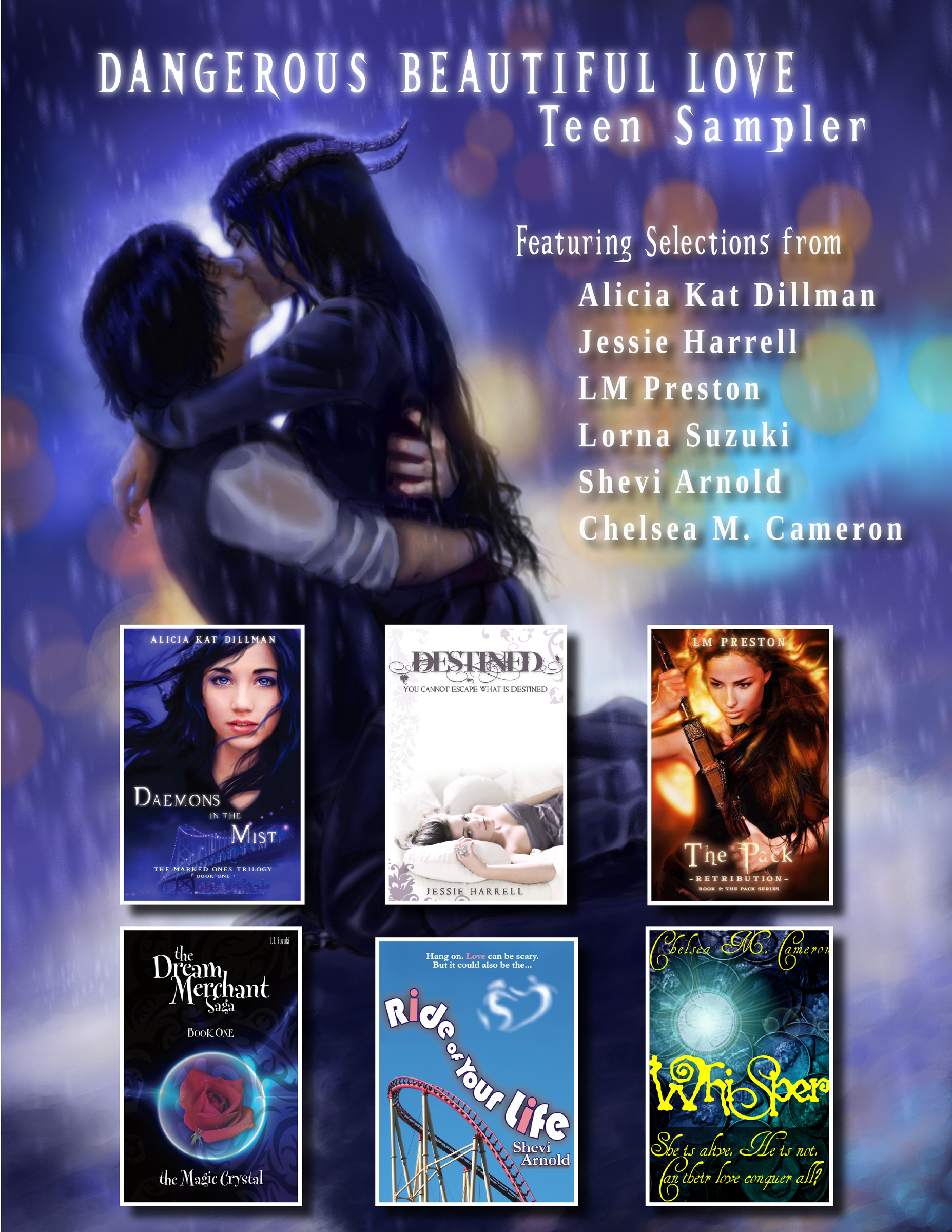
Yes, Ride of Your Life is a part of an exciting new teen fiction sampler put together by the amazing, super-creative Alicia Kat Dillman: Beautiful Dangerous Love.   


Cover of Dangerous Beautiful Love Teen Fiction Sampler


Here's the blurb:


"Do you crave the dangerously beautiful worlds of paranormal suspense, ghostly romances, and otherworldly adventures? The you’ll be swept up in this sampling of six fantastic indie reads including Daemons in the Mist by Alicia Kat Dillman, Destined by Jessie Harrell, The Pack -Retribution- LM Preston, The Magic Crystal by Lorna Suzuki, Ride of Your Life by Shevi Arnold, Whisper by Chelsea M. Cameron."


So what are you waiting for? Start the summer off right by downloading this wonderful mix of teen fantasy, science fiction, paranormal and romance from Smashwords today.  

Friday, June 01, 2012

Looking for a great summer read? How about a bittersweet, teen romantic ghost story?

I'm excited to announce that my latest YA novel, Ride of Your Life, is now available on Kindle and Nook and from the iBookstore! This is the story of Tracy Miller, a teenage girl who dies in a theme-park fire and meets the love of her life thirty years after her own death. This bittersweet romantic ghost story was inspired by a true event: the Great Adventure Haunted Castle fire that killed eight teenagers in 1984. I think Ride of Your Life is the most romantic ghost story since the movie Ghost, but I hope you'll download a free sample so you can decide for yourself: http://amzn.com/B0081ICVEQ

Sunday, September 11, 2011

Want to turn your picture book into a multi-media iBook?

Like many writer-illustrators, I've long been fascinated by picture-book apps, and I've been wondering how I can take advantage of this new technology. David Fox (along with Carisa Kluver) co-hosts a weekly Twitter chat with Brooks Jones on this topic. It's called #storyappchat, and it takes place every Sunday at 9pm EST. David is also the producer of a new picture iBook, entitled Are You My Friend? He agreed to answer my questions on how a picture iBook is made.


David, please tell us a bit about this project. Who wrote it? How did you find an illustrator? The drawings are delightful, by the way. And what about the voice talent? Who is she? She’s really good. Where did you find her?

Wow, that’s a lot of questions you snuck into the first one :-)

Annie Fox, internationally known children’s author and anti-bullying activist, wrote the book. She also happens to be my wife, which is how I lucked into the opportunity to turn it into an iBook. Annie has written books for Free Spirit Publishing, mostly for tweens and teens, including the Middle School Confidential™ series. More about Annie and her work at http://www.AnnieFox.com

Annie and David Fox


We first met Eli Noyes, our illustrator, about 18 years ago. At the time he was a director at Colossal Pictures. We told him about Annie’s Raymond and Sheila book series, and he offered to create a drawing for us, to help Annie show the book around.


Interestingly, this wasn’t Are You My Friend? but a different Raymond and Sheila story (which we can now publish as an iBook at some point in the future). Anyway, in 2003 we reconnected with Eli and asked if he might be interested in doing some drawings for Are You My Friend? Eli, wanting to expand his already very impressive skill set, happened to be taking a class on children’s book creation/illustration, so he saw this as a great opportunity. He helped us lay out the entire book, did sketches for each page, and did some beautiful watercolor illustrations for some of his sketches. But despite our attempts, even with an agent, we weren’t able to find a publisher then.


A year ago, we realized we didn’t have to wait to find a publisher... we had all the skills to publish it ourselves on an iPad! So we reconnected with Eli yet again, and this time he completed all the illustrations in color.


A few pages from Are You My Friend? on the iPad
Illustrations by Eli Noyes

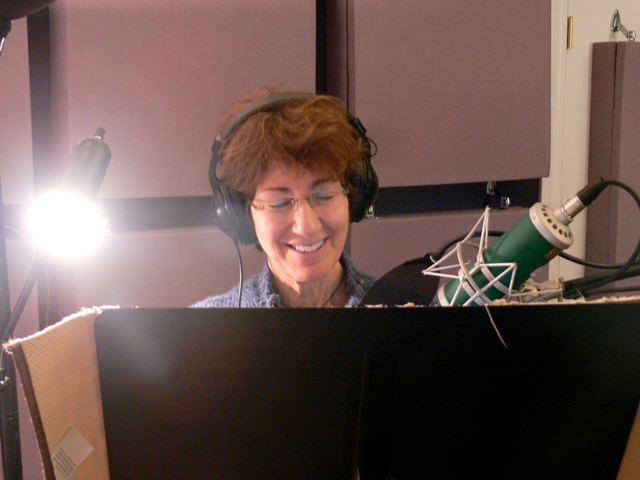
For the narration and character voices, we knew we wanted to go the professional route. I contacted an old friend and LucasArts alum, Julian Kwasneski, and told him about our project. He loved the story and Eli’s art and wanted to make sure we had a great actor to play the parts. We worked with the Stars Agency and got back auditions from 10 voice-over actors. While they were all really good, Melissa Hutchison was perfect. She was able to nail all the voices in the audition. And Julian had already worked with her on other projects, so they had an established working relationship. Jory Prum was our sound engineer (another LucasArts alum), and Julian our sound director. Julian also helped with the sound effects we added to the iBook’s soundtrack.


Voice-over actor Melissa Hutchison, really getting into character

Why did you and your wife decide to turn this story into an iBook?

Our original plan was to turn it into an app. Having gone through that process once already, I knew how long it would probably take (about 2-3 months). And then I learned about Apple’s update to their iBooks bookshelf app that enabled background audio and synchronized word highlighting with the narration. That seemed like a perfect vehicle for our story, since we already had the art and narration. With the help of a beta version of RedJumper.net’s Book Creator app, I was able to lay out the book and text in iBooks format. Then I added the sound coding by hand.

What special features does Are You My Friend? have?

In addition to the read-it-to-me narration and soundtrack I mentioned above, and of course, the whimsical illustrations and fantastic narration, we’re using high resolution images so you can pinch-zoom in to see more details. There’s also a unique friendship skills/social and emotional learning guide for parents and teachers at the back of the iBook.

How did you add those features? Was it a lot of work? Did you have to do any coding? Do you think anyone could do it?

Adding the narration with synchronized word highlighting was a lot of work. I used the open source Audacity software on my Mac and imported the narration for each page spread. Then I selected each word and bookmarked it, naming the bookmark to match the spoken word. Audacity then let me export these bookmarks into a text file that contained each word and the start and end point of the sound (in seconds). I converted that data into the format that the iBook required, using an Excel spreadsheet to help.
I then exported from Excel into the pages of the iBook. Yes, there’s “coding”, very similar to the HTML coding of a website. But no programming. There’s no logic code (if-then-else statements), just XHTML statements.

I don’t know if anyone could do it. If you’ve ever built a website (even a small one) and did some hand-tweaking of the underlying HTML code, then yes, you could do this. If that sounds daunting, then hold on a bit... I’m sure that some tools will appear that will make this all much easier, without ever having to touch the code.

Tell me about Book Creator. Where do you get it? What do you need to run it? What does it do? How much does it cost? Is it hard to get the words to light up when they’re read? Did you encounter any problems along the way? How did you solve them?

I was fortunate to be accepted as a beta test for Book Creator. It’s made by RedJumper.net, and was just approved by Apple to go live. You can buy it starting September 15th in the iTunes App Store for $6.99. That’s an amazing deal!
Book Creator does not handle any of the sound features I added to our iBook. It does a great job of letting you position your art assets (jpeg or png files) on the pages, and add/position/resize the text. You can see a video demo of it on their website. http://www.redjumper.net/bookcreator/

How long did each step in the process take? What were the costs involved?

After having all the art assets and text, it took me a few days to resize the art to the best size for an iBook, drop it in, and add the text. But it took me a few weeks to do all the narration and word sync code, music, sound effects, and ambient sound for each page. Part of that was a learning curve for me. I could probably do it all in about 2 weeks now that I know what I’m doing.

Left to right: Sound director Julian Kwasneski, author Annie Fox, sound engineer Jory Prum
Using iPads to hold the database of each sentence the actor was to say

Costs for this last stage were minimal... really just my time, plus about $50 for the royalty free music we used, and some more for sound effects from Julian.
The biggest cost by far was the actual recording session. Of course, this depends on how much text there is to record (we recorded a lot of extra text for a future interactive app version of our book), how much the talent charges, the sound studio, sound effects, etc. Figure a few thousand dollars to do it all at a professional level. Maybe less if you want to cut some corners.

Author Annie Fox adding vocalizations for the last scene in the book


How do you get a picture-book iBook into the iBookstore?

First step is to set up an iBook publisher account. You do it through iTunes Connect:

If you’re already an app developer, you need to register under a different account. There is no fee for this, but you do need a US bank account. You also need an ISBN number for your book. It should be a new one, not one already used for a paper version of your book (if it’s been published already). But it could be the same as an ebook version of your book.

If you don’t have one, you can buy them through Bowker at https://www.myidentifiers.com where the price is $150 for 1, $250 for 10, or $1000 for 100. But there’s a non-profit that bought a block of 1000 ISBN numbers and is reselling them for $5 each. http://www.epubbud.com/isbn.php - only downside is that in the Bowker database, epubbud is listed as the publisher. But you still have control over the meta data you send to Apple, so you can control who the publisher is there.

Once you’re accepted into Apple’s iBook developer program, you can download sample iBook files and their PDF guides on how to do it, like their assets guide. You also download a Mac program called iTunes Producer that walks you through the process of adding all the meta data (title, description, author and illustrator names, pricing, cover) and attaching your epub file. It then checks the syntax to make sure there are no errors, and uploads it all to Apple. It’s then live in the iTunes iBookstore within an hour or two!

Any advice to writers or writer-illustrators who are considering turning their stories into iBooks or apps?
Go for it! If you have any technical skills at all, work with Photoshop, and have an iPad, you can at least do a silent version using the Book Creator app.

If you have HTML skills, and want to invest in recording the narration, then you could go the next step and turn it into an enhanced iBook with sound. Or wait a bit until the tools catch up and it won’t be as difficult to add the sound.

Going the book app route only makes sense if you plan to add some animation and interactivity. Doing a book app is definitely more challenging, though there are several tools that make this easier as well. We list several in the right margin of the http://storyappchat.wordpress.com/ site.

There’s a huge range here, with some taking a percentage of the royalties and publishing the final app themselves, and others, like Kwiksher.com’s tool, where you also need to license the Corona SDK, have an Apple App developer’s license, and submit the final app yourself (but they don’t take a cut of the royalties).


So, unless you plan to do animation and really need a lot of interactivity to make your story work, I’d say stick with the iBook format. Much easier to create. You could always do an app as well.

Are you considering hiring out your services to other writers or writer-illustrators?

Yes, we have considered that. We do have more of our own content to produce, but we’re happy to consider taking on other projects, if they match the types of books we want to work on. The unifying feature of all our iBooks and apps are that they have to be entertaining as well as empowering for kids.


I’m also a consultant for app and iBook developers, and am happy to hand-hold someone through the process. I’ve always enjoyed helping people learn a new tech skill after I’ve successfully completed a project myself.

Anything else you would like to tell us about Are You My Friend?

I’ll let Annie answer that one:

I've been answering email from kids around the world since 1997. For children of any age, nothing matters more than having friends they can trust. Parents do a great job of teaching toddlers to "be nice." But as friendship conflicts become more complex, kids are left to figure things out on their own. The results don't often lead to constructive learning. By telling an engaging story about kids being kids, complete with a set of positive messages, readers can learn what it takes to have a friend and to be a real friend to yourself and others.

Thanks, David and Annie! And here's wishing you both the best of luck with the book.

Thank you for the chance to share this all with you and your readers! If anyone wants to contact us, you can do so through our website, http://www.ElectricEggplant.com

And for those who would like to learn more  from David and others about making picture iBooks or apps, check out #storyappchat on Twitter on Sundays at 9pm Eastern time.
Photos provided by David Fox

Tuesday, August 30, 2011

Some fun stuff coming up this week:

  • The truth behind fantasy fiction. Harry Potter, Twilight, The Lord of the Rings--can any of it be real?

  • An interview with the very funny Sarah Billington, author of Life Was Cool Until You Got Popular. There will be a chance to win a copy of this great eBook for older middle-grade or younger YA readers, and you don't want to miss it.

  • A discussion about picture-book apps and how to make them with David Fox, who has done just that. 

Monday, August 15, 2011

How I learned to stop worrying and love the e-book


I know my friends mean well when they tell me that an agent and a book deal are right around the corner. Every writer wants to be traditionally published, right? Every writer wants to see his or her book with a Random House or Simon & Schuster logo on the spine, right? And that’s what I’ve been working toward these last nine years. That’s the reason I’ve written seven middle-grade and YA novels, the reason I attended all those writers conferences, the reason I’ve entered contests, and the reason I’ve submitted my manuscripts to agents. I’m getting so close. Why would I want to give up all I’ve worked so hard for when I’m so close to getting it?  


The assumption is that traditional publishing is the real deal and self-publishing is for writers who couldn’t make it any other way. But I’m not a big fan of assumptions. I like to examine things more closely and from different perspectives. So let’s take a closer look at how traditional publishing stacks up against indie publishing today.

Traditional Publishing
Indie E-Publishing
How long does it take?
According to a survey conducted by SF writer Jim C. Hines, it takes the average writer ten years to get a first novel published. http://www.jimchines.com/2010/03/survey-results/
This works according to Parkinson’s Law, which states that work expands to fill the amount of time allotted to it. Three months to a year is about right.

How much does it cost?
That depends on how much you want to invest. There are the basic expenses of mailing dozens of query packages over ten years, but most successful writers also invest in conferences, which cost hundreds to thousands of dollars. Some writers also take MFAs, which generally cost over $10,000.
Again, it depends on how much an author wants to invest. Basic expenses include books on writing and publishing, copyright registration, an editor, and a professionally designed cover. Total expenses usually run $200-$1,000.

How big of an advance can a writer expect to get?
According to a survey conducted by SF writer Tobias S. Buckell, the median first-time author advance is about $5,000. Combine that with the above survey, and that means the average writer earns $500 a year for the first ten years of his career: http://www.tobiasbuckell.com/2005/10/05/author-advance-survey-version-20/

Indie Publishers don’t get an advance, and they do have to spend money to publish their books.
What about royalties?
A traditionally published author earns royalties once his or her book has earned out its advance. That doesn't sound too bad...except when one considers the majority of books by first-time authors don't earn back their advance. What's even more alarming, is that, according to research conducted by writer Kris Rusch, publishers--including some of the big six--are under-reporting ebook sales. So even if your book is selling enough to earn back your advance, you might never know it: http://kriswrites.com/2011/04/20/the-business-rusch-royalty-statements-update/
This depends on the writer’s abilities as a writer and as a marketer, but consider this: in ten years, an indie publisher can easily produce five ebooks, and if he sells them at $2.99 each (which would earn $2 for every copy sold), he only needs to sell 500 copies on average per book over a ten year period to make up the money he didn’t get from an advance.

What about a second book?
According to editor Alan Rinzler, 80-90% of books don’t earn out their advance, which means that’s all an author gets--and it means an author will have a doubly hard time finding a publisher for a second book: http://www.alanrinzler.com/blog/2011/06/05/good-day-sunshine-for-writers/
Indie publishers usually build an audience, which means they generally make more money the more books they have out. One unsuccessful book doesn’t put an end to an indie publisher’s career. He can always try, try again--with a different book or even the same book.

What about editing?
According to Self-Editing for Fiction Writers, Second Edition: How to Edit Yourself Into Print by Renni Browne and Dave King, “first-time authors are being printed rather than published—assuming they’re fortunate enough to get a publishing contract in the first place.... An acquisitions editor who signs up fifteen or twenty books a year couldn’t possibly edit them all...”
Most smart indie publishers hire editors. This costs money, but at least indies can shop around. They choose who they’re going to work with, and they have the final say. You can’t fire your editor at a traditional publishing house, but you can fire a freelance editor who works for you.

What about cover and interior design?
The publishing house chooses your cover based on their knowledge of the market and sometimes other factors (including a cheaper royalty-free cover). Authors may or may not be happy with the results, but they have no say. Brunettes have been turned into blondes. African-American protagonists have been portrayed on covers as white. Sometimes writers have had to rewrite scenes to fit cover images.
The cover is perhaps the most important thing an indie publisher can invest in. Some designers sell halfway decent covers for under $50, but most good ones go for $300 and up. It’s a good idea to start with something cheaper and then change it when you’ve made enough to justify the expense. Again, if you’re self-publishing, the choice is yours.

What about marketing?
Most publishers today expect most first-time novelists to do their own publicity. Those big advertising budgets are for writers who have already made the bestseller lists. You get a book launch, maybe a book signing or two, and a dozen or so review copies to mail out. Otherwise you’re basically on your own.

Like a traditionally published writer, this is mostly in your own hands. Your one advantage here is that you know it.
What about getting your book into brick-and-mortar bookstores? And what about Amazon?
A big publisher does have an easier time getting your book into brick-and-mortar stores, however...You might not have noticed, but brick-and-mortar bookstores are closing at an alarming rate. In addition, new books usually only stay on the shelf for a few months before they’re remaindered. After that, your book is the same boat as one that was self-published---unless your book goes out-of-print, in which case, it’s at a disadvantage. Your access to Amazon is pretty much the same, except that the publisher will probably act on your behalf. Again, it’s not in your hands.
For a small additional fee (about $50), most POD printers can make your book available to brick-and-mortar bookstores that ask for them, whenever they ask for them. It can never go out-of-print. You can sell your book through Amazon, and what goes on your book’s page (with the exception of reviews and comments) is in your hands.

What about reviews?
Big publishers usually have access to more print reviewers than indie publishers do, but that doesn’t guarantee your book will be reviewed in the New York Times. And even if it is, that doesn’t guarantee the review will be positive or that it will lead to sales. Print newspapers are fading even faster than brick-and-mortar bookstores. They still matter, but not as much as word of mouth and social media marketing.
When it comes to marketing, indie publishers usually focus on social media. A dozen glowing reviews from real people with real names on Amazon--or people saying nice things about your book on Twitter--will probably boost your book sales more than a great review from a print newspaper.

What about ebooks?
Traditional publishers usually charge $9.99 (the maximum Amazon allows in the 70% royalty range) for ebooks, because they don’t want ebooks to undercut their hardcover sales. Authors, however, usually only make about 15% of that. There is a very slim chance your publisher will invest heavily in marketing your ebook (they do that for bestsellers), so your $9.99 ebook will probably have to compete with similar indie-published books that cost a lot less than yours. In some categories, the indies are winning hands down. Recently, only one of the top ten Science-Fiction novels on Kindle was traditionally published--and it was a decades-old classic, Ender’s Game. In short, the competition is fierce, and this is one you're very unlikely to win. Amazon claims to sell more ebooks than books in any other format, so this is a major loss for the traditionally published writer who isn't a bestseller.
Indie publishers can charge less for ebooks and still make money, not only because their expenses are low and they can put out as many books as they can write in any given length of time, but because ebooks--when done right--should be their primary money maker. They can make $2 of pure profit for every ebook copy sold at $2.99. That’s 25% more than a traditionally published author whose ebook sells for $9.99.


So to all my friends, thank you for your kind words, but I didn’t give up my goal of finding an agent and a publisher because I lost faith in myself; I did it because I lost faith in the traditional publishing industry and because I truly believe in my work and my vision for it.

Thank you for believing in it too.