Here's an "AI-generated" piece of writing people are sharing online: "In the theater of the absurd called life, we are both the puppet and the puppeteer, dancing to a tune we can neither hear nor understand."
Parts of it sounded familiar, so I Googled them.
A 5-word phrase here — "can neither hear nor understand" — was plagiarized from "Only You" by Sting.
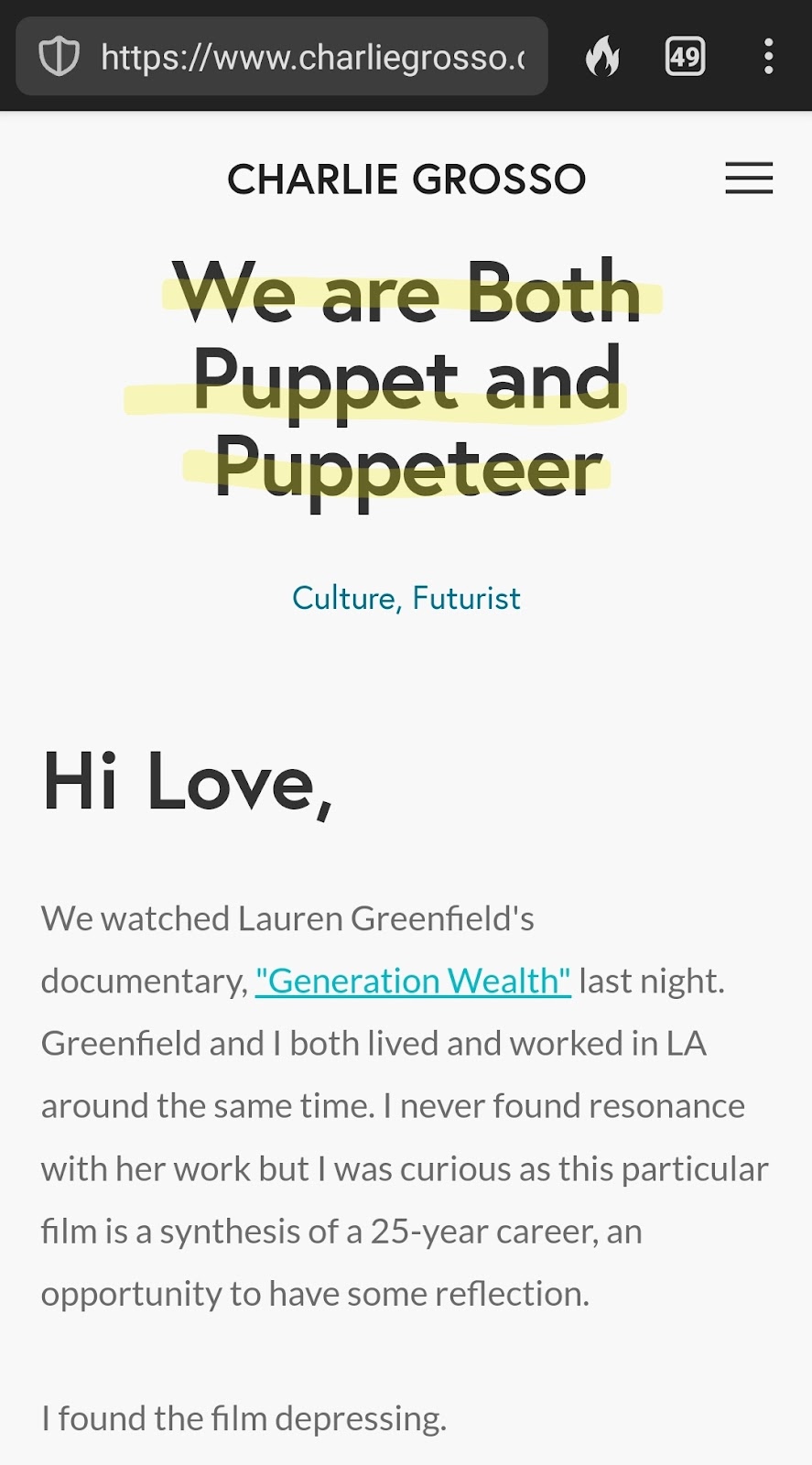
Another 8-word phrase – "we are both the puppet and the puppeteer" — is the title of an opinion piece by Charlie Grosso.
"Theater of the Absurd' is the name of a genre of performance art. That's another 4 words.
So far, I've found 17/26 words that were plagiarized from humans, and I'm hardly even trying.
This is what AI does. It plagiarizes, plagiarizes, plagiarizes. That's why writers are putting together a lawsuit to get it to stop using our work as sources. Our words belong to US. They are not for computer programs to steal, manipulate, and take credit for.
I’m about to
give you a piece of advice I got from an agent at a SCBWI New Jersey workshop.
The workshop and one-on-one critique with the agent cost me a nice bit of money
and a trip to Princeton, but I’m about to give it to you for FREE!
How lucky
does that make you?
During my
critique, the subject of clichés came up, not because my manuscript had any
clichés, but because I wanted tips on how to avoid them.
The agent
told me, “If everyone else goes ones way, go the other way.”
Simple,
right? If everyone turns right, you turn left. If everyone zigs, you zag. If everyone
is doing something one way, then it’s a cliché. Don’t do it that way. Do it the
opposite way. Leave the beaten path
and forge your own. It’s that easy.
When we
think of clichés, we usually think of over-used expressions, like “head over heels
in love.” But clichés can be bigger things, too.
All kissing
scenes zig one way? Zag, and write a kissing scene that’s almost the opposite
of that. That’s what I did in Ride of Your Life. If you read it, you’ll
see there’s a first kiss that couldn’t have been written in any other book. It’s
just so different! Gilbert’s first kiss with Amber in Why My Love Life Sucks also
zags . . . and so does a kiss in the upcoming sequel, Why It Still Mega Bites. I hate kissing clichés,
so of course I write kisses differently.
Everyone is
writing dystopian? Zag, and write whatever the opposite of dystopian is in your
eyes. (For me, that would be a science-fiction comedy.) Or zag, and write a
dystopian that breaks all the clichés and completely changes what people think
a dystopian novel is supposed to be! After all, no one need another dystopian
novel that’s exactly like the hundreds of others already out there.
So how do
you zag?
In my blog
post on humor, Writing
Words for Nerds #AtoZChallenge—H is for Humor (and how to create it), I mentioned
the mirrors and lenses of the House of Funny. While any mirror or lens can help
you zag, the best to use here is the “lens of character.” Because if you have a
truly different character with a completely different way of seeing the world
and interacting with it, anything viewed through the lens that is that character
will be different.
Should you
always zag where everyone else zigs?
I don’t think so. But you should always zag
when zigging feels somehow wrong to you, it doesn’t fit your story, or it makes
your story less of what you’re trying to make it.
You should
also try to consider the possibility
of zagging, even if you choose to zig in the end. It should always be a choice,
not something you did because you were following the crowd—or trying hard not
to follow the crowd. You shouldn’t zag for zagging’s sake. You should do it
because you like that’s your preferred choice.
And now I’m
down to another Z: Zero!
I’ve reached
the end of this blog post, which means I have zero posts left to write in the #AtoZChallenge. I did it! Hope you
liked it and that it helped or at least entertained you in some way.
Maybe I’ll
do it again next year, this time in April!
YA: (Continues
to text on her phone, her face partially hidden behind her hair. She shrugs.)
Shevi: We’re
here to set people straight about all the mistaken assumptions they have about you.
YA: (Pausing
but not looking up from her phone) Yeah! People just don’t get me.
Shevi: I
think most people know that YA stands for “Young Adult.”
YA: (Sighs
and rolls her eyes) I don’t like being called that anymore. I’d rather
be called “Teen.”
Shevi:
Totally understandable, since that’s clearly what you are.
YA: Duh!
Shevi: Okay,
so I think most people know that YA books are books with main characters who
are between thirteen and seventeen years old.
YA: Yes, but
we’re not all the same.
Shevi:
Right! There’s younger YA, which is more for teens between thirteen and
fifteen. And then there’s older YA, which is more for teens between sixteen and
seventeen.
YA: Because
we’re dealing with different stuff.
Shevi:
Absolutely! For example, the Georgia Nicolson books by Louise Rennison, like Angus, Thongs and Full-Frontal Snogging,
deal with friendships, first crushes, everyday family stuff . . .
YA: And the
character is younger, so that’s definitely younger YA.
Shevi: Yes.
And my Legend of Gilbert the Fixer
series that starts with Why My Love LifeSucks has a seventeen-year-old character dealing with the last year of high
school and who he wants to be after high school.
YA:
Definitely older YA.
Shevi: Yes.
YA: But it’s
only like PG-13, so younger teens can read it.
Shevi: Yes,
and that’s true of a lot of YA. Younger teens can read it. They just might not necessarily relate to it. It
depends on the maturity of the particular reader and what they’re going
through.
YA: (Back to
texting) Yeah.
Shevi: And
that’s one of the misconceptions I’d like to clear up. Some people think that
any book with a teenage protagonist is a YA, and that’s just not the case.
YA: (Laughs)
Yeah, because if that was true, all those Disney princess movies would be YA,
and they’re so not!
Shevi: Right!
A YA novel has to deal with same things teens are dealing with today. Like
first romantic relationships.
YA: (Blushes)
Ewwww . . . Don’t talk about that out loud, okay?
Shevi: Don’t
worry. It’s just between the reader and you.
YA: (Nods
and goes back to texting)
Shevi: Two other common misconceptions are that a YA book has to be completely
clean . . .
YA: (Laughs)
Yeah, no.
Shevi: Or
that YA books can only be issue books that deal with things like sex, violence,
drugs . . .
YA: (Blushes)
Yeah, no.
Shevi: A YA
book can certainly deal with serious issues. That’s fine. But there are all
kinds of YAs.
YA: Yeah,
just like there are all kinds of teens.
Shevi: Exactly. And a
YA refers to an audience age-group, not a genre. A YA can be in any genre. It can be an issue book, but it can also be a comedy, a
fantasy novel, a science fiction novel . . .
Shevi: That’s another thing. You don’t have to be a teen to appreciate YA. A good book
is a good book, no matter how old you are.
YA: Thank
you!
Shevi:
Before we go, is there anything else you’d like people to know about you?
YA: (Looks
up and puts her phone down. She takes a deep breath and lets it out.) I wish
people would stop telling me what to do.
Shevi:
Meaning?
YA: Some
writers treat us like we’re little kids. They don’t understand who we are
or what we’re going through. They lie to us. They’re not honest. You don’t have
to tell me what to do or think or feel. I can do those things for myself! It’s
like . . . it’s like they don’t respect me.
Shevi: (Nods)
I think that’s something every writer should keep in mind, no matter who their
audience is. No one likes to be condescended to. I know I don’t. And you know
what else?
YA: (Shrugs)
Shevi: I
love your honesty. I think that’s what makes you one of my favorite categories
of books. You don’t waste time but get straight to the point.
YA: (Blushes)
I like that about me, too.
Shevi: So I hope that clears up a few misconceptions. If you want to know more, just check out the books in the the teen section of your local library or bookstore. The more you read, the more you'll realize how great YA books are.
One of my
rules of comedy is that you should, “take it as far as it will go. All the way
up to the edge . . . and then push.”
And as I’ve
told members of my critique group (please excuse the PG language), “Don’t do anything
half-assed. It should be full-assed or nothing!”
I honestly
mean that.
What I’m
talking about is extreme writing—and
it’s the only way you should write.
I think if
you look at any successful book, you’ll see the author didn’t hold back, didn’t
do things by half. Whatever the author was doing, the author did it all the way. You might like it. You might
hate it. But either way, you have to respect that whatever the writer’s vision
was, that writer went for it.
Take Harry Potter as an example. That book
isn’t just about a boy with magical powers who waves a wand and recites spells.
There’s a whole magical world around him that’s rich with detail. Hogwarts has
a history. Letters are delivered by owls. Food comes alive. Trees can attack
you. Staircases move. Paintings talk. Ghosts roam the halls. J.K. Rowling didn’t do things by
half. She took it all the way up to the edge and then pushed.
Or Gilbert
Garfinkle from Why My Love Life Sucks (The Legend of Gilbert the Fixer,book one). I didn’t set out to write a series about just any geek; I set out to
write a book the ultimate geek. Gilbert
isn’t just a hacker; he’s the ultimate
hacker. He’s not just a nerd fighter; he’s the ultimate nerd fighter. He’s not just a fan of Star Trek; he’s a fan
of pretty much every form of geek or nerd culture. And I wasn’t going to give
him a little problem. I gave him the ultimate teenage geek’s ultimate
nightmare: getting stuck with a gorgeous vampire girl who wants to be his
platonic BFF, literally forever!
Now that’s extreme writing.
You don’t
have to write fantasy, science fiction or comedy for your writing to be
extreme. You can commit 100% to writing a quiet book, too. Just don’t set out to make a quiet
book with a few exciting scenes, or an exciting book with a few quiet scenes.
Whatever choice you make, stick with it! Commit to it! Don’t waffle. Unless, of
course, you’re all about waffling, in which case, I want to see you waffle like
an IHOP! I want to see you waffle like no one has ever waffled before! I want
you to be the King or Queen of Waffles!
Like many
people, The Shawshank Redemption is
one of my favorite movies. I love it because the hero, Andy Dufresne, isn’t
just ordinary—he is extremely
ordinary. He isn’t just boring—he is extremely
boring. He’s an accountant, for goodness sakes! His hobbies include playing
chess and reading. How boring (in the eyes of most people, not a book addict
like me) can you get? His favorite music is opera. Opera! Andy is as ordinary
as a piece of coal, but here’s the thing about coal: under a great deal of
pressure, a piece of coal can turn into a diamond.
And that for me is the beauty of this movie. Andy Dufresne succeeds—not despite
being extremely ordinary and boring—but
because of it.
And that, I think, is a metaphor for extreme writing. Take something that could be boring and ordinary, put it under the pressure of making it extreme, and watch it shine. It honestly doesn’t
matter what you’re writing about. As long as you make it extreme, your story
will be more compelling for it.
I suspect
the most widely known rule when it comes to writing an article is that you must answer the
six W questions: Who, What, Where, When, Why (and How).
Answer these six
questions, and you’ll have a complete article. Don’t answer these six
questions, and your readers will be left asking questions you should have
answered.
Fictional
stories answer these six questions, too, but there’s one very important
difference: the answers for an article are supposed to be based on fact, but the answers
for a work of fiction can be anything the author chooses.
Cinderella, for example, has an
evil stepmother and evil stepsisters in the original fairy tale, but in your
version? You can do anything you want.
This Cinderalla is running away from the prince
The truth is
every existing story has an infinite number of story possibilities. All you
have to do is change the answers to the six questions.
Who?
In the original, it’s Cinderella, her evil stepmother and evil stepsisters, her
fairy godmother, and the prince. But what if you make one of the stepsisters
the main character? Or the fairy godmother? Or what if Cinderella isn’t so
good? What if she’s kind of mean and she chooses to sleep in the cinders to embarrass
her step family?
What?
In the original, she gets magic clothes, goes to the ball, falls in love with
the prince, loses a glass slipper, and is found to be the prince’s true love
when the glass slipper fits her. But what if she doesn’t have a fairy godmother,
or magic clothes, or any of that stuff? What if she doesn’t even like the
prince? What if she doesn’t want to go to the ball?
All she wants is to get rid of the curse of obedience
Where?
The original takes place in a fairytale land. But what if it didn’t? What if it
took place in the 21st century? (Time is a part of the setting, not
the “when.”) What if it took place on another planet? What if it took place in
the Wild West?
When?
The story begins with Cinderella being mistreated by her stepmother and stepsisters.
But what if it started before all of that happened? Or what if it started after?
And how much after? What if starts with Cinderella trying to adjust to a royal
life and being unable to accept how the servants at the castle are treated?
What if it deals with political intrigue behind the scenes as noblemen and
women try to get rid of Cinderella? Or what if it skips ahead a couple of
decades as the daughter of Cinderella and the prince has doubts about marrying
a prince?
Why?
Cinderella gets her happy ending because she’s good and obedient and doesn’t
complain despite all the hardships she endures. But what if she isn’t so good
and obedient? Or what if she is obedient, but not by choice?
How?
The “how” of a story is about how the story is told: in other words, its style
or genre. Cinderella is fairytale, but it doesn’t have to be. What if you
turned it into a mystery? I mean, how did Cinderella’s parents die (or at least
disappear) anyway? What if you turned it into a screwball comedy? Or into a science fiction novel with robots?
Six
questions, infinite answers, and infinite story possibilities.
There’s a
fun improv game you can play where you say the same thing in a bunch of
different ways.
For example,
try saying “I love you” in the following ways: bashfully, sarcastically, like
Captain Kirk (remember . . . to pause in
the . . . most unexpected of places), like a rock star (yeah,
baby!), like a slimy politician (don’t forget to vote for me), angrily, drunk,
like a little kid, like a parrot, and like Siri.
These are
just a few examples. Maybe you want to come up with a few on your own. Or maybe
you’d like to try different words. I used to play a similar game with my
daughter and her friends, where we would read a children’s book in different
ways. Believe me, Dr. Seuss sounds a lot funnier if you read his words furiously.
What makes
this game interesting is that you soon discover that words change their meaning
depending on how you say them. Spoken bashfully, “I love you” sounds deep, so
deep that it scares the speaker just a bit; but spoken sarcastically, it sounds
more like “I despise you.”
You might be
thinking, “What does any of this have to do with writing?”
While
different literary agents and editors are looking for different genres, one
thing that almost all of them are looking for is a unique and interesting
voice.
Written
words actually do have a “voice.” It’s the thing that differentiates one writer
from another, the way each of us can express the same thing in a different way.
Some of us
are like standup comedians. We write in our own voice. Jane Austen was like
that. Her words are uniquely hers. No one else could have written them, not
unless they were great at mimicking her voice.
Others are
more like actors. We write in the voice of a character we’re playing. Daniel
Handler wrote the Series of Unfortunate Events books like that under the name
Lemony Snicket. I’d say Louise Rennison wrote her Georgia Nicolson books like that, although
I’ve been told by people who heard her speak that Georgia’s voice was Rennison’s. They say she actually
spoke like a teenage girl “on the rack of lurrrv,” and she really was the
bestie every girl wanted to have.
Of the books
that I’ve written, Toren the Teller’s Tale is close to my
writer’s voice, although it’s heavily influenced by the voices of the various
storytellers in it, particularly Toren herself. Dan Quixote: Boy of Nuevo Jersey
has a lot of my voice in it, although a younger version of it. I think Ride of Your Life comes closest to my
true writer’s voice. Yes, it has focal characters, so the voice adjusts
depending on the point-of-view character in a scene. But I do think you get a
lot of my voice, my style, the way I put words together into sentences and
sentences into paragraphs.
On the other
hand,Why
My Love Life Sucks was written in Gilbert Garfinkle’s voice, not mine. I suppose parts of me get into his voice, just
a bit. We’re both proud geeks, after all, both love science and both want to
fix the world in our own way. He’s a lot smarter and younger than I am, though,
and male. And I’ve given him some things that are the opposite of me, just so I could try on his way of seeing things.
Gilbert loves heights, because I’m afraid of heights. Gilbert loves extreme
sports for the same reason. He’s brave where I’m scared, and sometimes he’s
scared where I’m brave.
I think I
prefer to write in someone else’s voice. I know I prefer to write in Gilbert’s.
When I write in my own voice, I feel self-conscious. What will readers think of
me? What if they don’t find me funny? What if they don’t like my writing? What
if they don’t like me at all? Gilbert, on the other hand, could hardly care
less. He just sees the world the way he sees it, and it doesn’t matter what
anyone thinks. Writing in his voice also makes me feel like I’m not doing this
alone. I have a friend in my head. I can take him anywhere I like. And he is
geeking awesome. I would listen to his
voice all day if I could.
While
different literary agents and editors are looking for different genres, one
thing that almost all of them are looking for is a unique and interesting
voice.
So how do
you, the writer, give them what they want?
That’s a
good question. After all, if there were an easy answer, everyone would be doing
it.
When it
comes to a personal voice, you probably already have one. You probably already
have a unique way of saying things that’s different from how other people say
them. You can develop that voice by reading a lot books and seeing how you
would say things differently.
Maybe you
wouldn’t say “I love you.” Maybe you would say “I hate you” in such a way that
deep down everyone reading it would know you actually mean “I love you.”
Or maybe you wouldn’t say it at all. Maybe
you’d show it with the things that you do, or maybe you’d think it and be too scared
to say it out loud.
Whatever way
you have that’s unique to you, pay attention to it. Cultivate it.
Many new
writers try to write like someone else, but you need to write in the way that
only you can. That’s the only way you’ll stand out. That’s the only way your voice can be heard above the rest.
As for
writing in a character’s voice . . . This one is a bit trickier
to explain.
I think you
need to know the character inside and out. It could help to write down their
entire life’s story, all the things they like and don’t like and why, all their
greatest dreams and deepest fears. It could also help to draw them or find a
photo of someone who makes you think of them. You have to know who they truly
are, and you have to let your characters speak for themselves. You can’t try to
control their voices. If you can treat them like they’re real people—not
puppets for you to manipulate—they’ll be more likely to have their own unique
voices, the way that real people do.
Two small
technical notes: first, avoid writing things like “he saw,” “she thought,” or
“I felt.” There’s nothing between your character and the things that are affecting
them, so don’t put your character between them.
Instead of writing “He saw her as she left,” simply write “She left.” Instead
of writing “she thought it might be nice to meet him for coffee,” write
“Meeting him for coffee might be nice.” Instead of writing “I felt reassured,”
write “So it wasn’t all bad.” And second, if you’re writing in first person,
watch out for the “evil I.” You’ll probably have to sprinkle a few I’s in your
first-person manuscript, but you don’t want to overdo it. People who say “I” a
lot are usually self-absorbed, so if your character isn’t meant to be an
egomaniac, try to edit most of those out.
I’m
currently writing the end of Why It Still
Mega Bites, the sequel to Why My Love Life Sucks. It’s fun, but
also challenging, because a big part of the book is written in Amber’s voice.
Getting inside her head and seeing things through her bright blue eyes and
strange mix of hope and insecurity feels weird, I’ve really enjoyed it. I think
it helps not to judge your point of view character too harshly, to accept that
they are who they are, to see them as they see themselves. It probably helps to
view the people around you that way, too. Try to have an open mind and put
yourself in another’s shoes. Maybe it will make you a better writer. It
probably couldn’t hurt.
Whatever you
do, try to keep your voice authentic to yourself or your character. Don’t write
anything for convenience or because that’s the way you think the character is supposed to be or the way the genre is supposed to be written. An authentic
voice is rarely convenient and often breaks the rules.
And that, I
think, is the kind of voice literary agents and editors are looking for, a
voice that’s different because it breaks the rules.
Sorry for
the bad free verse, but can you feel it? Can you feel that tangerine?
Long-held
writing wisdom says that you should write in a way that lets your reader
experience each scene with all of the reader’s senses. We should be able to see
it and hear it, of course, but we should also be able to touch it. taste it. And smell it. If the air is damp and chilly,
we should be able to feel that on our skin in a way that gives us goose bumps
and makes us shiver.
In recent years,
science has backed this up, proving that the word for a thing stimulates the
exact same parts of the brain as the thing itself. This is even works with actions, so if I write "giggle," a part of your brain is sort of giggling.
And if I write . . .
Smile!
Did you smile?
Well, if you didn't on the outside, your brain probably did. Pretty cool, right?
This part of
writing, the part where I get you to physically experience the world of the characters, has always been a little challenging for me. I’m not sure why. There
could be more than one reason. I like to start with dessert, and for me that’s
always been action and dialogue, high drama or low-brow humor. Anything but
description. I know my writing needs more of it, but . . . I
just don’t like writing it that much.
Or perhaps it’s because of my background in
Theater Studies, cartooning, and illustrating. In those settings, anything
visual is simply shown visually.
There’s no need to use words to describe anything. So using words to describe something
I’d much rather draw or design? It’s a challenge.
And it
becomes even harder when you consider that long-held writing wisdom also says
you should write in nouns and verbs, and that adverbs and adjectives should be
banished from your writing. How do you describe a touch or a taste without
using the words that describe actions and things?
The answer often
given is to use the most specific verbs and nouns, and that’s hard. Yes, some
words can be made more specific. You can write “tangerine” instead of “fruit.” You
could write the “tangerine bit back” instead of describing it as “sour,” but isn’t
sour clearer? I mean, it may be poetic, but the tangerine isn’t literally biting back.
And aren’t
adjectives and adverbs just additional tools for the writer to use? Should we
really discard a whole section of our toolbox? What if an adjective is the
perfect tool to get the job done? Shouldn’t the rule that says, “use what works”
supersede the “write in nouns and verbs” rule? I think it should.
Anyway, here’s
one of my attempts at trying to help the reader touch a scene. It’s fromWhy My
Love Life Sucks (The Legend of Gilbert the Fixer, book one).
This is Gilbert, lying paralyzed in bed after Amber bit him, reflecting on the events
of the night that led up to his current predicament. He’s remembering what
happened just after he first met Amber at Bucky Bee’s in New York City. At this
point, they’re walking home together. There are many more descriptive scenes in
Toren
the Teller’s Tale and Ride of Your Life, but I particularly
like this one. Hope you like it, too:
She
intertwined her fingers with mine, and it felt like . . . like
the entire universe in all of time was a giant jigsaw puzzle. All the outer
pieces had been put in place first, and then someone had worked his way through
that puzzle from the outside in. Over time all the pieces had been put in place
until there were only two spaces left: one space for my hand, the other space
for Amber’s. When she took my hand and intertwined her fingers in mine, it was
like they had been designed to fit together that way, like the universe had
been waiting—holding its breath—just waiting for those last two pieces to slide
into place and make everything complete.
We
continued walking down 9th Avenue and crossed West 34th
Street. Everything took on a magical feel—even the smells from the Chinese
restaurant, and the lights from the cars that passed and from the illuminated
ads on the bus stops—they were all pieces of that puzzle that had been waiting
for the two of us. The way we walked side by side; the way her red dress looked
with my navy blue jacket over her shoulders, even though my jacket was too big
on her in exactly the same way that it was too big on me; the way she smiled;
and the way she made me smile: everything was infused with magic.
For a
brief second I thought I caught a vision of . . .
something . . . It was such a strange feeling, like I was looking
into the future, or maybe the future was looking in on me. Or maybe it was the
past. Or maybe both. It reminded me of a song, and I began to sing it. “There’s
not a word yet . . .”
“. . . for
old friends who’ve just met,” she continued. She had such a sweet voice.
“That’s Gonzo’s song from The Muppet Movie.”
“You
know it?” I asked, surprised.
She
nodded. “It’s funny, I was thinking the same thing. It’s like we met in a
previous life.”
“I
don’t believe in previous lives.”
“A
future one, then.”
I laughed.
Yes, that was exactly what it was like. “I believe in those.” Or at least I did
at the time. Not so sure now.
If you want to read the rest, click the link below. For now, it's just $2.51 on Amazon Kindle:
As many writers will tell you, the first
rule of being a good writer is to read, and read, and read some more.
But I like
to think it goes beyond that. You can’t simply read like any other reader; you
have to read like a writer. You have
to take apart what you read and figure out what works and what doesn’t and why.
You have to take what you’ve learned, and you have to apply it to your own
writing.
I also think
it goes beyond stories written in books. There are stories in every medium
imaginable. There are stories in movies, TV shows, songs, and art. But it goes
beyond that, too. The truth is there are stories pretty much everywhere you
look.
In Toren the
Teller’s Tale, young Toren learns that every person, every object, and
even forces like the wind have their own unique stories. If she can read a
thing’s complete story, that thing becomes a part of her. She can control it,
but only if that thing wants to be controlled. And when she fully knows a thing’s
story, she can retell it in a single word that brings that thing to life. This
is her unique magic, the magic of the storyteller.
While Toren the
Teller’s Tale is an epic fantasy, there’s a part of it that’s, well,
not a fantasy at all. The truth is that every person and every object does have a story. You have to crack it
open like an egg, take it apart and figure it out to discover the story hidden
within.
Just pick up
any object, the object closest to you. Who made that? Where did it come from?
How did it get to you? Who were the people who affected or were affected by its
journey? And isn’t it interesting to think that someone at the start of its
journey in some small way affected you at this stage of its journey? You’re
connected to each other through this object. You’re connected to every person
along its path. And that’s just one object. Look around you. How many people
affected or were affected by the objects just in your immediate vicinity? And
role did they play in that object’s story?
But it’s
even more than that. Because every person, every object, holds millions of possible stories. How could this object have arrived here?
Where could it have gone instead? And
what could happen to it in the
future? How would that affect the people involved? The potential stories are infinite.
And if you believe the Many Worlds theory of quantum physics, what’s even
crazier is that they could all be true, somewhere out in our amazing universe.
In his
autobiographical book, Rewrites: A Memoir, playwright Neil Simon
says (I’m paraphrasing), “Writer’s block isn’t when a writer has no ideas; it’s
when a writer has so many ideas and doesn’t trust himself to choose the right
one.”
With so many
stories around us all the time, that truly is
a dilemma. How do you choose the right one?
I like
improv’s answer. There is no right and no wrong choice. There’s just a choice, and you have to make it or let
the audience make it for you. Whatever the choice is, you have to commit to it 100%. I guess you could say the only
wrong choice is not choosing or not committing to what’s been chosen.
I see dozens
of stories around me every day, and I throw almost all of them out.
It’s not
because I haven’t committed to a choice. It’s because I am already 100% committed
to choices I’ve already made, stories I have thought out in my mind or outlined
on paper but haven’t had time to turn into fully formed manuscripts. Like the
persona in Robert Frost’s “Stopping
by Woods on a Snowy Evening,” I “have promises to keep/And miles to go
before I sleep.”
But the
stories are there, inside my head. Don’t ask me what I’m thinking. You probably
don’t want to know.
I once sat
with a guy near a bonfire and watched the ashes float in the hot air above the flames. He
leaned in and said, “You’re a writer. I bet you’re thinking something about the
poetic beauty of the fire.” I smiled and nodded, although what I was really
thinking was “Wouldn’t it be funny if some prehistoric caveman who was obsessed
with flight saw those ashes and thought he could fly if he could somehow sew or
glue the ashes together? And after a few failed attempts, it might occur to him
that it had something to do with the fire. He’d wonder if he could fly if he
could just somehow throw himself on the fire at just the right angle. Maybe he
could test that theory by tossing a friend over it. Hey, maybe that’s what gave
J.M. Barrie the idea for pixie dust!”
See? There's a reason why I don't tell the stories I don't tell and focus instead on the ones I do.
Speaking of which, I should get back to those stories.
The second book in the Legend of Gilbert the Fixer, here I come!
Yes, a writer needs questions. You simply can't do without them.
But why?
Keep reading, and I’ll tell you.
I once worked
under an arts-and-entertainment editor who gave me this classic piece of
newspaper advice: “Tell ‘em. Then tell ‘em. Then tell ‘em again!”
I knew what
she meant. I had already learned about the journalism pyramid. You start with
maybe one sentence that says what your article is about. Your second paragraph
says what it’s about, but says more about it. Your final paragraphs go into more
detail about the topic of your article. You tell ‘em about the topic of your
article. Then you tell ‘em. Then you tell ‘em again. The reader gets the gist
of the entire article in that first sentence. The rest is just the same thing
in greater and greater depth. If you just want the headline, you’ll stop
reading there. And if the headline grabs you, you’ll continue reading until you’ve
reached the depth you’re looking for.
A classic
piece of journalism advice, but the more I looked at it, the more I realized
that format that worked so well for news didn’t quite work for feature stories.
People read
the first pages of the newspaper to be informed, but when they read the
magazine or the features section, they read less to be informed and more to be
entertained. If you tell ‘em once at the very start what the feature piece is
about, readers have no real reason to read the rest of the article. No, I decided.
I need to find some other way to get readers to keep reading.
So I came up
with my own rule: hook ‘em. Then hook ‘em. Then hook ‘em again!”
And it
worked! Readers liked my feature articles, and I won praise and respect from my
editors. In a short time I worked my way up from being a freelance
arts-and-entertainment writer to the newspaper’s consumer columnist. I had two
pages in the magazine, and another half a page in the middle of the week. Readers like
to be hooked. I guess you could say we’re hooked on it.
But what
exactly is a hook? And how do you hook ‘em again and again?
A hook is
something in your story that grabs your reader and makes that reader want to
keep reading. For example, if I start a book with the main character lying in
bed wondering if he’s going to die by morning—and if that’s not the worst thing
that could happen to him over the next few hours—that’s a pretty good hook.
Basically, a hook is a
question the writer plants in the reader’s mind, a question the reader won’t
know the answer to unless the reader keeps reading. It can be written as a question. The first words of Toren theTeller’s Tale are “Who are you?” It takes the rest of the book to get a
complete answer, and it is a doozy. But it doesn’t have to be spelled out like
that. In most novels and short stories, the hook is a conflict or problem the audience
wants to see resolved. Will Cinderella escape life with her cruel stepmother and
stepsisters? Will the Light Side defeat the Dark Side? Will Gilbert get turned into a vampire, and why did a gorgeous girl who could have any guy she wants pick this extreme geek, anyway? You won't know the answer unless you keep reading.
Some writer
once said that every novel is a mystery, and that’s true. The writer plants a
question in the reader’s mind on the first page, and the reader has to keep
reading to discover the answer to the question and solve the mystery. If the
mystery isn’t solved by the end, the writer has broken the unwritten author-reader
contract, a contract that basically says that if the writer plants a question
in the reader’s mind at the start, the writer will provide the answer to that
question by the book’s end. All important questions will be answered. All
important matters will be resolved. It might not be a happy ending, but it will
be a resolution. It's vital that the author fulfil his or her part of the contract.
Hook ‘em.
Then hook ‘em. Then hook ‘em again works with pretty much any piece of writing
that isn’t news and isn’t meant to be boring. Just plant those questions in
your reader’s mind, and watch how your reader gets hooked.
So why does a writer need questions? Are you still here?