Wednesday, May 18, 2016

Writing Words for Nerds #AtoZChallenge‑‑S is for Stories (and where to find them)

As many writers will tell you, the first rule of being a good writer is to read, and read, and read some more.

But I like to think it goes beyond that. You can’t simply read like any other reader; you have to read like a writer. You have to take apart what you read and figure out what works and what doesn’t and why. You have to take what you’ve learned, and you have to apply it to your own writing.

I also think it goes beyond stories written in books. There are stories in every medium imaginable. There are stories in movies, TV shows, songs, and art. But it goes beyond that, too. The truth is there are stories pretty much everywhere you look.

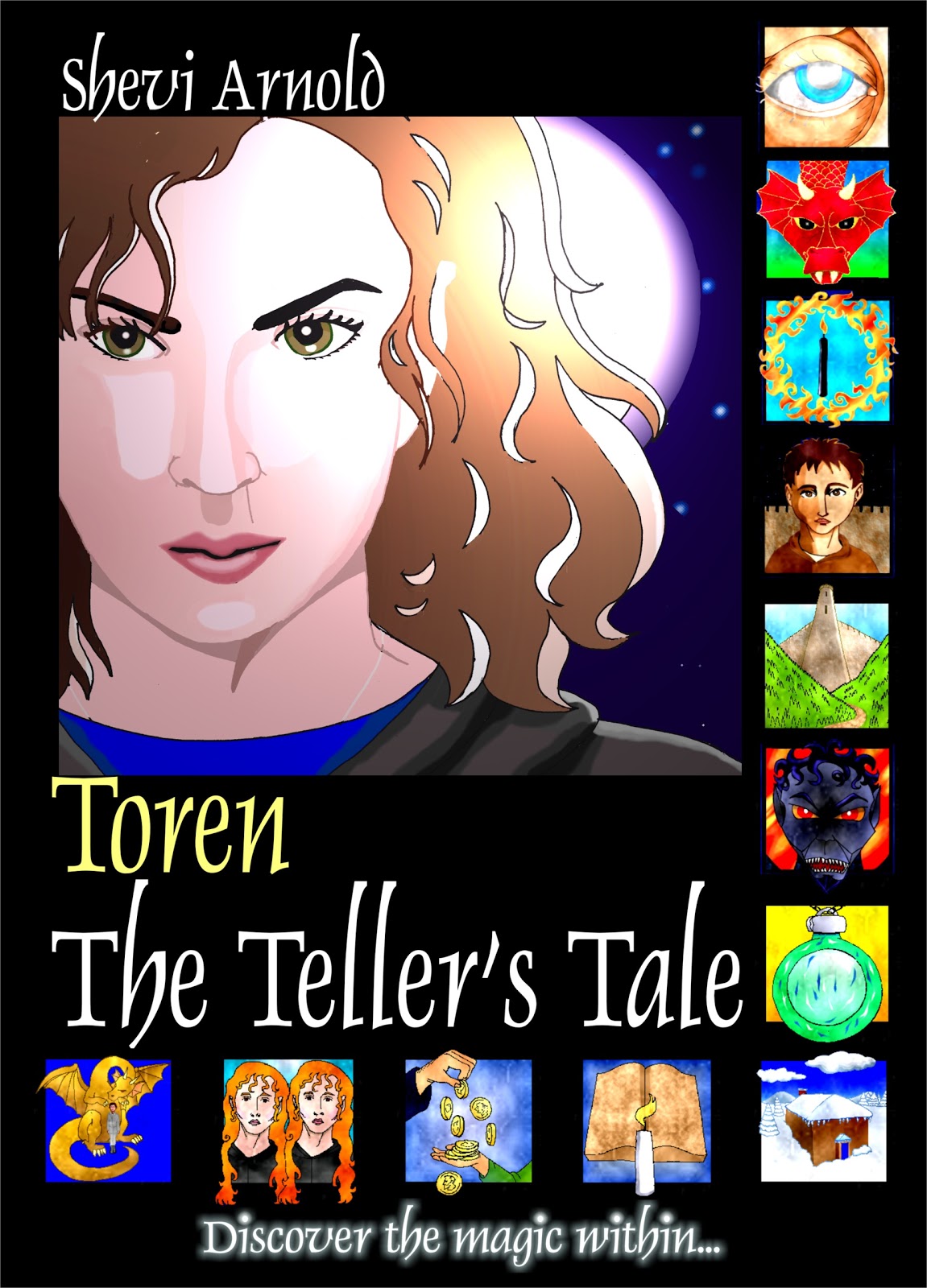
In Toren the Teller’s Tale, young Toren learns that every person, every object, and even forces like the wind have their own unique stories. If she can read a thing’s complete story, that thing becomes a part of her. She can control it, but only if that thing wants to be controlled. And when she fully knows a thing’s story, she can retell it in a single word that brings that thing to life. This is her unique magic, the magic of the storyteller.


While Toren the Teller’s Tale is an epic fantasy, there’s a part of it that’s, well, not a fantasy at all. The truth is that every person and every object does have a story. You have to crack it open like an egg, take it apart and figure it out to discover the story hidden within.

Just pick up any object, the object closest to you. Who made that? Where did it come from? How did it get to you? Who were the people who affected or were affected by its journey? And isn’t it interesting to think that someone at the start of its journey in some small way affected you at this stage of its journey? You’re connected to each other through this object. You’re connected to every person along its path. And that’s just one object. Look around you. How many people affected or were affected by the objects just in your immediate vicinity? And role did they play in that object’s story?

But it’s even more than that. Because every person, every object, holds millions of possible stories. How could this object have arrived here? Where could it have gone instead? And what could happen to it in the future? How would that affect the people involved? The potential stories are infinite. And if you believe the Many Worlds theory of quantum physics, what’s even crazier is that they could all be true, somewhere out in our amazing universe.

In his autobiographical book, Rewrites: A Memoir, playwright Neil Simon says (I’m paraphrasing), “Writer’s block isn’t when a writer has no ideas; it’s when a writer has so many ideas and doesn’t trust himself to choose the right one.”

With so many stories around us all the time, that truly is a dilemma. How do you choose the right one?

I like improv’s answer. There is no right and no wrong choice. There’s just a choice, and you have to make it or let the audience make it for you. Whatever the choice is, you have to commit to it 100%. I guess you could say the only wrong choice is not choosing or not committing to what’s been chosen.

I see dozens of stories around me every day, and I throw almost all of them out.

It’s not because I haven’t committed to a choice. It’s because I am already 100% committed to choices I’ve already made, stories I have thought out in my mind or outlined on paper but haven’t had time to turn into fully formed manuscripts. Like the persona in Robert Frost’s “Stopping by Woods on a Snowy Evening,” I “have promises to keep/And miles to go before I sleep.”   

But the stories are there, inside my head. Don’t ask me what I’m thinking. You probably don’t want to know.

I once sat with a guy near a bonfire and watched the ashes float in the hot air above the flames. He leaned in and said, “You’re a writer. I bet you’re thinking something about the poetic beauty of the fire.” I smiled and nodded, although what I was really thinking was “Wouldn’t it be funny if some prehistoric caveman who was obsessed with flight saw those ashes and thought he could fly if he could somehow sew or glue the ashes together? And after a few failed attempts, it might occur to him that it had something to do with the fire. He’d wonder if he could fly if he could just somehow throw himself on the fire at just the right angle. Maybe he could test that theory by tossing a friend over it. Hey, maybe that’s what gave J.M. Barrie the idea for pixie dust!”

See? There's a reason why I don't tell the stories I don't tell and focus instead on the ones I do.

Speaking of which, I should get back to those stories. The second book in the Legend of Gilbert the Fixer, here I come! 

Tuesday, May 17, 2016

Writing Words for Nerds #AtoZChallenge—R is for Raise [the Stakes], and why you NEED to do that NOW!

Do you write fiction? If so, you need to raise the stakes in your story, and you need to raise them NOW! This is not an option! If you don’t raise the stakes, no one will ever read your book. All those countless hours—all the heart and soul you put into your book—you might as well throw them in the trash right now if you don’t. And you can’t afford to push this off any longer. Raise the stakes! Raise them now! 

And that’s what raising the stakes is all about.

It’s about lighting a fire under your character and turning a want into a desperate need.


Only $2.51 now on Amazon Kindle
Because the more desperately your character needs something, the more desperate your reader will be to find out if your character gets it and how. Raising the stakes will keep your reader engrossed in your story and wanting—no needing—to read more. And that’s something you desperately want as a writer, isn’t it?

Raising the stakes also solves the dreaded writing problem known as the sagging middle.

Many writers have great openings and great endings, but they kind of get lost in the middle of their story. By focusing throughout on what the main character wants and how he or she deals with the obstacles on the path to getting it—sometimes known as the “character arc” or the “emotional arc” of a story—your story’s middle won’t sag. You just need to stay focused! Stay focused and raise, raiSE, RAISE THE STAKES!

Okay, so HOW do you raise the stakes?

I wrote about this in my blog series on Improv for Writers. Improv uses raising the stakes to keep audiences engaged in longer skits. That’s something writers can and should—no, desperately need—to do, too.

As I wrote in “Improv for Writers, Part 1 of 3: How Improv Can Help You Write Faster, Better, and More Creatively”: “There are two ways to raise the stakes. The first is by the main character wanting whatever it is he wants even more. The second is by giving him more obstacles. These obstacles can be internal or external but they have to come out of whatever it is the character wants. They can’t just be random obstacles thrown at the main character.”

In part two of that same series—Mind Games: Five Solitaire Games for Fiction Writers—I wrote about an improv-for-one game I created that will show you how to “Raise the Stakes” in no time:

“To play this game as a writer, start by creating a character and giving that character something he or she wants. Now write a list of the reasons that character wants this thing, what it will mean if the character doesn’t get it, and what it will mean if the character does. One part of raising the stakes is about raising the character’s desire, so put these reasons in order from least important to most important….

“Next, create a list of the kind of things that might get in his or her way. I like to call this Murphy’s Law for Writers, which I sum up as, “If anything can go wrong (for your main character), it should.” These obstacles have to come out of what it is the character wants, not random, outside obstacles. They can come from the character himself (internal conflict), other characters, or the environment. One of the best obstacles is time itself, because if the main character doesn’t achieve his or her goal by a certain time, it will never happen....
  
“Create other characters to make him need to reach his goal more or to provide obstacles to reaching his goal…. Keep raising the stakes and keep having your main character do everything possible to achieve the goal until the question of whether or not your main character gets what he wants is answered. Your audience will be riveted, because your audience will need to know the answer to that question.”

Here’s an example using Gilbert Garfinkle at the start of Why My Love Life Sucks:

Gilbert Garfinkle from Why My Love Life Sucks (The Legend of Gilbert the Fixer, book one)

Desire: to take apart, figure out, and fix the world so that everything makes sense

Raising Desire
Obstacles
Gilbert wants to make sense of the world, because if he can understand it, he can fix it.
He can’t fix something if he can’t make sense of it, and in general he can’t make sense of girls. He also can’t make sense of the existence of vampires, so having both of those enter his life in the form of Amber is a huge obstacle.
Gilbert wants to go to MIT, where he expects to meet like-minded people who will make him even better at at fixing the world.

As a vampire, Gilbert can’t stay awake during the day. So how can he hope to finish high school and take the SATs? And if he doesn’t manage to do those things, how will he go to MIT?
Gilbert wants to fix the world so that he can be worthy of the smartest, most amazing girl in the world, Jenny Chen.
Gilbert is too afraid to tell Jenny how he feels, and the last thing he needs is Amber hanging around, giving his friends the impression that he’s already got a girlfriend.
Gilbert wants to become the scientific genius he thinks his father would have wanted him to be. He wants to be worthy of his brilliant father’s legacy.
He can’t know the world if he can’t even make sense of it. And vampires and pretty girls who choose him don’t make sense. Vampires aren’t even scientifically possible. What would his father think about him getting turned into one?
He desperately needs to believe the world makes sense, and that means avoid things that don’t make sense to him: in other words, most teenage girls.
Vampire charm makes him irresistible to most girls, and his fear of them is even greater now that he feels the urge to bite them, too. Could his life get any worse?


You don’t need to use everything on your list, just the parts you think will work best for your story. The important thing is to keep raising the stakes by turning a desire into a greater and greater need and presenting your main character with ever greater obstacles.


Because the greater your character’s needs becomes, the greater your reader’s need to keep reading becomes, too.

Monday, May 16, 2016

Writing Words for Nerds #AtoZChallenge—Q is for Questions (Do you need them?)

Yes, a writer needs questions. You simply can't do without them. 

But why? 

Keep reading, and I’ll tell you.

I once worked under an arts-and-entertainment editor who gave me this classic piece of newspaper advice: “Tell ‘em. Then tell ‘em. Then tell ‘em again!”

I knew what she meant. I had already learned about the journalism pyramid. You start with maybe one sentence that says what your article is about. Your second paragraph says what it’s about, but says more about it. Your final paragraphs go into more detail about the topic of your article. You tell ‘em about the topic of your article. Then you tell ‘em. Then you tell ‘em again. The reader gets the gist of the entire article in that first sentence. The rest is just the same thing in greater and greater depth. If you just want the headline, you’ll stop reading there. And if the headline grabs you, you’ll continue reading until you’ve reached the depth you’re looking for.

A classic piece of journalism advice, but the more I looked at it, the more I realized that format that worked so well for news didn’t quite work for feature stories.

People read the first pages of the newspaper to be informed, but when they read the magazine or the features section, they read less to be informed and more to be entertained. If you tell ‘em once at the very start what the feature piece is about, readers have no real reason to read the rest of the article. No, I decided. I need to find some other way to get readers to keep reading.

So I came up with my own rule: hook ‘em. Then hook ‘em. Then hook ‘em again!”

And it worked! Readers liked my feature articles, and I won praise and respect from my editors. In a short time I worked my way up from being a freelance arts-and-entertainment writer to the newspaper’s consumer columnist. I had two pages in the magazine, and another half a page in the middle of the week. Readers like to be hooked. I guess you could say we’re hooked on it.

But what exactly is a hook? And how do you hook ‘em again and again?

A hook is something in your story that grabs your reader and makes that reader want to keep reading. For example, if I start a book with the main character lying in bed wondering if he’s going to die by morning—and if that’s not the worst thing that could happen to him over the next few hours—that’s a pretty good hook. 


In the beginning of Why My Love Life Sucks(The Legend of Gilbert the Fixer,book one) the reader has to keep reading to find out what’s going to happen next. And that is a hook.


Basically, a hook is a question the writer plants in the reader’s mind, a question the reader won’t know the answer to unless the reader keeps reading. It can be written as a question. The first words of Toren theTeller’s Tale are “Who are you?” It takes the rest of the book to get a complete answer, and it is a doozy. But it doesn’t have to be spelled out like that. In most novels and short stories, the hook is a conflict or problem the audience wants to see resolved. Will Cinderella escape life with her cruel stepmother and stepsisters? Will the Light Side defeat the Dark Side? Will Gilbert get turned into a vampire, and why did a gorgeous girl who could have any guy she wants pick this extreme geek, anyway? You won't know the answer unless you keep reading. 

Some writer once said that every novel is a mystery, and that’s true. The writer plants a question in the reader’s mind on the first page, and the reader has to keep reading to discover the answer to the question and solve the mystery. If the mystery isn’t solved by the end, the writer has broken the unwritten author-reader contract, a contract that basically says that if the writer plants a question in the reader’s mind at the start, the writer will provide the answer to that question by the book’s end. All important questions will be answered. All important matters will be resolved. It might not be a happy ending, but it will be a resolution. It's vital that the author fulfil his or her part of the contract. 

Hook ‘em. Then hook ‘em. Then hook ‘em again works with pretty much any piece of writing that isn’t news and isn’t meant to be boring. Just plant those questions in your reader’s mind, and watch how your reader gets hooked.

So why does a writer need questions? Are you still here?

Well, I guess that's your answer.  


Friday, May 13, 2016

Writing Words for Nerds #AtoZChallengs—P is for POV. What’s the right one for your story?

 Choosing the right POV (Point of View) for your story can be a challenge. I know, because it’s challenged me. But after writing five novels and moderating a critique group for several years, I think I’ve learned a few things I can pass on to you.

I was probably halfway finished with Ride of Your Life before I realized it needed Josh’s POV. Until then, Josh was kind of flat. The reader only got to see him through Tracy’s eyes, and Tracy had a tendency to idealize him. In her eyes, he was this cute boy, a boy who made her imagined ghostly heart beat faster. Love doesn’t let us see the whole person, just the parts we like. That’s the way Tracy sees Josh.  And if I had written the entire book from Josh’s POV, Tracy would have been flat for the same reason. People are much more complex and interesting on the inside than they seem on the outside.


So I went back and added chapters and rewrote others to give the reader Josh’s POV. And that brought this entire ghost story to life.  

Ride of Your Life was probably the biggest eye opener for me, although I think I learned something every step of the way. Believe me, if this is something you’re struggling with, there’s a reason. Getting the right POV is hard! In fact, if you’ve never struggled with POV, I think you might want to reconsider your process. The best POV isn’t always obvious, and it’s worth taking a deeper look.

Okay, so how does POV work? There are three tenses: past (most common), present (immediate, exciting and fun, but a bit challenging), and future (rare, and very difficult to do well). There are also three kinds of narrators: third person (most common), first person (immediate, exciting and fun, but a bit challenging), and second person (common in nonfiction, but rare and difficult to do well in fiction).

While tense tends to be consistent, at least within a scene, the kind of narrator you use can be blended and can shift.

For example, a third-person narrator can get inside a character’s head like a first-person narrator and show the reader what the character is thinking. This is sometimes called “close third,” and the character whose thoughts we get to see is referred to as the “focal character.” If the narrator does this a lot and jumps from head to head, the narrator is omniscient, something that’s generally fallen out of favor in the last few decades (although when done well, like in A Series of Unfortunate Events, it can be delightful to read). A third-person narrator who knows things the characters don’t, particularly future events, is also omniscient.


In most cases, a writer needs to decide if a narrative will be present or past tense, and first-person or third-person.

Past is standard. Readers are accustomed to it.  

But present can be good if you either really want to get into the character’s head at the immediate moment (almost diary style) or you want to give the reader the impression that anything can happen at any moment, for example, that the main character could die. Of course, that made present tense perfect for Why My Love Life Sucks (The Legend of Gilbert the Fixer, book one). The book starts with Gilbert dying. How much fun would that be if the story were told in first-person past tense? It would kind of give away that (SPOILER ALERT) Gilbert doesn’t exactly die. Not permanently anyway. 


Whether a writer should choose third or first person is often a lot trickier.

The main advantage of third person is that the narrator can know things the main character doesn’t know, as well as show a counter point of view to the one the main character might have of him or herself. Sticking with A Series of Unfortunate Events, the narrator, Lemony Snicket, has an adult, reflective and comically morose POV, which contrasts sharply with how the main characters view themselves.  If this had been written in first-person, it would have lost half its humor and charm. The books simply wouldn’t be the same without Lemony Snicket’s strange point of view.

The main advantage of first person is that it really lets the reader feel what it’s like being in the main character’s shoes and seeing the world through his or her eyes. I couldn’t have written Why My Love Life Sucks from any point of view other than Gilbert’s. He has a unique way of seeing things that makes the story what it is.

Of course, the problem with first-person narration is that you can’t show the reader something the main character doesn’t know. That can be a serious problem if something important happens when the main character isn’t there. That’s why in the second book of the Gilbert the Fixer series (Why It Still Mega Bites, which I am close to finishing), Amber gets to be the first-person narrator of about half the chapters. Gilbert spends most of the book away from the main action, and there wasn’t any other way to tell the whole story.

In addition, first-person narration can be challenging for those who don’t feel they have a good handle on how their characters see the world. I get complimented for how well I write from a male point of view (considering I’m a woman), but I have seen writers struggle with trying to write from the point of view of someone of the opposite gender. I’ve also seen adults write kids as they imagine kids to be, rather than as they are. Beverly Cleary’s Ramona books—indeed, any of Cleary’s children’s books—are great examples of a writer who knows how to get into a kid’s head. And these books are written in omniscient third with focal characters, not first.   

Third-person narration is more flexible than many writers think. Not only can you get into a character’s head, unless you’re one of those rare writers like Hemingway or (sometimes) Capote, you generally should. At least you should know how to write third-person with a focal character. If you decide not to, that should be a conscious choice, not one made because you didn’t know there was another option. 

Writing in third makes it easier to jump around from one character’s head to another, although in general it’s preferred to have only one focal character per scene. And you can write about things the main character doesn’t know or see, so it would seem that third-person is the obvious choice.

But is it? Well, no.

It really depends on the story. 

Like Gilbert Garfinkle, sometimes the main character has a very interesting way of seeing things. In my post about writing humor, I  mentioned the House of Funny lens that is character. I love the lens of character! I love seeing thing through the unique perspective of a character who sees the world very differently. Sure, you can sort of get that with a close third-person narrator, but it’s like the difference between hearing a reporter talk about something and hearing the person who was involved talk about it. I'd rather hear the story first hand. 

Whatever point of view you choose, I hope you won’t be one of those writers who deliberately hide information the narrator knows. I consider that cheating. If your narrator gets to see all the cards, your reader should get to see all the cards, too. The only time cheating is acceptable is if it’s a part of the story. If your narrator is meant to be a liar and a cheat, it’s fine to lie and cheat here, too. But if we’re meant to see the narrator as honest, the narrator has to be honest and open with the information he or she shares, too. Lay those cards on the table where we can see them, narrator!

Okay, so let’s say you have a story, but you don’t know which POV to use. How do you decide?

Who are your characters? Do they have interesting points of view and interesting voices? Do they have a lot at stake? If so, first-person or close third-person with focal characters will probably work best for you. The more interesting and unique their voice and way of thinking are, the better your story will be in first person.

Do you want to tell the story from an outsider’s point of view? Are there things you want the reader to know that the characters don’t? If so, third-person is probably the way to go. Whether or not you use focal characters will depend on how much you want to get into your characters’ heads. If you do decide to show their thoughts, I recommend going all the way. Really show the entire landscape of what they’re thinking and feeling. If you do it, don’t do it superficially. Dig deep.

Are you trying to give the reader a sense of immediacy, the feeling that all this is happening right here and right now? Do you want to give the impression that anything could happen at any moment at any time? If so, present tense is the way to go.

Do you want to give the impression that the story you’re telling has already happened? That it’s over and fixed in stone and nothing can change it? That calls for past tense.

Let’s say you’ve decided to go with first person or third-person with a close focal character, but you’re not sure whose point of view it should be? Obviously, you’ll need to choose a character who’s present in the scene, which can change from scene to scene. After that, the character who has the most at stake is usually the most interesting.

One thing to keep in mind is that readers prefer it if there’s a clear pattern for who the narrator or focal character is. If you plan to write a book almost entirely from one character’s point of view, don’t let the first time you switch to another character’s point of view be halfway through the book. It’s jarring. Just let another character be the focal character earlier on so that readers know to expect a shift.


Like with anything else, don’t be afraid to change the POV when you edit your story you see something that will make it better.  Yes, it can be challenging, but it will be worth it in the end. 

Thursday, May 12, 2016

Writing Words for Nerds #AtoZChallenge—O is for Outline. Do you need one?


Do you need an outline? The answer is...it depends. 

Those who write outlines are called outliners (duh!), and those who don’t are called “pantsers,” which refers to how they write by the proverbial seat of their pants.

I recently ran a survey in a Facebook writer’s group I belong to, and what I discovered surprised me. While there are more pantsers than people who consider themselves outliners, the biggest group was made up of people who consider themselves both! Sometimes they outline, and sometimes they don’t. Some will outline the beginning and then let the story work itself out from there. Others outline certain kinds of projects but not others.


Me? I’m an outliner. Not only do I need to outline the entire book before I sit down to write it, I also need to outline individual chapters before I write them. I like to outline the next thing I have to write when I finish writing for the day. It gives me something to work toward when I return to the manuscript. I have a terrible sense of direction, and the outline is my road map. I need one, so I don’t get lost. For me, being a pantser just isn’t an option.

But I don’t just need to have an outline; I LIKE having one. It means that I can always “start with dessert.” I know what all the scenes are and where they go, so I can start with the scene or conversation I’m most excited about. And I do. My full outlines have bits of dialogue and some fully fleshed out scenes in it, because those are the desserts I’ve already eaten. I only move onto the things that aren’t dessert when I’ve eaten all the desserts I can. And you know what? Very often I find the things that I’m not really excited about writing don’t need to be written at all. It’s cool how that works out.

I know that many outliners feel that pantsers should be outliners too, but I’m not one of them. I believe you should do what works for you, and if that’s writing without an outline, then you should definitely do that.

Some pantsers think that outliners should be pantser, too. Very often it’s because they see an outline as something that restricts creativity. Being a pantser gives them freedom to take their story anywhere at any time. I don’t like getting lost, but for many pantsers, that’s a part of the joy of writing. They love getting lost in their story, discovering it as they go along, and seeing where it leads. They love discovering the characters and being surprised, just like a reader would.

Again, that’s not me. I don’t enjoy getting lost. I’d rather fly straight to Orlando, check into a hotel I’ve researched well so I know what to expect, and take Disney transportation into Disney World, a detailed schedule of what I’m going to do in each of the parks tucked away in my bag. Have a great time getting lost and wrestling alligators in a Florida swamp, pantsers. It sounds exciting. It’s just not my idea of fun.

And outlines really aren’t as restrictive as many pantsers seem to think. Who says that just because you have a detailed schedule in your hand you have to pass up a better opportunity if one comes along? Outlines are flexible. They can be rewritten. And it’s a lot easier to rewrite a five page outline than it is to rewrite a 250-page book, which is what most pantsers who write novels end up having to do.

Some strict outliners and pantsers don’t see it as a choice.

Some outliners say, “I can’t write without knowing where I’m going.” Are you sure? Have you ever tried it? Who knows, it might be fun.

And some pantsers say, “How can I write an outline if I don’t know where my story is going? I don’t have a plot. I just have these characters. I don’t know what they’re going to do until they do it.” Then how do you know they’re good characters? How do you know they have a story worth telling? Of course, if it turns out they aren’t and they don’t, you can always rewrite the whole thing. Me? I have too many great characters with stories that I’ve already fully outlined in my head, and not enough time to follow around characters who may or may not get anywhere. Of course, it’s the finished result that matters, not how you get there.

The answer to what you can do if you’re an outliner who wants to be a pantser is easy: just do it! 

It may be scary, but maybe that’s a good thing. And if you find yourself stuck, just give yourself a timer and a goal. How does 500 words in an hour sound? Don’t be surprised if after the hour is up, you feel the urge to write more.  

The answer for the pantser who wants to be an outliner is a little more complicated: instead of being a long-form pantser, writing every little detail as you go along, try being a pantser of a short story.

You can write on paper, but you can also write it in your head. Just go and get lost in your story, but try not to do it for more than a page. If you need to, add another page. And another. It could be a series of short stories with the same characters and a single character arc. You can keep writing those short stories until you find a satisfying end to that character arc. And then you’re done. You’ve just pretty much pantsed your way to an outline.


I hope this helps, or at least gives you some food for thought. Again, there’s no right or wrong way. There’s only what works for you, and you won’t know what that is until you’ve tried both options.   

Wednesday, May 11, 2016

Writing Words for Nerds #AtoZChallenge--N is for (use the) News

The news can be a double-edged sword.

On the one hand, it can make you more aware of what’s going on, which is good. For a fiction writer, it can inspire ideas for stories. It was a news story that inspired my YA romantic ghost story, Ride of Your Life, and science news helps inform the science in my teen science-fantasy comedy series, The Legend of Gilbert the Fixer.


But then there are the drawbacks: being obsessed with the news can gobble up time that would be better spent doing other things, like writing. The news tends to focus on bad news, too, which can be depressing and troubling. There’s also a lot of misinformation and bias. The news rarely gives you the “the truth, the whole truth, and nothing but the truth.” There are always those who will manipulate the facts, or even blatantly lie about what the facts are. You can get media burnout just trying to find out what the real story is.

I know about the news from both sides. My family has been in newspapers for five generations, and I don’t mean we ate fish and chips in the UK (where it used to be sold wrapped in newspaper). No, I mean we’ve been working in the newspaper business that long. I was a consumer columnist and arts-and-entertainment for the Jerusalem Post. Before that, I was an editorial cartoonist, a job that requires a deep and current knowledge of the news. My mom edited the women’s section of two different newspapers between the fifties and the start of this century. Her father was a newspaper writer and editor. Her grandfather (on her mother’s side) was a newspaper writer and editor. And finally her great grandfather on her mother’s mother’s side was a newspaper writer and editor. Five generations all leading up to me.    

I’ve seen both sides of that sword. It’s been a blessing and a curse. I love the news when it’s honest. Today the journalists with integrity stand out, because they’re very much in the minority. I also love little stories about ordinary people accomplishing great things, humorous news, and learning about scientific discoveries and breakthroughs. I hate the news when it’s deceptive and manipulative, and that just seems to be getting worse and worse. Most people don’t trust the media nowadays, and to the most part I can’t blame them.

Today’s news gives you a lot of material for writing fiction, most of it in the area of satire and dystopian science fiction.

Want to know how to write either?

For satire, check out my post: Writing Words for Nerds #AtoZChallenge—H is for Humor. I came up with my House of Funny formula when I was an editorial cartoonist, which is basically like writing political satire in a drawing or two and ten words or less.

For dystopian fiction, you only have to take one bad or even potentially bad news item, look at it through a microscope so that the tiniest thing becomes huge, and then project it into the future. Of course, you better hang on tight, because that is going to be one scary ride. Or you could just listen to the current presidential candidates. They all seem to have doomsday scenarios for what’s going to happen if you don’t vote for them. Although I think it’s probably smarter to trust your own gut over what any politician tells you.


My name is Shevi, and I’m a news-aholic. 

Tuesday, May 10, 2016

Writing Words for Nerds #AtoZChallenge--M is for Magic (Is it real?)

Picture a scene. Harry Potter is playing Quidditch with his friends as the sun begins to set. The young wizards zoom and loop through the sky, chasing the winged golden snitch that remains ever out of grasp.


As night falls, a figure appears in silhouette on the horizon, her long hair flowing in the wind. She’s holding a staff and wearing a long cloak. An extreme close-up reveals the cloak is made of colorful patches. The young woman, still in silhouette, runs her fingers through her hair and raises her hand. There’s a sound, like a woman talking, but the words spoken aren’t of this world.

The young woman glows, and we can see her for the first time. Her hair is dark, her skin pale, and her clothes are colorful.

The dramatic music rises as we once again see Harry trying to catch the snitch. The camera shifts to the snitch itself and follows it zooming straight toward something. The music rises and suddenly ends as the snitch flies into the young woman’s outstretched hand.

“The time for games is over,” she says.

The screen fades to black. Enchanting music starts. The words “This time the magic is real . . .” appear on the screen and then fade. The last screen shows the words “Toren the Teller’s Tale” as the music comes to an end.

Sometimes I think of parts of my books as scenes in a film. This is the trailer that I like to imagine for the film version of Toren the Teller’s Tale. Sure, it will probably never exist in real life. But anything can be real in my imagination.


Toren the Teller’s Tale is about real magic. It’s about the magic of stories: the magic that lets you see and hear and touch and taste and smell a story, the magic that transports you to different worlds that could only exist in your imagination, the magic that lets you experience what it’s like to be a boy wizard or a hobbit or a young girl who loves telling stories and is about to discover the magic they hold. Toren the Teller’s Tale is about a kind of magic you know is real. You’ve felt it every time you’ve found yourself swept away by a story.

Those who aren’t very familiar with fantasy and science fiction often think there’s a clear divide between the two genres. Fantasy involves wizards and magic spells and magical creatures, like dragons. Science fiction involves the future and space ships and alien planets and things that could scientifically exist one day.

But there’s more overlap than most people realize. Anne McCaffrey’s Dragonriders of Pern books, for example, have dragons, but they’re science fiction.  Most people would say that Star Wars is a science fiction series, but never say that to a science-fiction purist. Sure, it has aliens, androids and spaceships, but it also has a form of magic called “the force” as well as Jedis, who are basically wizards that live on other planets, have robot companions, and fly spaceships. Star Wars regularly breaks the rules of science, which is fine as long as you don’t call it science fiction.

There are some who have pointed out that the Many Worlds theory of quantum mechanics basically means that all fantasy is actually science fiction, which is true.


That’s a topic that comes up in a conversation between Gilbert Garfinkle and Dungeon Master Dave in Why My Love Life Sucks, the first book in the Gilbert the Fixer series. Gilbert, the young aspiring mad scientist, can’t accept that he’s been turned into a vampire. His life is supposed to be a science-fiction novel. How is it possible that it now contains an urban fantasy trope? In his mind, that’s not scientifically possible.  It makes no sense. Dungeon Master Dave points out that the Many Worlds theory says otherwise. Because if an infinite number of worlds exist, some of those worlds must have vampires, as well as Gilberts that don’t believe in their existence.

The first book in the series shows Gilbert mostly grappling with his strange, new, unscientific predicament. By the second book (Why It Still Mega Bites, which should be out later this year), he’s come to accept that “magic is just science we don’t yet understand.”

Of course, he wasn’t talking about Quidditch.

Monday, May 09, 2016

L is for Love Stories (And how to write one when you don’t read romance)

Sometimes I have ideas for books in genres I don’t read. For example, I read fantasy, science fiction, and all kinds of humor and comedy. I don’t read thrillers, but I have a great idea for a romantic thriller with a little twist of science fiction. Except for the science fiction part, I have no idea how to write it. I also don’t read serious romance. Bridget Jones is awesome, and so are the Georgia Nicolson books. But those are romantic comedies. Serious romance? I generally find it laughable, and not in a good way.

And yet I’ve written a mostly serious YA romance. I even won third place in a national contest with it. So how did that happen? 


The idea for Ride of Your Life came for me soon after I heard about the Great Adventure Haunted Castle fire that killed eight teenagers in an amusement park in New Jersey on May 11th 1984, almost exactly 32 years ago. It was my way of trying to give a pointless tragedy a happy ending. I knew from the start that it was going to be the story of a love greater than death. But I didn’t want it to be a typical romance. That was never a genre that appealed to me. And it seemed wrong to write a book in a genre I didn’t enjoy reading. So what was I to do?


For a long time, I did nothing. The story was one that stayed in my head and gave me comfort when I needed it. It was a story where death was the beginning, not the end. And sometimes that’s a story I need to hear.

Skip ahead about 25 years. I had trouble deciding what to submit to the Smartwriters’ Write It Now contest for the YA category. I told the members of my critique group, Fantasyweavers, that I had this idea for a story about two teenage ghosts meeting and falling in love in an amusement park. I wrote out the first page, and asked them what they thought. They liked it and encouraged me to write the first chapters I needed to submit. So I did—and the first three chapters of Ride of Your Life won third prize. 

I continued working on it, and a few months later, I submitted it for a critique at a conference. The agent I showed it to liked it, particularly how well I captured a male perspective in the scenes that were shown from Josh’s point of view.

I told that agent, “I have a hard time writing the romantic scenes.”

“Why?” he asked.

“Because romance in books always seems so clichéd. It’s not real. I mean, those kisses in romance novels, no one kisses that way.”

And he told me something that I think about to this day. He said, “If you don’t like writing something, don’t write it.”

At first I thought, “Well, how am I going to write a love story without any of that romantic stuff in it?” But then I realized that wasn’t what he was saying. What he was saying was just because people have been writing romantic scenes one way for decades that doesn’t mean I have to write it that way, too. If it feels wrong to me‑‑if I don’t like writing it that way‑‑I shouldn’t. Instead I should write what feels right to me.

That was so freeing. 

Instead of banging my head trying to write what I thought people expected a romance novel to be, I could just write the story I had in mind. It doesn’t matter if it fits someone else’s label. The only thing that matters is that I’m honest to the story I’m trying to tell.

So that’s why Ride of Your Life is probably different from any love story you’ve ever read. I gave up trying to write a romance novel and instead focused on telling the story of how two teenage ghosts named Tracy and Josh met and fell in love in an amusement park. I liked them. I liked their story. And I liked writing it.

I hope you like reading it, too.


Oh, and if you write romantic thrillers, contact me. Maybe we can write that great book together. I can help with the science fiction twist.


Sunday, May 08, 2016

Writing Words for Nerds #AtoZChallenge--K is for "Kill your darlings"

It’s funny how many times I’ve had to correct inexperienced writers when they talk about the piece of writing advice that says, “kill your darlings.”

Sometimes, they think “kill your darlings” means that a writer should create a darling and beloved character, and then kill that character.  

Yeah, no.

What’s funnier still is that, even though I know this isn’t what it means, I very often do kill my favorite characters. Toren dies (SPOILER ALERT: she doesn’t stay dead. That’s hardly a big spoiler, since that’s not a ghost telling Noa the story at the beginning of Toren the Teller’s Tale. ADDITIONAL SPOILER ALERT: this isn’t The Sixth Sense). I kill off Josh and Ashley in the first chapter of Ride of Your Life, and Tracy and Mack have already been dead for thirty years before the book begins. And Gilbert is already dying at the start of Why My Love Life Sucks, although that’s just so he can become a vampire and Amber’s platonic BFF, literally forever. All things considered, he probably wishes I had actually killed him, but what kind of story would that have been? I’ll tell you what kind: it would have been a very short story.

No, what “kill your darlings” means is that you should get rid of the sentences, turns of phrase or even scenes that are so exquisitely precious that they stick out in your manuscript like diamonds in a cat’s litter box. Diamonds don’t belong there, and neither do those literary darlings. They make the rest of your manuscript look bad. You can either elevate your entire manuscript to that level, or you can do the much more logical thing and “kill your darlings.” Erase them. Cut them out. Edit them out of existence.

Of course, they are darlings, which makes them hard to kill. “But I love them so much!” you might say.

True, true. But aside from being exquisite, what do they add to the story? Do they move the plot along? Do they reveal something about a main character that isn’t revealed any other way? If the answer to both is “no,” kill them. Kill those useless darlings now.

“But . . . But . . .”

*Sigh*

Look, I hear you.

Me, I’m a ruthless editor. You should see one of my mid-editing copies of Why My Love Life Sucks. I took out lots of scene and temporarily left them in the notes section so I could reconsider using them. My daughter loves this draft. She calls it the one “with the deleted scenes.” And some of those deleted scenes are pretty good. Some of them include pretty funny lines. But they didn’t fit. They were useless darlings, and they had to be killed. So I killed them. For the sake of the story as a whole, they didn’t make it into the final draft. And I’m glad they didn’t. I liked those darlings, but I love the story more. And that’s the thing—you have to love your story more.  

Okay, so here’s a compromise for anyone who’s having a hard time killing their darlings: cut and paste them into the notes. That way you can read your story with and without them. You can see if they do anything for your story, or if they’re just pretty diamonds that serve no function and don’t belong. And if you see they really don’t, but you still don’t have the heart to kill them, just take them out. I don’t mean with a gun or on a date. I mean put them aside. Make another document and put all your darlings there. Maybe one day you’ll write something where they actually move the story along. Maybe you won’t. Either way, your current story will be better without them.


Darlings only work when they serve the story. Otherwise . . . If you want readers to love the story, you have to put the story first. 

Friday, May 06, 2016

Writing Words for Nerds #AtoZChallenge--J is for Justice (and why we need it in stories)

I’m a middle child.

You can go ahead and think of all the stereotypes about middle children having an overdeveloped sense of justice. In my case, they’re entirely true.

It’s one of the things I liked about fairy tales when I was growing up. I loved seeing brave and good heroes and heroines (especially the heroines) get rewarded. Even more, I liked seeing bad things happened to the bad people who deserved them. I wanted justice to be served, and like the boy in my favorite movie, The Princess Bride, it bothered me when it wasn’t. It bothered me because it just wasn’t fair.

“What did you read me this thing for?!”

When I was little and pointed out that my dad was being unfair about something, he replied, “Life isn’t fair.”

Well, I never expected life to be fair. I expected him to be fair. Just because life isn’t fair, that’s no excuse for people to be unfair. Heck, if anything, that’s even more reason for people—especially parents—to be fair, to make up for the injustices of life.

And I feel that’s even more true when it comes to writers and the stories we tell, particularly stories for children.

What’s the point of telling a fictional story if doesn’t right the wrongs of life? What’s the point of telling a story if it doesn’t give us something we don’t get in real life: justice?

Of course, not all classic fairy tales have just endings. The original Little Mermaid doesn’t. I hated that story when I was little. I hated how the Little Mermaid, who only wanted to love and be loved, had to pay for her bravery and devotion to the stupid prince with her life. That was so unfair!

 Of course, years later, Disney fixed it. I guess I wasn’t the only one who felt that story needed to be fixed and justice needed to be served. Someone at Disney felt that way, too.

One of the things I’ve done time and again in this blog is show writers easy ways to come up with story ideas. Here’s another: if there’s something in a classic story that you don’t like—whether it’s a Hans Christian Anderson fairy tale, an ancient Greek myth, or a Shakespeare play—write a story inspired by it and fix the part that you don’t like.


I did that with Don Quixote when I wrote Dan Quixote: Boy of Nuevo Jersey. I love Don Quixote, but I hate the ending. Why does he have to give up on his dream and die? Actually, I know the reason. Cervantes wrote Don Quixote in parts, and while he was still writing it, readers said that the main character needed to wake up and stop dreaming. Of course, once he gave up on his dreams, there really was no reason for him to keep living. Hence the tragic ending to what should be a comedy. When I wrote Dan Quixote and put the story of Don Quixote into a modern middle-school American setting, I fixed the part I thought was wrong and gave it the just ending it deserved.

A lot of the adaptations we see today are about righting literary wrongs.

The Wicked Witch of the West, for example, was never actually shown to be evil in the movie version of The Wizard of Oz. Sure, everyone hates her, but why? The worst thing we see her do is take Toto away from the girl who killed her sister (yes, it was an accident, but still) and stole her sister’s magical shoes. Can we really blame the witch? And why is Oz so great? He manipulates a girl to kill someone for him. He basically turns Dorothy into a mercenary. Really? So I’m glad to see adaptations like Wicked, adaptations that right the wrongs.

 The same goes for the movie Maleficent. Originally the character was awful, but we never got to hear her side of the story. And Aurora? All she does is sleep, and we’re supposed to root for her? And her happy ending is that a prince kisses her while she’s asleep? Yeesh! The new movie fixes all of that, and I’m glad it does.

I also like adaptations that fix social injustices in fairy tales, the way Ella Enchanted and Disney’s latest live action Cinderella movie attempt to fix the inherent sexism of the original Cinderella fairy tale.

So if you’re looking for an easy way to write a story, just look for a story old enough to be in the public domain that has something unjust about it and make it just. Fix it. Right the wrongs.

Life might be unfair, but you don’t have to accept it. You can be a literary superhero.