I've put together a great list of KidLit people on Twitter, and I highly recommend you subscribe if you want to see the latest tweets by writers and illustrators with just a click.
Here it is!
https://twitter.com/SheviStories/lists/cb-and-ya-people
It's a great list full of great stuff. Hope to see you there.
Love,
Shevi

I Write Words for Nerds
Showing posts with label list. Show all posts
Showing posts with label list. Show all posts
Tuesday, April 12, 2016


Monday, August 19, 2013
Top 10 Reasons to Date a Geek (like Gilbert)
Geeks (or nerds) are our most undervalued resource. The meek might inherit the earth someday, but the geeks will definitely inherit the stars!
Here are ten reasons why geeks make the best boyfriends or girlfriends:
 1. Passionate
 2. Intelligent
Here are ten reasons why geeks make the best boyfriends or girlfriends:

As Gilbert Garfinkle tells Amber in Why My Love Life Sucks (The Legend of Gilbert the Fixer, book one) , all geeks are passionate about something: “The very definition of being a geek is that you love something just because you love it, not because someone is telling you you should, but in spite of them telling you you shouldn't. There's no greater love than geek love. If you're lucky, maybe someday you'll find it too.”
, all geeks are passionate about something: “The very definition of being a geek is that you love something just because you love it, not because someone is telling you you should, but in spite of them telling you you shouldn't. There's no greater love than geek love. If you're lucky, maybe someday you'll find it too.” 
It takes a certain genius to be a true geek.
3. Fun
Who better to watch Doctor Who with than a fellow Whovian? What do you mean, you've never seen an episode of Doctor Who? Well then, you are in for a treat! Just try to get to the episodes with Amy and Rory quickly. They're the most romantic couple on TV ever. And you can watch The Princess Bride together, and he can tell you, “As you wish,” and...
You are just going to have so much fun together.
You are just going to have so much fun together.
4. Likely to get rich someday
That’s true in Gilbert’s case, anyway. He’s a computer genius who invents things. True, he’s not really interested in money, but the potential is definitely there.
5. Happy and often funny
Geeks are happy because they've found something they love. And while not all geeks are funny, many have a great sense of humor. Gilbert does.
6. Inventive
Whether your geek is into designing software, writing science fiction, or drawing comic books, he or she is sure to come up with creative ways to express his or her love for you.
7. Appreciative
Geeks generally don't expect to be loved, so when they are, they appreciate the one who loves them.
8. Doesn't judge
You know those people who only want to hang out with the popular crowd and who dress and look a certain way and wouldn't dare deviate from what's currently considered cool? Those people aren't geeks, and they have no idea what they're missing.
9. Loves you for who you are
A geek cares most about what's in your heart and would never ask you to change for him or her.
10. Encourages you to express your own geeky side
Stop caring about what people might think. Is there something you love so much you want the world to know? Then tell the world! You'll soon find you aren't alone. There's someone out there who is as geeky about that thing as you are, and you can share that limitless passion together.
Sunday, April 28, 2013
Looking for Family Entertainment Deals in New York City? Check out These 11 Websites
 |
| New York City is one of the most amazing--and expensive--cities in the world, but deals abound if you know where to look. (Times Square in New York City, photo: Terabass) |

A friend of mine from overseas will be coming to the New York
City area with her family for summer vacation. We talked about it over Facetime
(gotta love how Facetime can connect you with family and friends who are far away), and she told me her family wants to have a genuinely American
experience. She mentioned seeing an auto race as an example.
She also said she wanted to see a Broadway show. Then we
both said in unison, “But they're so expensive!”
And it’s true, they are.
But there are great deals out there if you know where to
look.
For example, one year I bought tickets for the family to see
Ovo by Cirque du Soleil, which is a great Cirque show. We sat only four rows
from the stage, and the tickets only cost us $40 each.
Today I bought tickets for Rebounderz in Edison, New Jersey.
This is an amazing indoor trampoline park that my family loves. Two tickets good
for 90 minutes each were just $23. That’s $11.50 per person! Not bad.
I've also bought coupons good for discounted merchandise from
some cool stores, discounted movie tickets, tickets to off-Broadway shows, like Stomp, and
more.
So I compiled this list of places to look for good entertainment
deals in the NYC area for my friend and her family, and I thought I’d share
them here with you.
After all, the only thing better than having a good time is
having a good time at a great price. (If you're coming from overseas, be aware
that you might need an American credit card to take advantage of many of these deals.)
Here's a short list of websites you should check out if you
looking for entertainment deals in the New York City area:
1. Groupon
Groupon works with Expedia to bring you travel deals based
on location. I bought those tickets to Rebounderz here, as well as movie
tickets. It's best to subscribe a couple of months in advance, because you
never know what you’re going to find.
Goldstar offers an eclectic list of events, some of them FREE, and many of them half or more off. Current examples are the Blue Man Group: Worldwide Theatre Sensation at Astor Place Theatre for $43.00-56.60 instead of $85.00 and Cirque du Soleil’s Totem for $37.00-$78.00 instead of $55.00-115.00. We've bought tickets to off-Broadway shows from Goldstar. You have to join the club to take advantage of offers, but it's free, so why wouldn't you?
3. Living Social
Living Social deals are . . . interesting,
and even more eclectic than Goldstar's. They're worth checking, though, because
you never know what you're going to find: rock-climbing in Brooklyn for the
kids or a pirate boat cruise for adults, who knows? It could be fun.
4. Amazon Local
Did you know Amazon offers local deals? Well, now you do. There
are deals for local services, activities, and products. For example, right now
you can save 60% off a New York City ghost tour . . . if you
dare. I wonder if my friend’s family would like that?
5. School Tix
How does taking in a Broadway or off-Broadway show at a decent price sound?
School Tix has a nice selection of shows at discount prices,
and you generally don't have to come with a school-age child to get these deals.
Right now, for example, it’s offering Annie for $45.00-$85.00; Chicago for
$49.50-$88.00; and Peter and the Starcatcher for $49-$69.
6. Theater Mania
Theater Mania also offers tickets to a nice selection of
shows, on and off Broadway, at reduced prices.
7. Your Broadway Genius
Your Broadway Genius has discount tickets for Broadway and
off-Broadway shows, too. The selection is small, but interesting. And I was surprised
to see reduced tickets for The Ride: $50
instead of $69 (not including tips). I've always wanted to take The Ride, which
is part bus tour and part musical-variety show. You sit facing the windows,
while actors and entertainers perform on the sidewalks of New York City in front of your eyes. Now
I’m even more tempted.
8.
DealCatcher
No matter what you're looking for, DealCatcher is a great
place to check prices first. I usually go there to look for deals on products,
but they offer activities too. I’d be particularly tempted by the Improv and
comedy club offerings they have going now. (I love, love, love Improv and stand-up comedy.) DealCatcher catches deals from other websites, so if you find
something you like, you might want to follow the link to the other site to see
what else they have to offer.
9. SlickDeals
SlickDeals is a lot like DealCatcher, but not all of their
deals are the same. They're worth checking out too. And you might want to
subscribe to both newsletters so that you can be aware of new deals before they're
sold out.
10. TravelZoo
And finally, one of my favorite travel deal aggregators,
TravelZoo, also offers entertainment deals by area. Of course, their New York
City entertainment deals include Broadway, off-Broadway, and so much more,
including unusual tours of the city, sport events, and activities on the water.
TravelZoo is also a good place to look for travel deals near and not so near
New York City.
Oh, and I should include this one last website just for the
locals . . .
11. New York City Patch
I don't know if these exist around the country, but in this
area, most communities have a Patch website with local information, such as
news updates, classes, events, and much more. Here's a list of family events in
the New York City area over the next few days, and most of them are free:
__________________
I hope this helps my friend make the most of her family trip, and I hope it helps you
too.
This isn't a complete list by any means, so try searching on
your own. And let me know what you find. I always love learning about great
deals, particularly ones my family can enjoy close to home.
ADD ON: I realized after I wrote this that I completely forgot about AAA. If you have a membership--and you should if only for the roadside assistance should your car break down in the middle of nowhere for whatever reason--you're entitled to some great discounts at theme parks, restaurants, the movies, and lots more. Here's a link that should work if you can enter the site with your membership card: http://midatlantic.aaa.com/Store/Travel/AttractionandMovieTickets For example, Hersheypark tickets, which usually cost $58.80 are just $38.00 when preordered online and shipped to you (at no additional charge).
ADD ON: I realized after I wrote this that I completely forgot about AAA. If you have a membership--and you should if only for the roadside assistance should your car break down in the middle of nowhere for whatever reason--you're entitled to some great discounts at theme parks, restaurants, the movies, and lots more. Here's a link that should work if you can enter the site with your membership card: http://midatlantic.aaa.com/Store/Travel/AttractionandMovieTickets For example, Hersheypark tickets, which usually cost $58.80 are just $38.00 when preordered online and shipped to you (at no additional charge).
Monday, June 04, 2012
How to Find a Great Book Cover Designer, and the 7 Rules You Need to Know to Work Together (without Driving Anyone Crazy)
 |
| Chances are you’re going to want to publish more than one book—and if you’ve put all that effort into finding a good designer the first time, you’ll want to have a good relationship with that designer so that he or she will want to work with you again. Part of this means knowing upfront how much everything will cost, what is and isn't included in the price, when the designer expects to be paid, and how long it will take the designer to finish the work. |
The first step to finding a great cover designer is to get recommendations, and the best way to do that is to hang out in places where other indie authors hang out. Most indie authors are proud to show off their covers—after all, it’s a great way to publicize your books—and are more than happy to tell you who designed them.
One of my favorite indie author hangouts is the ebook experiment group, which I started on Facebook. At the bottom of this post you’ll find links to the websites of different cover designers who have been recommended by indie authors I’ve met there and elsewhere on Facebook.
Twitter chats, like #IndieChat and #MBPA, are another good way to connect with indie authors and to discover book cover designers you might want to work with.
Once you get a recommendation, check out the designer’s website. Most cover designers today have a website, which should include a portfolio of previously published work. You need to see if the designer is really as good as the writer who recommended the designer says, and you also need to see if the designer’s work fits your particular book. Doctor Seuss, after all, might have designed great covers, but that doesn’t mean he would have been the right person to design the cover of a vampire novel, not unless the title of it is One Fang, Two Fangs, Red Fang, Blue Fang.
So what should you look for when you check out a recommended designer’s portfolio?
Read my two previous posts on cover design ("What You Need to Know About Cover Design Before You Indie Publish Your Novel" and "Indie Publishers, What You Need to Know About Book Covers") to get an idea of what makes a great book cover great. In short, you should look for clarity, the right mood, something that fits in with the current bestsellers in your genre, a good hook, simplicity (as in no overwhelmingly distracting colors or other elements), and something that makes the book stand out among competing titles. Some of those requirements—particularly “standing out”—cost more, so you might want to stick with something that’s just professional and standard for the genre until you can afford something better.
Beyond what you should be looking for, you should also learn to recognize the things you need to avoid. The guest blog post I wrote for Indies Unlimited (Cover Basics, Part II) might help you there. It’s an uncharacteristically snarky, but very funny, post on the things I think but don’t say when I see badly designed covers. Hopefully it will give you a laugh or two, as well as an idea of what not to do.
Okay, so let’s say you’ve gotten some recommendations, checked out several websites, and found a designer whose work you like. The fonts and images are clear and can’t be misconstrued. (I saw one with what appeared to be a phallic symbol on the cover, which later turned out to be a very strange, stylized Red Riding Hood. Unless you’re writing erotic fiction, this is not a good thing.) The mood (dark, humorous, playful, sexy, etc.) fits the mood of your book. The designer has experience designing books in your genre. The covers you found on the designer’s website had a good hook, one that made you want to open the book and start reading. The covers are simple, in that everything in them tells you something about the story you couldn’t get from the title alone, and nothing is redundant or distractingly overwhelming. It’s contemporary, and not hopelessly outdated. And—if you can afford something special—the cover isn't like one you’ve seen a million times before, one that could fit half the books in the same genre. The price also fits your budget. Great! Now what?
Most designers will indicate on their websites how they want to be contacted, so contact the designer in that way. First find out if the designer is open to working on your project, how long it will take, and how much you can expect to pay and when. Be aware that it might take an in-demand designer several months to finish your project, and allow for that time in your publication schedule. Also be aware that the many designers expect to get paid partially, or even fully, upfront. Some charge for edits. Some don’t. It’s best to have everything clear in writing from the start so that there are no misunderstandings.
Before I tell you how to work with a cover designer without driving yourself—or the cover designer—crazy, let me explain why that’s something you really want to do.
I’m a writer, but I’m also an illustrator. As an illustrator, I have worked with so many difficult clients that it has put me off working for individuals altogether. I love working with magazines and newspapers, but you probably couldn’t convince me to design your book cover. I’ve been burned too many times.
You don’t want to do that, because chances are you’re going to want to publish more than one book—and if you’ve put all that effort into finding a good designer the first time, you’ll want to have a good relationship with that designer so that he or she will want to work with you again. Even if you decide to work with another designer, that second designer might wonder why you switched designers, contact the first designer, and discover you’re not an easy person to work with. You don’t want to be that kind of client. You want to be the kind of client a designer loves working with, so that your designer will not only want to work with you again but will give you good recommendations for other designers if for some reason that designer can’t help you the second time around.
That takes care of the “why” regarding not driving the designer crazy. Now let’s look at the “how.”
7 Rules for Working with
a Book Cover Designer
a Book Cover Designer
1. Get everything in writing. If you’re getting a custom-made cover, get everything in writing so you know exactly what you’re paying for, how much it will cost, when you have to pay, and when you can expect to get your finished artwork. Most designers charge at least partially upfront. Some include edits in the price, and some charge extra for them. You’ll need some of this information in writing if you choose to buy a premade cover, but there’s less of a hassle involved when you can’t make changes, like you can with a custom-made cover.
2. Be clear with your instructions from the start. I once knew a newspaper manager who could babble on for an hour without anyone understanding what it was he wanted. No one can give you what you want if you can’t say what it is you want. Be clear. Let the designer know a little bit about your book, like its title, genre, intended audience, mood, and basic plot. Do not drive the designer crazy with too many details.
3. Don’t expect Bloomingdale’s at Wal-Mart prices. While it’s important to have a clear vision, it has to fit the designer’s abilities and your budget. You might want a cover that looks exactly like the cover of the latest bestseller, but some of those are painted by illustrators who work a month or more on that one illustration and charge thousands of dollars. Others require hiring a studio, a photographer, a costume designer, models, and more. Like the Rolling Stones song goes, “You can’t always get what you want…” Adjust your vision to fit the designer you’ve chosen. Don’t try to change the designer to fit the cover you have in your head. That never works out.
4. Ask questions. One of the best things you can do is ask the designer for input. Maybe the designer has great ideas that never would have occurred to you. Or maybe the designer has made certain design choices you don’t understand. Don’t pretend to know things you don’t, and don’t be embarrassed to ask.
5. Respect the designer. Realize the designer is a professional and trust him or her to make the right choices for your book. If the designer isn’t a professional, you shouldn’t hire him or her.
6. Be professional. Be courteous, pay on time, and value the designer’s time, work, and talent. For example, some designers don’t charge for edits, but that doesn’t mean you should push it. There’s no justification for more than one edit, two tops. It’s possible the designer might come up with a terrific cover concept that doesn’t exactly fit what you have in your book. Maybe the cover has an extreme close-up of a brown eye, and you’ve described your character as having blue eyes. Just how important is the character’s eye color? Does the entire story revolve around it? If so, you should have mentioned it in your brief description of the story. If it isn’t, consider that it’s easier to search your manuscript for blue eyes and replace them with brown eyes than it is for the designer to go back to the drawing board to make those brown eyes blue. You can ask the designer how much trouble it would be to make that change, but only if you’re paying for a custom cover and this is your first edit. I don’t think anything drives me crazier than a client who keeps asking for changes after changes, mostly because that client doesn’t really know what he or she wants or how to communicate it.
7. Give credit where credit is due. Ask the designer how he or she would like to be credited in your book, and make sure you let other indie publishers know what a great job your designer did.
The two most important words to remember are clarity and respect. Ask questions so you have a clear idea of what you can expect, and communicate those expectations clearly. You are a writer, after all, and the Internet is a written medium. There’s no reason why a writer should have a difficult time communicating clearly online. And try to respect that the designer is a professional, one who has studied and worked hard to get to where he or she is in the profession. You wouldn’t tell your doctor what you think it best for your body. You would tell your doctor what’s wrong and ask for his professional opinion. Tell the designer about your book, and ask that designer for his or her professional opinion. Some of the worst designed covers I have ever seen were created by designers who were trying to follow the writer’s detailed instructions. The writer was probably happy with the finished result, but probably not as happy with his or her sales. Treat the designer like a professional, and the designer will see that you too are a professional.
And finally, be flexible. Designers aren’t mind readers. They can’t give you exactly the cover concept you have in your head. But if you’re flexible and clear about what you want, you might get something even better.
* * *
And now, here’s a list of cover designers other writers I know have been happy with. Some charge less, and some more. I’ve only listed the more expensive designers I think are worth the extra money. This is by no means a complete list, but it is a good place to start. If there’s another cover designer you’d recommend, I hope you’ll tell us about him or her and leave a link in the comments below.
- Dara England has decent premade ebook covers starting as low as $18. These are particularly suited to romance and historical fiction, but you’ll find some YA and paranormal covers in there too. She offers both premade and made to order e-book covers, and her prices are quite affordable: http://mycoverart.wordpress.com/clearance/
- Cheap covers for romance and erotica: http://www.romancenovelcovers.com/ Premade covers are just $45, and there’s a wide selection to choose from.
- I was really impressed by a friend's book cover, and this is the place that did it: http://probookcovers.com/ Right now covers are just $99. These are first-rate covers at a fraction of the cost.
- Great illustrator who does covers: http://www.partzero.com/covers.html (He did the cover for Dust by Arthur Slade)
- Carl Graves (cover designer, reasonable rates) website: http://extendedimagery.blogspot.com/ Client list includes Alexander Sokoloff, Barry Eisler, Erik Lynd, J.A. Konrath, Jack Kilborn, James Swain, L.A. Banks, Lee Goldberg, and Tobias Buckell.
Of course, if you do have the skills and experience to design your own book cover or for some reason you still don’t want to hire a professional, here are some good places to look for images that could look good on your cover and don’t cost a lot:
Friday, March 02, 2012
7 STEPS TO BECOMING AN AMAZON BESTSELLER (AND 3 REASONS WHY I WON’T TAKE THEM)

Anyone can be an Amazon Kindle bestseller by playing the numbers, and I'll tell you how in a moment.
First I want to explain why I would never do it.
I want people to buy my book because they want to read it. And I want people to be happy that they bought my book after they've read it because something in it moved, inspired, or entertained them. I want readers to love my books. If I didn't, I wouldn't spend a year or more carefully writing and polishing each one. If I didn’t, I wouldn’t have spent over a decade honing my craft.
In Toren the Teller'sTale, there's a wizard who says he will not accept payment until he knows the customer is fully satisfied. That's how I feel about my books. I don't want to trick readers into buying something they don't want or need. I want them to feel that their money was well spent, that my book was worth every penny and more.
So far the reviews I’m getting are telling me that I am succeeding by my own definition of success, even if I’m not selling millions of copies or making bestseller lists. I am doing what I set out to do: I’m getting my books into the hands of people who enjoy reading them.
So far the reviews I’m getting are telling me that I am succeeding by my own definition of success, even if I’m not selling millions of copies or making bestseller lists. I am doing what I set out to do: I’m getting my books into the hands of people who enjoy reading them.
A lot of people would say that I'm naïve, and they may be right.
They would say that even the major publishers play the numbers to get on bestseller lists, and have been doing so for years. They would say that major publishers have huge advertising budgets, and little indie publishers have to play the numbers in order to compete. I don't know if that's true. I hope it's not. In any case, I'm not going to stoop to that level. Of course I want to win the game, but only because I’ve earned it.
Okay, now let me tell you how someone can turn almost any book into an Amazon bestseller. It has something to do with Amazon’s new program: Kindle Direct Publishing Select (KDP Select).
To understand KDP Select, you must first know what KDP is.
KDP is the Amazon program authors can use to get their e-books into Amazon's Kindle store. The regular KDP program lets publishers keep 70% of the retail price of their e-books (provided they’re priced between $2.99 and $9.99).
KDP Select, on the other hand, lets publishers make money based on the number of times Amazon Prime customers “borrow” a book for free.
Amazon Prime customers can borrow any book in the KDP Select program. To help authors encourage customers to choose their books, each author is allowed to give away his or her books for free for up to five days while that author is in the 90-day KDP Select program. The amount of money authors can make in the KDP Select program fluctuates and is based on the size of the pot every KDP Select author earns a portion of, and on the relative number of free borrows each author’s books have seen in relation to the number of free borrows other KDP Select books have seen. In other words, if 500 copies of your books are borrowed for free and everyone else in the program averages 1,000 free borrows, you’ll earn much less than everyone else. Contrary-wise, if you book is borrowed 1,000 times for free and everyone else's books are borrowed 500 times for frees, you’ll make a lot more.
The main way to draw attention to your book so people will consider borrowing it is by giving your book away for free for five days. Amazon will promote your free book at that time, and you can promote it too. You can't sell your book through BN.com, the Apple iBookstore, or any other online retailer when you're in the KDP Select program. It becomes your only way to make money. There is, therefore, a huge incentive to sell a lot of free books while you’re in the KDP Select program.
The main way to draw attention to your book so people will consider borrowing it is by giving your book away for free for five days. Amazon will promote your free book at that time, and you can promote it too. You can't sell your book through BN.com, the Apple iBookstore, or any other online retailer when you're in the KDP Select program. It becomes your only way to make money. There is, therefore, a huge incentive to sell a lot of free books while you’re in the KDP Select program.
Every day, Amazon customers have the option of choosing from over 100 free books. So why would a Kindle owner choose your free book above another? What’s in it for them?
Now it’s entirely possible that what’s in it for them is a great book, but that’s not why Amazon customers trawl the freebie bestseller lists. People are willing to pay for great books--but they’re also willing to take a chance on something that may or may not be good if they don’t have to pay for it.
So what incentive are you going to give Amazon’s customers to get them to choose your book over someone else’s?
7 EASY STEPS TO BECOMING AN AMAZON BESTSELLER
STEP ONE: write a book.
You don’t need to know how to write, and it doesn’t have to be a great book. Don’t even think of it as a book. Think of it as a product. Based on their reviews, many of the writers on the Amazon Kindle freebie bestseller list don’t really know how to write, and many of those who do are giving away a single short story or essay, not an entire novel or nonfiction book. You don’t have to write a masterpiece, just something you can slap a title and cover on and call an e-book.
STEP TWO: give it an enticing title and a nice cover.
You don’t really have to know anything about book design. There are places you can buy premade covers for $50 or less. Here’s one that has a clearance section with lovely book covers for just $18: http://mycoverart.wordpress.com/clearance/
STEP THREE: ask friends and relatives to post 5-star reviews for you.
I recently got into an argument with a writer on Amazon because I said her suggestion to write reviews for your own book is unethical. She argued that it is common practice. As a former consumer columnist, I consider any attempt to mislead consumers unethical, and I think putting your words into someone else’s review is misleading consumers. However, there are apparently people who have no problem with it, and that’s the competition those who join the KDP Select program are up against. Remember, you're all getting a portion of the same pot, so if someone has better sales, it's at your expense.
STEP FOUR: get a Twitter account.
The longer you’ve been on Twitter and the bigger following you have there the better.
STEP FIVE: sign up for KDP Select.
Mark the five days you’ll be giving your book away for free on your calendar.
STEP SIX: buy some Amazon gift cards.
You can start with just one $10 card and then build up from there. If things pan out, you might give away up to six $25 gift cards, which is one for every two weeks you’ll be in the KDP Select program.
STEP SEVEN: go on Twitter to announce you’ll be giving away a free Amazon gift card, and repeat this step over and over.
Make the giveaway conditional. For example, you’ll give away a gift card to someone who re-tweets about the contest when you reach 1,000 borrows or 5,000 free downloads. You can even give away some of the cards when you get a certain number of Twitter or blog followers, 5-star Amazon reviews, or Facebook fans. Use the correct hashtags so that people looking for Kindle freebies or contests can find your tweet easily. Your tweet would look something like “#Win a $25 #Amazon gift card when my #Kindle #ebook reaches 2,000 #free downloads! Buy here (link) and RT to enter #giveaway”.
Notice how that tweet says nothing about the book itself? That’s because with this method, you’re not selling a book—you’re selling an opportunity to win a free Amazon gift card. You’re essentially selling free raffle tickets to get people to do what you want!
If you don’t think people are doing this, go to Twitter and see just how fast the #free or #giveaway hashtag flies there. It’s dizzying.
There are thousands of people on Twitter who are looking for free stuff, and they’ll be more than willing to download your free e-book to get it.
So writers are posting tweets like the one I wrote above, and those tweets are getting people to download their books in droves. They might download your book and never read it, but what difference does it make? Your book will be a bestseller. It’ll appear on the Amazon bestseller list along with all the other bestsellers. You can even put “Amazon bestseller” on your book jacket. And that will help you get a bigger share of the KDP Select pot, because all that attention and the bestseller status will help you get your book borrowed more times than the next guy’s book.
So writers are posting tweets like the one I wrote above, and those tweets are getting people to download their books in droves. They might download your book and never read it, but what difference does it make? Your book will be a bestseller. It’ll appear on the Amazon bestseller list along with all the other bestsellers. You can even put “Amazon bestseller” on your book jacket. And that will help you get a bigger share of the KDP Select pot, because all that attention and the bestseller status will help you get your book borrowed more times than the next guy’s book.
I’m not saying there isn’t a time and a place for giveaways. They can be great if you’re trying to get Twitter or blog followers or Facebook fans. They can also be great for rewarding the fans you already have. What I am saying, though, is that if you’re using giveaways to sell books, you aren’t really selling books.
3 REASONS WHY I WON’T BE JOINING AMAZON’S KDP SELECT
NUMBER ONE: I know how to play the numbers game—and I don’t want to play it.
I want people to buy or borrow my books because they want to read my books, not because they want to win some sort of giveaway.
NUMBER TWO: I don’t want to compete with writers who are willing to play the numbers game.
I’m a writer, not a salesperson, and in the KDP Select program, salespeople have a distinct advantage over writers. That would make my book look bad, because it would be lower down in the bestseller list, and other books—many of them poorly written—would be above it. How would that look if my free book didn’t sell as well as someone else’s book an Amazon customer tried and hated?
NUMBER THREE: giving your book away for free once devalues all of your work forever.
They do say, “Why buy the cow when you can get the milk for free?”
Someone once did a psychological study to see if people enjoyed a piece of cake more if it was served on a fancy dish. It turns out they do. They also discovered that a $100 bottle of wine actually tastes better if you know it costs $100. In fact, a $9 bottle of wine tastes better if you think it costs $150.
So what happens when you give your book away for free?
Those who are in the KDP Select program find they sell the most copies when their book is free and within the few days after those free days, which is when your book is riding the bestseller list high from all those free downloads. The sales and free borrows for that particular book often stay high for a while and then gradually drop off.
However, the increased sales rarely carry over to the author’s other books—and a few writers have noted that some readers who picked up that one book for free have expressed that they expect to get the writer’s other books for free too. Instead of enticing readers with a free book, these writers are actually losing potential sales on their other books.
WHAT DOES THIS PROVE?
In the end, the Amazon sales rankings and bestseller lists, which both writers and readers tend to focus on, say virtually nothing--when it comes to free books, or books that were free at one time--about the quality of a book and everything about the writer’s ability and willingness to do anything to sell that book.
This isn’t to say that all the writers that sell a lot of free books play the numbers or manipulate reviews. Many of them don’t. But beware the company you keep, because many other writers on the free bestseller Amazon Kindle list do.
And as a reader, do your best to read between the lines when it comes to the bestseller rankings and the reviews on those books. Maybe you’ll luck out and find a diamond in the rough, but don’t be surprised if it turns out to be rock salt in disguise.
So as you can see, the numbers can be played. The only question left for writers to ask themselves is if they want to play them. I don’t, so I fold. Now that I know the rules, I am sitting this game out.
Sunday, December 11, 2011
Find the Perfect Gift for a Writer--No Matter Your Budget!
Are you looking for a gift for a writer? Trying to find the perfect something in your price range? Or would you like someone to FINALLY get you the right present, something that acknowledges who you are as a writer, and not just someone who happens to wear socks?
If your answer to any of these questions is “yes,” here are my tips and a list of some great gifts by price range. If you’re the writer, you might want to tell that special someone about this post and your thoughts on it. You could even print it, attach it to your refrigerator, and circle your favorite in red ink with arrows pointing to it. It’s not subtle, but it should do the trick.
And now here it is. (All prices are current for December 11th, 2011 and may change at any time):
FREE TO $10
1 Time to write!
If your spouse is a writer and you have kids, just getting the kids out of the house can be very helpful. Give the writer a coupon booklet with ten coupons good for one hour of time at home alone to write. Also throw in coupons for five undisturbed baths, five massages, and five hour-long trips to the library.
2 Cards
Diana Greenwood suggests sympathy cards for rejections. I think inspirational cards that show your support could be a great gift. Just print up cards with things like “You know who I believe in? You!” “You’re amazing in all the write ways,” and “The only thing you can’t edit…is a blank page. Keep on writing! I believe in you.” Hold onto the cards and give them out when your writer needs encouragement and support
.
3 Books on Writing or Publishing
I would particularly recommend ones that provide inspiration. Here are a few that could be great if the writer doesn’t already have them:
 o Zen in the Art of Writing: Releasing the Creative Genius in You: by Ray Bradbury ($7.99 from Amazon)

o The Artist’s Way: A Spiritual Path to Higher Creativity by Julia Cameron. This was recommended by my Facebook friend, Deborah Blake Dempsey, although I know several other writers who love this book. ($11.55 new in paperback or used for $2.84 and up with $3.99 for shipping from Amazon)

o The Writer’s Retreat Kit: A Guide for Creative Exploration and Personal Expression by Judy Reeves ($19.95 new from Amazon, but starting at $3.99 plus $3.99 shipping new from an Amazon seller.)

o Time to Write: Professional Writers Reveal How to Fit Writing Into Your Busy Life by Kelly L. Stone ($11.01 new from Amazon or $0.01 plus $3.99 used from an Amazon reseller)

o The Writer’s Workout: 366 Tips, Tasks & Techniques from Your Writing Career Coach by Christina Katz ($12.63 in paperback and $9.99 on Kindle from Amazon)

o Chicken Soup for the Writer’s Soul, edited by Jack Canfield ($10.17 new and $4 and up used from Amazon)


o The 3 A.M. Epiphany: Uncommon Writing Exercises that Transform Your Fiction by Brian Kiteley—recommended by Deborah Blake Dempsey, who says, “This is a good one for jump starting the creative juices or for someone stuck in their writing.” ($10.47 new from Amazon or $5.30 plus $3.99 shipping new from an Amazon reseller)
4 Autobiographies of Famous Writers
Two that I've enjoyed are On Writing by Stephen King ($10.88 for the latest edition new, although older used version may be available for less) and Rewrites: A Memoir
 by Neil Simon ($1.30 plus $3.99 new from an Amazon reseller).
5 Books that Reaffirm the Magic of Stories
Novels like Cornelia Funke’s Inkheart ($8.79) and, Jasper Fforde’s Thursday Next series (starting with The Eyre Affair, $10.88 new or used for $3.79 including Super Saver shipping) , or my own soon to be released, Toren the Teller’s Tale.

6 Writing Materials
Pens, paper, sticky notes, notebooks, or a journal (for those writers who like journaling) can be nice presents. Writer Deborah Blake Dempsey says, “The Sharpie Pen. It doesn't bleed through paper. You can write, sketch or doodle your way through writer's block. I can't get enough of it and, for a writer, it's a great gift. Oh, and if a journal is given along with the pens . . . perfection.” I know that writer Lisa Yee is particularly fond of Pilot G-2 pens. After having tried them, they’re now my pen of choice too. I prefer the ones with black ink. For an author doing book signings, a fancy pen might be good. I like metallic gel pens, particularly gold.
7 Tea
My Facebook friend, Jackie Garlick-Pynaert, wrote, “Good tea. Inspirational-flavoured tea, like Green Kamboucha, Higgens and Clarke chai, or white pomegranate. Writers need their tea!” (I’m guessing this is a UK company. I wasn’t able to find it in the USA, although Trader Joe’s, Revolution Tea, and Bentley’s seem to offer similar flavors.)
8 Dark Chocolate
When I worked as an editorial cartoonist, dark chocolate helped me continue working well into the night. My favorite is Max Brenner, which has shops in New York City as well as online, but dark Dove chocolate Dove will also do.
9 A Wrist Rest
My friend, Amy Lynn Spitzley, suggested “Some sort of a wrist brace!” 3M has gel wrist rest that can be used to help support your wrist when you use a mouse. It’s just $8 from Amazon and eligible for free Super Saver Shipping.
$25 AND UNDER
10 Board Games
Writers usually love words, so a word-based game could make a nice presents. Here are some of my favorites:
o Taboo ($16.99 from Toys R Us)
o Banangrams ($14.95 from Amazon and most other places it’s sold)
o Scattergories ($16.99 from Toys R Us)
o Scrabble ($8.99 from Toys R Us)
11 T-Shirts for Writers
 I like this "The Book Was Better" one from Think Geek ($16.99-19.999) :
Think Geek also has tees inspired by certain books, like Alice in Wonderland, The Hitchhiker’s Guide to the Galaxy, and The Princess Bride. Or if your writer is a NaNoWriMo 2011 winner, let them know how proud you are of them with an official NaNoWriMo winner’s tee for $25.
12 Writing-Themed Handmade Jewelry and More

13 A Special Edition of a Favorite Children's Book
It could be a first or hardcover edition, an illustrated edition for a book that isn’t normally illustrated, like The Hobbit, or a signed copy. Ask the writer what his or her favorite childhood book was, and start looking for it on Amazon, Ebay, or Half.com.
14 Writer's Digest
A one-year subscription costs $19.95, and it's worth it.
 15 Coffee
If your writer is also a coffee addict, a favorite brand in a writing related mug, like this one (which I designed) from Café Press. The front shows a hound dog typing away in pajamas and bunny slippers, and the back reads, “Do not disturb: Writer at work.” ($15 plus shipping, coffee not included. Posters and tees with the same design also available):
$50-$100
16 Membership in a Writers’ Organization
Membership to the SCBWI (Society of Children’s Book Writers & Illustrators) costs $85 for the first year, $74 a year after that. There are numerous benefits you can find out about here: http://www.scbwi.org/Pages.aspx/Membership-Benefits
17 A One-Day Writers’ Event
My local SCBWI group has events all year round with prices starting at free for members and $60 for non-members.
18 A Good Printer
There are many models for under $100, so don’t make your writer suffer with a printer that just doesn’t work. The Canon Pixma MG5320 wireless all-in-one printer seems like a good one. ($99.99 from Amazon)
19 Scrivener
Scrivener is a different kind of word-processing program designed specifically for the way writers think, with places for storyboarding, character information, and much more. There are videos online to help explain how everything works. Scrivener is available as a download for Windows ($40) and Mac ($45). What’s more, if you’re a recent NaNoWriMo winner, you can get Scrivener for half that (check the NaNoWriMo site for details).
20 Dragon Naturally Speaking
Dragon is speech-to-text software, which is great if you don’t type very fast or have a problem typing a lot. Get the latest version that will work with the writer’s current computer system, and look for it when it’s on sale. The version I use is 11.5 Premium, which works reasonably well with Windows 7. (The advantage of Premium is that it will also read my words back to me, which helps with editing.) The current home edition of Dragon is now on sale for $74.99 here. Also, get a good headset, preferably a USB one. I’m pretty pleased with my Sennheiser headset. It’s a fairly expensive set I bought on sale, but there are much cheaper ones like the Sennheiser single-sided voice-recognition headset
21 An E-Book Reader
Prices for black-and-white models start at $79 for the Kindle and $99 for the Nook.
22 Back Support Cushion
Diana Greenwood suggested a “super-duper back pillow for support at the desk chair, because we all know that there is no chair that can help with cramming when on a deadline.” I haven’t been able to find a good one yet, but here’s one option: Kensington memory foam backrest ($31.24 from Amazon)
$100 AND UP
23 A Writers’ Conference or Writers' Retreat
I’ve been to many SCBWI conferences, and although they can be pricey, most attendees would say they’re well-worth it. Try to find a good conference for the writer’s genre in your area, so you can at least save on airfare and maybe the cost of the hotel. Of if you’re getting this for your spouse, perhaps you’d like to join him or her? My husband did this once, and because conference attendees were given a discount, it ended up being a relatively affordable family vacation.
24 A Good Ergonomic Chair
These are usually over $100, but I was surprised to find what seems like a decent one for just $59.99 from Office Depot. Staples also has some nice-looking chairs on sale starting at $49.99, including a well-reviewed high-back office chair for $69.99.
 25 Kindle Fire—So much more than an e-reader, the Kindle Fire
 is Amazon’s tablet, priced at $199.
Needless to say, I want one.
26 Nook Tablet
Also so much more than an e-reader, the latest Barnes & Noble Nook can even stream TV and movies from Netflix and Hulu! It costs $249, and needless to say, I want one of these too.

27 The iPad
$500 and up, the iPad is the tablet all other tablets are measured against.
28 A New Laptop
If your writer is struggling with an old computer, he or she really needs a new laptop. I’m very happy with the Acer Aspire I have, and I know many people love the fancier Toshiba Satellite laptops. I’ve heard good things about Apple’s laptops, too, although they do cost significantly more. My recommendation is to figure out how much you’d be willing to pay, check Amazon, ZD Net, and CNet for reviews, and then compare prices at sites like DealCatcher.com: http://www.dealcatcher.com/laptops. Right now they’re showing one of the latest Acer Aspire laptops at the top of the page. It’s $479.99 from Amazon (the screen is kind of small, but it’s light and has many other nice features).

If your answer to any of these questions is “yes,” here are my tips and a list of some great gifts by price range. If you’re the writer, you might want to tell that special someone about this post and your thoughts on it. You could even print it, attach it to your refrigerator, and circle your favorite in red ink with arrows pointing to it. It’s not subtle, but it should do the trick.
And now here it is. (All prices are current for December 11th, 2011 and may change at any time):
A Writer's Wish List
1 Time to write!
If your spouse is a writer and you have kids, just getting the kids out of the house can be very helpful. Give the writer a coupon booklet with ten coupons good for one hour of time at home alone to write. Also throw in coupons for five undisturbed baths, five massages, and five hour-long trips to the library.
2 Cards
Diana Greenwood suggests sympathy cards for rejections. I think inspirational cards that show your support could be a great gift. Just print up cards with things like “You know who I believe in? You!” “You’re amazing in all the write ways,” and “The only thing you can’t edit…is a blank page. Keep on writing! I believe in you.” Hold onto the cards and give them out when your writer needs encouragement and support
.
3 Books on Writing or Publishing
I would particularly recommend ones that provide inspiration. Here are a few that could be great if the writer doesn’t already have them:
o Zen in the Art of Writing: Releasing the Creative Genius in You: by Ray Bradbury ($7.99 from Amazon) o The Artist’s Way: A Spiritual Path to Higher Creativity by Julia Cameron. This was recommended by my Facebook friend, Deborah Blake Dempsey, although I know several other writers who love this book. ($11.55 new in paperback or used for $2.84 and up with $3.99 for shipping from Amazon)
o The Writer’s Retreat Kit: A Guide for Creative Exploration and Personal Expression by Judy Reeves ($19.95 new from Amazon, but starting at $3.99 plus $3.99 shipping new from an Amazon seller.)
o Time to Write: Professional Writers Reveal How to Fit Writing Into Your Busy Life by Kelly L. Stone ($11.01 new from Amazon or $0.01 plus $3.99 used from an Amazon reseller)
o The Writer’s Workout: 366 Tips, Tasks & Techniques from Your Writing Career Coach by Christina Katz ($12.63 in paperback and $9.99 on Kindle from Amazon)
o Chicken Soup for the Writer’s Soul, edited by Jack Canfield ($10.17 new and $4 and up used from Amazon)
o The 3 A.M. Epiphany: Uncommon Writing Exercises that Transform Your Fiction by Brian Kiteley—recommended by Deborah Blake Dempsey, who says, “This is a good one for jump starting the creative juices or for someone stuck in their writing.” ($10.47 new from Amazon or $5.30 plus $3.99 shipping new from an Amazon reseller)
4 Autobiographies of Famous Writers
Two that I've enjoyed are On Writing
by Stephen King ($10.88 for the latest edition new, although older used version may be available for less) and Rewrites: A Memoirby Neil Simon ($1.30 plus $3.99 new from an Amazon reseller).5 Books that Reaffirm the Magic of Stories
Novels like Cornelia Funke’s Inkheart ($8.79) and, Jasper Fforde’s Thursday Next series (starting with The Eyre Affair, $10.88 new or used for $3.79 including Super Saver shipping)
, or my own soon to be released, Toren the Teller’s Tale.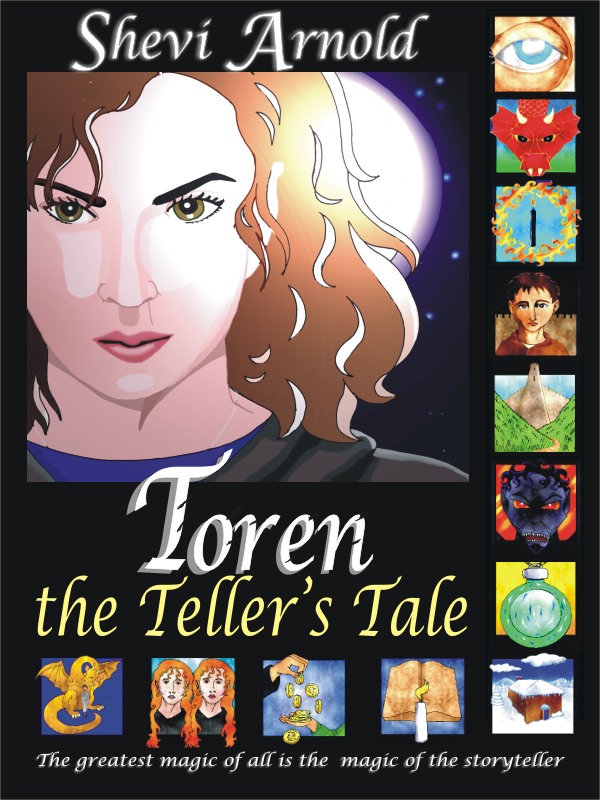
6 Writing Materials
Pens, paper, sticky notes, notebooks, or a journal (for those writers who like journaling) can be nice presents. Writer Deborah Blake Dempsey says, “The Sharpie Pen. It doesn't bleed through paper. You can write, sketch or doodle your way through writer's block. I can't get enough of it and, for a writer, it's a great gift. Oh, and if a journal is given along with the pens . . . perfection.” I know that writer Lisa Yee is particularly fond of Pilot G-2 pens. After having tried them, they’re now my pen of choice too. I prefer the ones with black ink. For an author doing book signings, a fancy pen might be good. I like metallic gel pens, particularly gold.
7 Tea
My Facebook friend, Jackie Garlick-Pynaert, wrote, “Good tea. Inspirational-flavoured tea, like Green Kamboucha, Higgens and Clarke chai, or white pomegranate. Writers need their tea!” (I’m guessing this is a UK company. I wasn’t able to find it in the USA, although Trader Joe’s, Revolution Tea, and Bentley’s seem to offer similar flavors.)
8 Dark Chocolate
When I worked as an editorial cartoonist, dark chocolate helped me continue working well into the night. My favorite is Max Brenner, which has shops in New York City as well as online, but dark Dove chocolate Dove
will also do. 9 A Wrist Rest
My friend, Amy Lynn Spitzley, suggested “Some sort of a wrist brace!” 3M has gel wrist rest
that can be used to help support your wrist when you use a mouse. It’s just $8 from Amazon and eligible for free Super Saver Shipping.$25 AND UNDER
10 Board Games
Writers usually love words, so a word-based game could make a nice presents. Here are some of my favorites:
o Taboo ($16.99 from Toys R Us)
o Banangrams
($14.95 from Amazon and most other places it’s sold) o Scattergories ($16.99 from Toys R Us)
o Scrabble ($8.99 from Toys R Us)
11 T-Shirts for Writers
I like this "The Book Was Better" one from Think Geek ($16.99-19.999) :Think Geek also has tees inspired by certain books, like Alice in Wonderland, The Hitchhiker’s Guide to the Galaxy, and The Princess Bride. Or if your writer is a NaNoWriMo 2011 winner, let them know how proud you are of them with an official NaNoWriMo winner’s tee for $25.
12 Writing-Themed Handmade Jewelry and More

Etsy, the handmade arts-and-crafts store, has a huge selection of jewelry and other fun stuff for writers. Just type “writer” into its search engine and see what you get. It can be overwhelming, so you might want to enter the name of a favorite book or something from a favorite genre instead. For example, when I typed in “science fiction” and limited the list to just jewelry, I found this adorable I, Robot necklace for $14 plus $4 shipping.
13 A Special Edition of a Favorite Children's Book
It could be a first or hardcover edition, an illustrated edition for a book that isn’t normally illustrated, like The Hobbit, or a signed copy. Ask the writer what his or her favorite childhood book was, and start looking for it on Amazon, Ebay, or Half.com.
14 Writer's Digest
A one-year subscription costs $19.95, and it's worth it.
 15 Coffee
If your writer is also a coffee addict, a favorite brand in a writing related mug, like this one (which I designed) from Café Press. The front shows a hound dog typing away in pajamas and bunny slippers, and the back reads, “Do not disturb: Writer at work.” ($15 plus shipping, coffee not included. Posters and tees with the same design also available):
$50-$100
16 Membership in a Writers’ Organization
Membership to the SCBWI (Society of Children’s Book Writers & Illustrators) costs $85 for the first year, $74 a year after that. There are numerous benefits you can find out about here: http://www.scbwi.org/Pages.aspx/Membership-Benefits
17 A One-Day Writers’ Event
My local SCBWI group has events all year round with prices starting at free for members and $60 for non-members.
18 A Good Printer
There are many models for under $100, so don’t make your writer suffer with a printer that just doesn’t work. The Canon Pixma MG5320 wireless all-in-one printer
seems like a good one. ($99.99 from Amazon)19 Scrivener
Scrivener is a different kind of word-processing program designed specifically for the way writers think, with places for storyboarding, character information, and much more. There are videos online to help explain how everything works. Scrivener is available as a download for Windows ($40) and Mac ($45). What’s more, if you’re a recent NaNoWriMo winner, you can get Scrivener for half that (check the NaNoWriMo site for details).
20 Dragon Naturally Speaking
Dragon is speech-to-text software, which is great if you don’t type very fast or have a problem typing a lot. Get the latest version that will work with the writer’s current computer system, and look for it when it’s on sale. The version I use is 11.5 Premium, which works reasonably well with Windows 7. (The advantage of Premium is that it will also read my words back to me, which helps with editing.) The current home edition of Dragon is now on sale for $74.99 here. Also, get a good headset, preferably a USB one. I’m pretty pleased with my Sennheiser headset. It’s a fairly expensive set I bought on sale, but there are much cheaper ones like the Sennheiser single-sided voice-recognition headset
21 An E-Book Reader
Prices for black-and-white models start at $79
for the Kindle and $99 for the Nook.22 Back Support Cushion
Diana Greenwood suggested a “super-duper back pillow for support at the desk chair, because we all know that there is no chair that can help with cramming when on a deadline.” I haven’t been able to find a good one yet, but here’s one option: Kensington memory foam backrest
($31.24 from Amazon)$100 AND UP
23 A Writers’ Conference or Writers' Retreat
I’ve been to many SCBWI conferences, and although they can be pricey, most attendees would say they’re well-worth it. Try to find a good conference for the writer’s genre in your area, so you can at least save on airfare and maybe the cost of the hotel. Of if you’re getting this for your spouse, perhaps you’d like to join him or her? My husband did this once, and because conference attendees were given a discount, it ended up being a relatively affordable family vacation.
24 A Good Ergonomic Chair
These are usually over $100, but I was surprised to find what seems like a decent one for just $59.99 from Office Depot. Staples also has some nice-looking chairs on sale starting at $49.99, including a well-reviewed high-back office chair for $69.99.
25 Kindle Fire—So much more than an e-reader, the Kindle Fire is Amazon’s tablet, priced at $199.Needless to say, I want one.
Also so much more than an e-reader, the latest Barnes & Noble Nook can even stream TV and movies from Netflix and Hulu! It costs $249, and needless to say, I want one of these too.

$500 and up, the iPad is the tablet all other tablets are measured against.
28 A New Laptop
If your writer is struggling with an old computer, he or she really needs a new laptop. I’m very happy with the Acer Aspire I have, and I know many people love the fancier Toshiba Satellite laptops. I’ve heard good things about Apple’s laptops, too, although they do cost significantly more. My recommendation is to figure out how much you’d be willing to pay, check Amazon, ZD Net, and CNet for reviews, and then compare prices at sites like DealCatcher.com: http://www.dealcatcher.com/laptops. Right now they’re showing one of the latest Acer Aspire laptops
at the top of the page. It’s $479.99 from Amazon (the screen is kind of small, but it’s light and has many other nice features). And that's my list. There should be something here for every writer and for every budget.
What about you? Is there something you'd particularly like from this list or something else I left out? Leave your comments below. I look forward to reading what you think. Thanks!
Subscribe to:
Posts (Atom)