Monday, October 03, 2011

A List of 10 of the Best Fantasy & Science Fiction Novels for Girls


When my daughter was about ten, we read Molly Moon's Incredible Book of Hypnotism by Georgia Byng to her. After a while, we would have my daughter read every few chapters, and eventually we left her to read the rest of the series on her own. My daughter is now fifteen, and she reads a lot of fantasy and science fiction. She loves novels with smart, strong and funny girls as main characters, girls like her. I asked her to help me compile a list of some of her favorites for other girls, the list at the bottom of this blog post.

 
When I was her age I read a lot too, and like her, I loved fantasy and science fiction. I journeyed with Frodo through Middle Earth in The Lord of the Rings, discovered with Schmendrick the Magician why all but one of the unicorns had disappeared in The Last Unicorn, and learned how a boy named Sparrowhawk became a great sorcerer named Ged in A Wizard of Earthsea.

Unlike my daughter, however, I never found those smart, strong, funny female main characters that I was looking for. Shouldn’t a reader be able to find him or herself in the novels he or she reads? Where were the girls who were like me?

The women in The Lord of the Rings books are mainly there to be beautiful or to add a comic element. None of them have active roles in the story. Of all the fantasy novels that I read, The Last Unicorn came the closest to embodying what it feels like to be a teenage girl moving between childhood and womanhood, which is crazy considering the character who embodies that isn't even human. What's even crazier is that Wizard of Earthsea features a boy as the main character even though it was written by a woman. Not even women were writing female main characters back then, or so I thought. (Much later, I discovered that there were a few contemporary female fantasy protagonists, like Meg in Madeleine L’Engle’s A Wrinkle in Time, which was published a few years before I was born.)  


So why did so few fantasy novels back then have strong female protagonists? Why were even women writers creating male main characters? Harry Potter is a much more recent example. Not only is the main character of that series a boy, the woman who wrote the series wrote it under the non-gender specific pen name J.K. Rowling. Why?

 
I think there might be two reasons. The first is that publishers don’t know there’s a demand for something until it hits the bestseller list. The Lord of the Rings hit the bestseller list in the sixties, so that told them there was an audience for fantasy novels of a certain type, a type with heroes, not heroines. So they tried to recreate that success and failed. By the seventies, according to Terry Brooks in Sometimes the Magic Works: Lessons from a Writing Life, the publishers had come to the conclusion that fantasy doesn’t sell. You had a hard time selling any kind of fantasy, forget about fantasy for girls. A publisher had to put his reputation on the line to publish a fantasy novel. Brooks was lucky to find a publisher who was willing to do just that. Stephen King also had a huge battle getting his first horror novel published, because publishers back then thought that horror didn’t sell. King had to prove them wrong, but first he had the almost impossible task of getting someone to publish his first horror novel.


Of course, it’s a self-fulfilling prophecy. Something that’s never published won’t make it to the top of the bestseller list. So if it was believed that fantasy for girls didn’t sell well, that was enough to prevent them from getting published at all.


The second reason is that it’s long been assumed that girls will read books with male main characters, but boys wouldn’t read books with girl main characters. This led to the assumption that if you want to sell a lot of books, you had to attract both boys and girls readers—and the only way you could do that was by making your main character a boy. Changing a female writer’s name to something less gender specific or even male was also considered good for sales.

While it’s still somewhat assumed that boys won’t read books with girls as main characters, everything has changed. Why? Because it’s now generally acknowledged that women and teenager girls buy more fiction than men and teenage boys. There’s still a preference for boys as main characters in middle grade, but female main characters are blossoming in YA and older fiction. A few fantasy and science fiction novels with female protagonists--like Twilight or The Hunger Games have turned into runaway successes. What difference does it make which gender of reader puts something on the bestseller list, as long as it goes on the bestseller list and stays there?

And the most interesting thing is that, while in the past even women were writing male protagonists, nowadays even men are writing fantasy and science fiction novels with girls as main characters, like the Maximum Ride series by James Patterson.


As for me, not being able to find the books I wanted to read when I was a teenager turned out to be a good thing.  I eventually I came to the conclusion that the only way I was going to get to read a fantasy novel about a girl like me was if I wrote it myself, and that's why I started writing Toren the Teller’s Tale when I was sixteen years old.

 
Nowadays, girls have plenty of wonderful, smart, strong and brave fantasy heroines to look up to. Without further ado, here are ten of my daughter’s favorites. (Although I agree with many of her choices, my list would have looked a little different.) This is by no means a complete list, but I wanted to limit it to ten, so I apologize to all the great fantasy novelists--Gail Carson Levine, Tamora Pierce, and many more--who didn't make this list. Each of these books is the first in a series, so if you like the first, you'll probably love the rest too. While most are good for readers age nine and up, the last two are better for ages twelve and up.

List of 10 Recommended Fantasy & Science Fiction Novels for Girls


1. Akiko on the Planet Smoo by Mark Crilley—a group of aliens take a fourth grade girl on an intergalactic adventure to rescue a prince from kidnappers.

  
2. The Everyday Witch: A Tale of Magic and High Adventure! by Sandra Forrester—Beatrice Bailey is about to turn twelve, when means she will get her official classification as a witch. But she first needs to pass a test.


3. Molly Moon's Incredible Book of Hypnotism by Georgia Byng—a young girl living in an awful orphanage discovers a book on hypnotism and her own incredible power.


4. Dragon Slippers by Jessica Day George—a plucky orphan girl befriends a dragon and gets a mysterious pair of blue slippers that might destroy the kingdom.

5. Theodosia and the Serpents of Chaos by R. L. LaFevers—eleven-year-old Theodosia, who spends a lot of time in 1906 in London’s Museum of Legends and Antiquities , discovers an ancient curse that leads her on a grand adventure.


6. Dealing with Dragons: The Enchanted Forest Chronicles, Book One by Patricia C. Wrede—daring and adventurous Princess Cimorene would rather deal with dragons than marry a prince.


7. The Sisters Grimm: The Fairy-Tale Detectives by Michael Buckley—after the disappearance of their parents, two girls discover that they must take on the family responsibility of being fairy-tale detectives.
 

8. Fablehaven by Brandon Mull—Kendra’s and Seth’s grandfather is the guardian of Fablehaven, a magical place where fairies and other magical beings live hidden away from most human eyes, and now it’s up to the brother and sister to save Fablehaven and their grandfather.


9. Scepter of the Ancients (Skulduggery Pleasant) by Derek Landy—a young girl teams up with a walking, talking skeleton to solve her uncle’s murder and stop whoever is trying to kill her next.


10. The Bar Code Tattoo by Suzanne Weyn—a high-school student becomes an outcast and has to run for her life when she refuses to get a bar code tattoo like everyone else.

Sunday, September 25, 2011

Fantasy, Science Fiction and the Many Worlds Theory


Before the Many Worlds theory, the separation of fantasy and science fiction was clear. If a story was based on science and scientifically plausible yet not currently possible, it was science fiction. If a story had elements that weren’t based on science and that were not scientifically plausible—like magic, dragons, vampires or ghosts—it was fantasy. The division was clear, and which shelf every book belonged on was simple.
Then along came science fiction writers who used some of the elements of science fiction but sometimes fudged the facts or went beyond what was scientifically possible. So science fiction was divided into hard and soft science fiction. Hard science fiction stuck with what was scientifically possible, and soft science fiction went into the realm of the scientifically impossible. Both were still based on science, but where they went from there on was different.

As time went by, the science in some science fiction became softer and softer, to the point where it was given different labels, like space opera, sci-fi, speculative fiction (or spec-fic or simply SF), or science fantasy. Star Trek, at least after the original TV series, is science fiction. Star Wars, though, is a space opera. Science fiction movies and TV shows that are very weak on their science are generally considered sci-fi. Speculative Fiction tends to be more literary and deal more, as the name implies, with “What if?” rather than what could be. And science fantasy is fantasy with science fiction elements, like Doctor Who. Doctor Who has had episodes with ghosts, vampires, werewolves and so on, usually giving pseudo-scientific explanations for them. You can’t argue that things in Doctor Who are scientifically impossible, because it’s not meant to be science fiction. Stick a bunch of planets in the Earth’s sky without gravity on Earth going haywire, and that’s fine. It’s science FANTASY, so it doesn’t have to follow the laws of science.  


But let’s step back in time a little before all this was going on. In 1957, Hugh Everett formulated a theory that reconciled the indeterministic behavior of subatomic particles with the laws of physics. This theory, which he called the theory of Universal Wavefunction, was later renamed by Bryce Seligman DeWitt and popularized as the Many Worlds theory. According to the Many Worlds theory, our world is one of many—perhaps even an infinite number of worlds—that are like our world but different in ways both big and small. Expansions of the Many Worlds theory have taken this even further by saying that many of these worlds might not even follow our laws of physics.

I repeat: according to expansions of the Many Worlds theory of physics, there are many--perhaps even an infinite number of--worlds out there that don’t follow our laws of physics.    

The Many Worlds theory was both troubling and exciting for the science fiction community. It was exciting because it opened up so many new possibilities. There could be alternate histories, like 19th century worlds with 21st century technology, or to put it another way, there could be steampunk. Time-travel paradoxes no longer existed, because instead of traveling back in time to a world where you weren’t meant to exist yet, you would travel sideways in time to an alternate world to which you were always meant to have time traveled. In a scene near the end of the most recent Star Trek movie, the two Spocks are having a laugh at Kirk because the older Spock managed to convince Kirk that his meeting with the younger Spock would cause a time-space paradox, which according to the Many Words theory couldn’t happen. But the meeting of the Many Worlds theory and science fiction was also troubling, because how do you define hard science fiction as being different from soft science fiction, science fantasy, and even fantasy if EVERYTHING (except for paradoxes) is scientifically possible?

I think the distinctions between fantasy, science fiction and science fantasy remain the same, but with one exception: fantasy that uses science to explain the fantasy in it can be science fantasy or even science fiction.

Back when I was in college, I fell in love with a science fantasy series by Gene Wolfe: The Book of the New Sun (Shadow & Claw: The First Half of 'The Book of the New Sun'


Monday, September 19, 2011

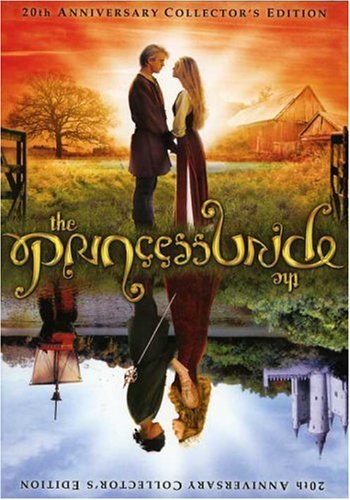
The Princess Bride and the Storyteller


My favorite movie is The Princess Bride. It has everything. To quote the storytelling grandfather in the movie, “Fencing, fighting, torture, revenge, giants, monsters, chases, escapes, true love, miracles . . .”

 What’s not to love? 

I shared this movie with my daughter when she was about ten, and it became her favorite too.  Like me, she knows the hidden meaning behind those three little words: “As you wish.” 

Every once in a while the subject of my favorite movie comes up, and people tell me I should read the book. William Goldman wrote the screenplay for The Princess Bride, which was based on his novel. I’ve been meaning to read it for decades, but never got around to it. Recently, I was participating in a Twitter chat for writers, when someone once again told me that I had to read the book. So I opened up my web browser to Amazon, found a used copy, and bought it on the spot.

Once it arrived in the mail, it sat on the shelf for a few weeks, because I was busy with other stuff. I had my own novel to edit, information about publishing and social media for writers to study and put into practice, and there were family obligations. But I kept seeing that book on the shelf. “Read me already,” it said.  

So I finally started to read it, and I told my Facebook friends they could stop pestering me about it already. That post received a lot of “likes,” but then someone warned me about the book.  

 While I knew many people who said it was their favorite book, I've also heard from many who said that the book isn't as good as the movie. I just didn’t know why. William Goldman wrote both, so how different could they be?

My Facebook friend explained: “The theme of the movie is ‘true love conquers all’ while the theme of the book is the more difficult and frank ‘life is not fair.’ One is a fairy tale and the other most definitely is not.”

Oh.

That almost put me off of reading the book.

But I started reading it anyway, and I discovered something rather surprising—William Goldman seems to have liked the movie better too.

I say this because the edition of The Princess Bride that I bought is the 30th anniversary edition, which includes both the introduction to the 25th anniversary edition and an even newer introduction.

First, to truly understand The Princess Bride, you must realize that this is a story within a story. The internal story of Buttercup, Westley, Inigo and Fezzik is almost identical in the movie and the book. Where the book and the movie differ is in the external story, the one about the storyteller and the audience. This is metafiction, and that’s probably one of the things I love the most about The Princess Bride. 

In the book, the storyteller is the character of William Goldman. Not the author, but the character. You can tell it’s the character, because in the book he has only one child, a boy named Jason, when in fact the real Goldman wrote The Princess Bride for his daughters. But that’s not all. The full title of the book is The Princess Bride, S. Morgenstern’s Classic Tale of True Love and High Adventure. In the book, William Goldman writes about how he came to abridge S. Morgenstern’s classic tale. However, S. Morgenstern doesn’t really exist. He’s as much a fictional character as Westley and company.

In the movie, a grandfather reads Morgenstern’s book to his sick grandson. Grandpa explains that this is the book his father used to read to him. At first the grandson is hesitant, but then he really gets into the story. In the very end of the movie, he asks Grandpa to come back and read the story again. Grandpa gets the final line in the movie, which is “As you wish.”

From a storyteller’s point of view, there could be no better ending. How could it end better than a request for more?

But the book doesn’t end that way.

Nor does it end with the much beloved last lines from the movie’s internal story: “Since the invention of the kiss there have been five kisses that were rated the most passionate, the most pure. This one left them all behind. The End.” That isn’t even in the book.

The book ends almost in the same place as the internal story, but with the storyteller pointing out that “in my opinion anyway, they squabbled a lot, and Buttercup lost her looks eventually, and one day Fezzik lost a fight and some hotshot kid whipped Inigo with a sword and Westley was never able to really sleep sound because of Humperdinck maybe being on the trail. . . . But I have to say, for the umpty-umpth time, that life isn’t fair. It’s just fairer than death, that’s all."

That’s not exactly a fairy-tale kiss or an “as you wish.”

So why are the two endings different? And why do I think the real Goldman preferred the movie ending to the original novel’s ending, aside from the obvious answer, which is that Goldman wrote the screenplay years after he wrote the novel?

In the introduction to the 25th anniversary edition, Goldman—the character and the real author—talks a lot about the making of the movie, as well as some of the other movies he wrote. One of them was Marathon Man, which is a story involving a Nazi in New York City, a Nazi who kills and tortures some good people in the story. The Holocaust proves that life isn’t fair, but it’s fairer than death. It proves that it might be better to tell your children not to believe in fairy tales. One-and- a-half million children were killed by the Nazis, in part because these children believed that grownups don’t hurt children. They believed in that fairy tale, and the Nazis used it against them. Only those who could see beyond that fairy tale survived, and I think that might have been part of the reason for the novel’s original ending.  

But the storyteller in the original novel isn’t Grandpa. He’s a screenwriter named William Goldman, whose son Jason doesn’t want to read Morgenstern’s novel. The character of Goldman in the novel has fond memories of his father reading the story to him, but when he picks up the actual book, he discovers that his father had only read the good parts. So Goldman sets out to abridge Morgenstern’s tale, all the while commenting on what he left out, what his father left out or put in, and what he thinks of all of it. This matters a lot, because, as I’ve already said, the movie and the novel have almost the same internal story. It’s only this external story that changes.  

But in the introduction to the 30th anniversary edition, Goldman is now a grandfather. Not only that, he’s shared The Princess Bride with his grandson, who loves the story as much as his grandfather does. It took 30 years, but eventually the storyteller from the book evolved into the storyteller from the movie.

And although the novel still doesn’t end with “As you wish,” chronologically, it kind of does. Because chronologically, the most recent event, which is found in the 30th anniversary edition’s introduction, is Goldman offering to make his grandson’s birthday wish come true. “As you wish.” And what his grandson requests is something every Princess Bride fan dreams of: a trip to Florin to see the sword that was forged for the six-fingered man, Fezzik’s gigantic clothes, and many other wonders from the story. The grandson gets his wish, and we get to go along for the ride.    

But what about the theme, you ask? Is the theme different for the 30th anniversary edition too?

This edition has a few chapters from a supposed sequel to The Princess Bride, which is entitled Buttercup’s Baby. There’s not much of it here, but what is here is all about love, particularly the love we feel for our children. Fezzik loves Buttercup’s baby so much that he’s willing to give his life to protect little Waverly. That’s not romantic love, but it is true love.  

So in the end, while life isn’t fair, love makes it bearable. And that truly is love conquering all: the unfairness, the torturers, the Nazis, and even death.